
Before Shure introduced a new product, the Company made certain that the sales team thoroughly understood it. Throughout his life, Sidney N. Shure advocated an “intellectual style of selling.” This involved knowing the products, listening to customers, and then introducing the right products for customers’ needs. From its early years, Shure developed practical lesson plans for selling the Company’s extensive line of microphones, which included carbon, crystal, dynamic, and controlled reluctance microphones. These lessons contained detailed descriptions of each product and the technology behind it. The plans also emphasized turning technical information into a “selling conversation that would be interesting to a non-technical customer.”
A 1950s manual titled “Shure Selling Slants for Cash Register Ringers” stated: “When the customer asks for a specific model of microphone—whether it’s a Shure or a competitor’s microphone—the first question should always be ‘What are you going to use it for?’ Then ‘Don’t be afraid to tell your customer about a different model if you firmly believe he or she needs it.’”
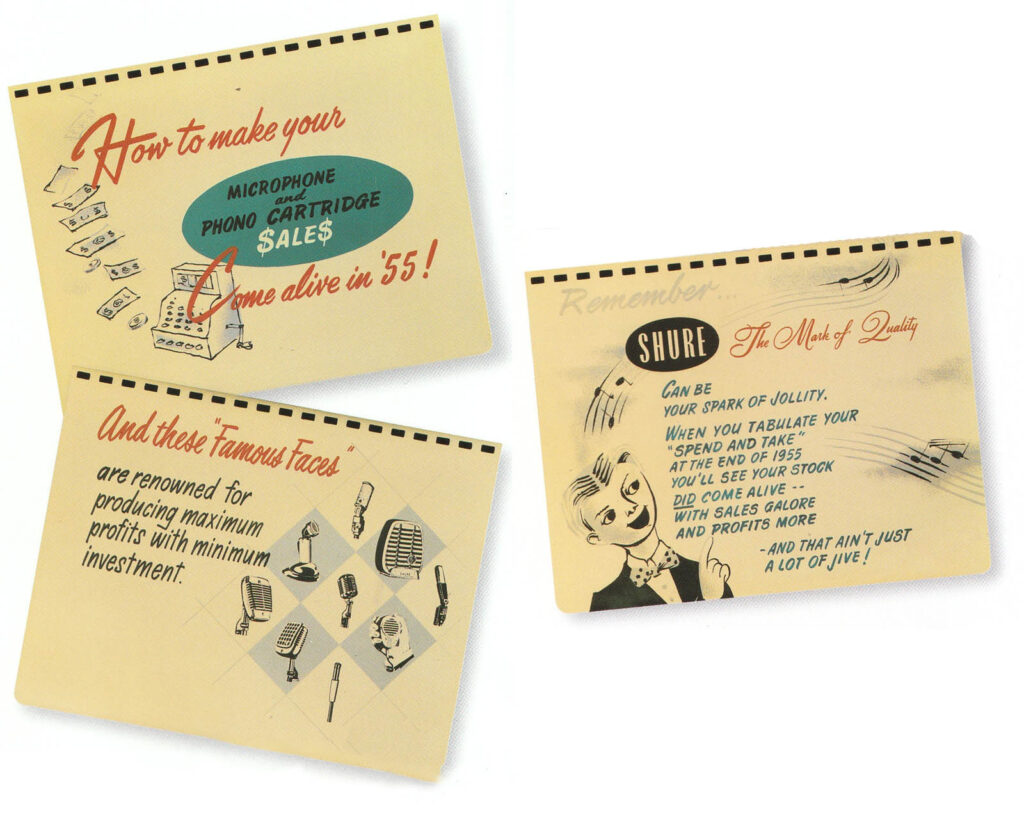
Pages from a presentation book used by the Shure sales staff in 1955. The customized books were hand printed and hand colored. They served to highlight the Company’s extensive line of audio products while promoting some of the marketing and sales advantages of the Shure line.
This style of selling reflected the discipline and confidence that Mr. Shure had in his products. He wanted to earn the trust of his customers, not simply sell them products.
This approach has been a lasting legacy of the early years. “We continue to place the trust and confidence of our customers above all else, and among our highest priorities are training, sales support, consumer information, and application support,” noted Shure President Sandy LaMantia. “Every day we learn more about our individual customers, and, at the same time, we are expanding our reach around the world. It’s a measure of our Company that, as we grow, we continue to build enduring business and personal relationships.”
