
Starting in the 1940s, Shure began developing a source for an inexhaustible supply of valuable ideas for improvements throughout the Company. This source was employees. In 1943, Sidney N. Shure organized a Labor-Management Committee, bringing together representatives from various departments in the Company to “manage suggestions; to make recommendations; and to handle any and all ideas employees have to improve production, morale, and working conditions.”
In announcing the program, Mr. Shure wrote: “This is your committee. Let’s make this a working committee with a reputation for quick action and results. In this way we can contribute much to the war effort and hasten our victory [in World War II].”
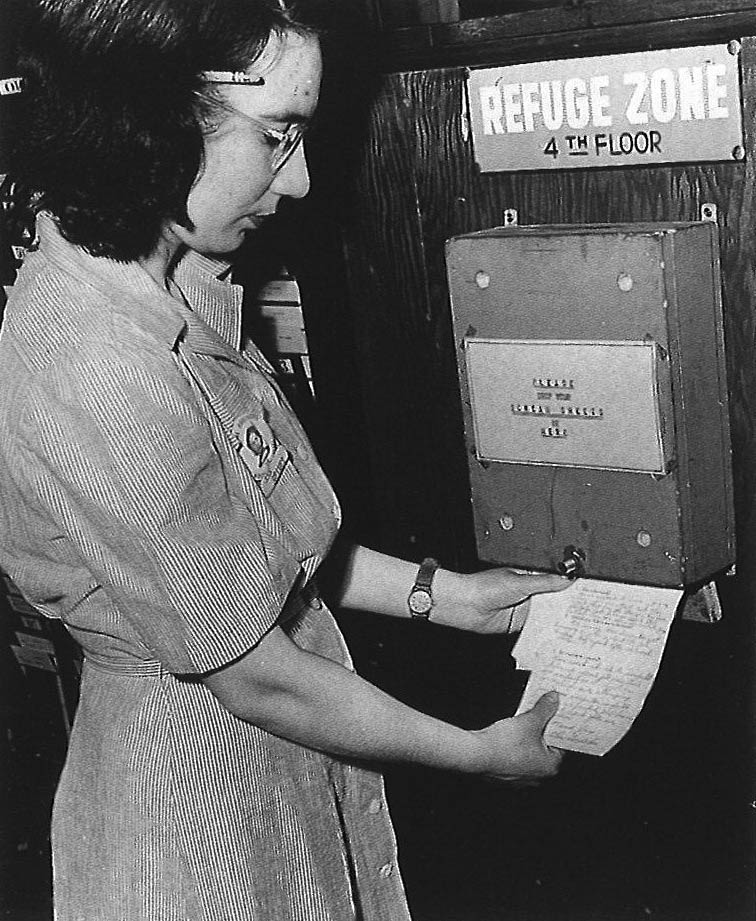
Suggestions were submitted to the Labor-Management Committee on a simple form called Scream Sheet, a term that reflected management’s belief that everyone can “say what they think is wrong and suggest new ways of doing things.”
In 1944, the Committee was renamed, but the mission remained the same. The new Employee Round Table Committee sorted through notes that employees placed in Suggestion Boxes. Committee recommendations were sent to the proper departments and were put into effect if found worthwhile. Every employee who made a suggestion implemented by the Company received an award. From the hundreds of recommendations, the Committee found better methods for increasing production, improving plant conditions, and advancing quality practices.
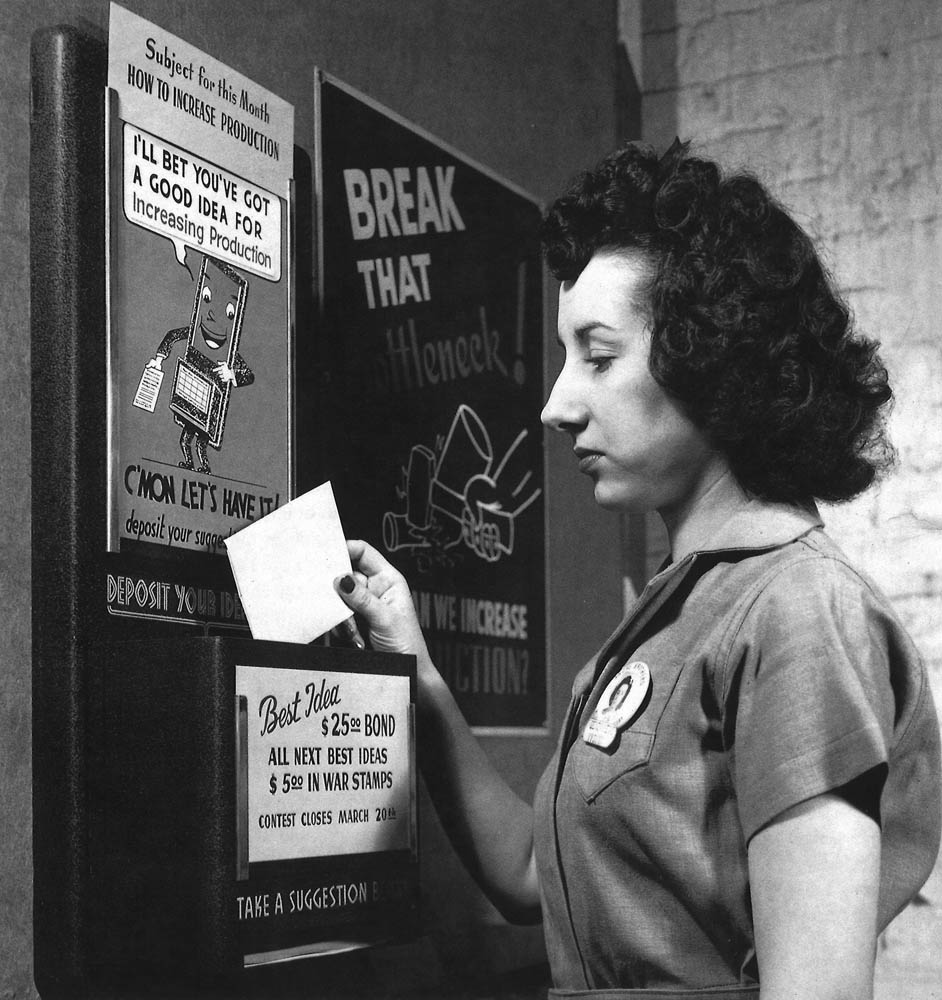
A 1944 report by Shure managers on the Round Table Committee revealed: “In a few months since they’ve been organized, they have considered such worthwhile projects as scrap and wastepaper drives, vacations for part-time workers, traffic at the time clocks, ventilation, screens for the machine shop, and improving the condition of the lunchroom tables.”
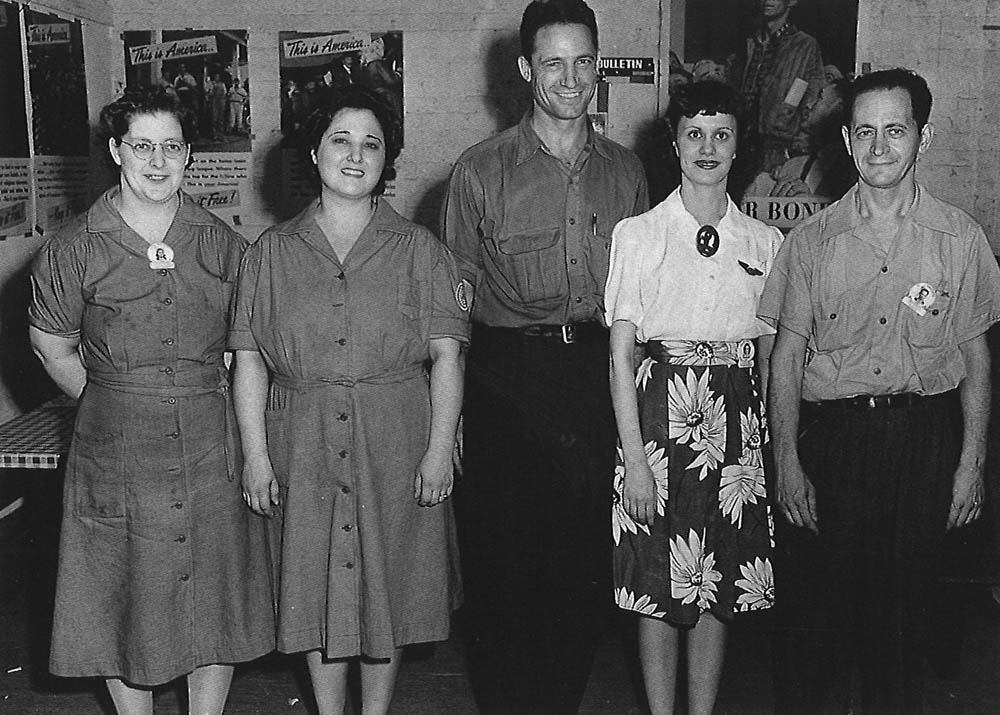
There was a constant rotation on the Committee, allowing new foremen, assembly workers, and office personnel to serve their departments and represent their ideas.
From “Scream Sheets” to “Speak Up”
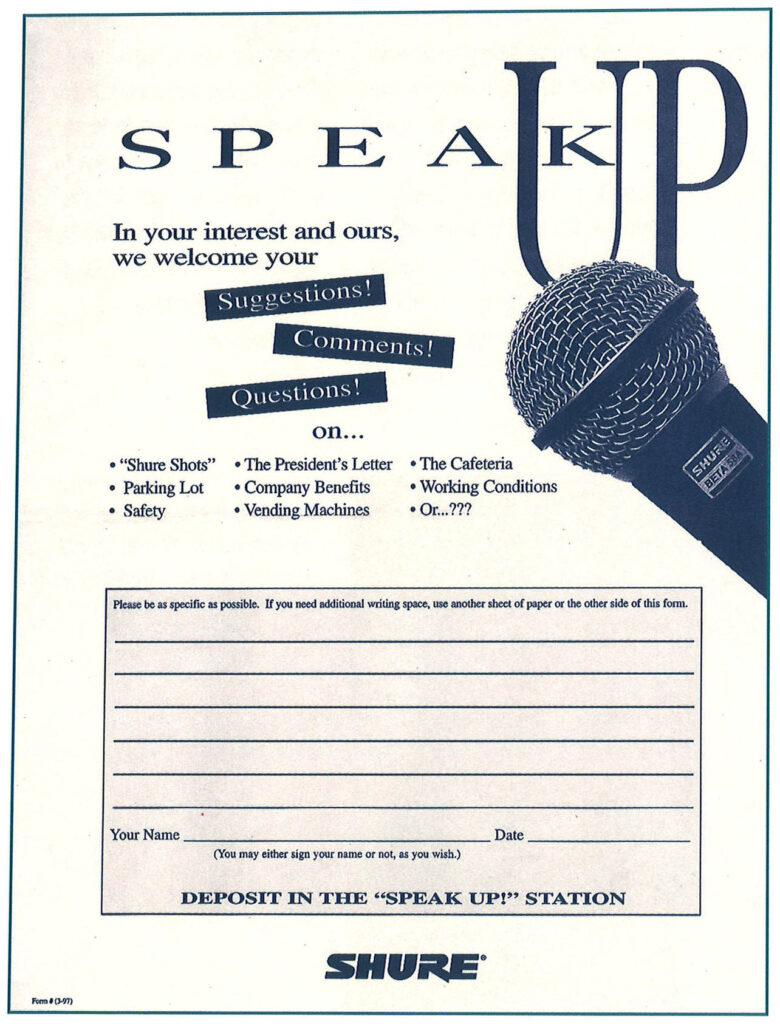
In 1969, Shure replaced Scream Sheets with “Speak Up,” which encouraged employees to submit written comments and suggestions at the Speak Up Station outside the cafeteria. Subsequently, stations were placed in other locations throughout every plant. As Mr. Shure emphasized: “This does not take the place of speaking directly to managers or the Personnel Department, but it is an additional channel for you to express opinions and suggestions.”
Within a few months, Mr. Shure reported to employees: “The response to this program has been gratifying. A number of people have expressed themselves on a variety of subjects; and all of the comments, suggestions, and questions will be receiving careful consideration. Where possible, prompt action was taken or will be taken to bring about changes and improvements.”
Into 2000, Shure maintains the Speak Up program, encouraging all Associates to provide suggestions and comments. According to Chairman Rose L. Shure: “The program continues to be part of our commitment to encourage upward communication at all levels within the Company.”
Always a better way
In 1981, building on the success of the Speak Up program, the Company launched “Better Ways,” which was designed to get specific suggestions on projects that were under way. Again, employees responded with a number of valuable recommendations. “I am in the process of reading every one of the suggestions accepted for implementation. Keep them coming—they are helping to make this a better company and a better place to work,” Mr. Shure wrote in April 1981.
In 1987, Better Ways II was initiated under the direction of Jim Kogen, then President of Shure. “This was just one of the programs that Mr. Shure started that demonstrated a tremendous confidence in employees. In Better Ways II, we simply continued to draw on the creativity and commitment of our people,” said Mr. Kogen.
In 1989, Mr. Kogen began to formalize the involvement of employees within a Companywide Total Quality Program. The program built on the more than 40 years of experience in developing employees as partners in a continuous process of improvement and innovation. It also marked a distinct shift in the roles and responsibilities of employees in shaping Shure for the challenges of the 21st century. From this point forward, employees officially became Associates, reflecting the nature of their contribution to the development, production, and support of Shure products.
