
The Shure Uniplex Microphone, used with a magnetic wire recorder, is shown with wire recorder inventor Marvin Camras in 1944. A similar microphone and recorder setup was used to record the landing of the United States Marines on Bougainville Island on November 1, 1943.
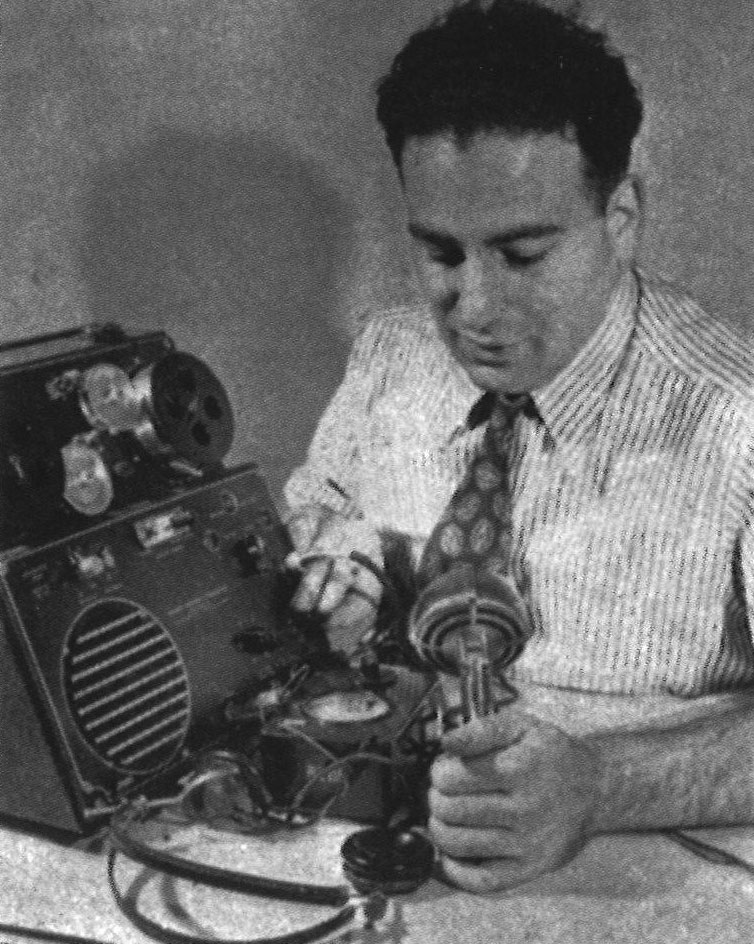
Several months later, Mr. Camras’ recorder played an important role in the critical World War II D-Day invasion. On June 6, 1944, the Allied Forces used a portable machine to play recorded, amplified battle sounds at decoy locations while Allied troops stormed a 50-mile stretch of French beach called Normandy.
Mr. Camras developed an interest in electronics while growing up in Chicago. At age 18, to help his cousin practice singing, he recorded sound on magnetically charged piano wires. Over his 60-year career as a professor and researcher at the Illinois Institute of Technology in Chicago, Mr. Camras invented and developed audio and visual technologies, including multitrack tape recording, stereophonic sound reproduction, magnetic sound for motion pictures, videotape recorders, and the technique of high-frequency bias recording. He received more than 500 patents. In 1990, Mr. Camras was awarded the National Medal of Technology by President George H. Bush. Ed: Marvin Camras was not the sole inventor of the wire recorder. In the 1930s, wire recorders were being developed in Germany.

Are these recordings, tapes available for public listening anywhere?