This Tech Tip is dedicated to those who served on D-Day, June 6, 1944.
Plane-to-plane communication and plane-to-ground communication became a critical issue as World War II intensified. The acoustical noise in a warplane cockpit made it difficult for the pilot to hear incoming messages and tainted outgoing messages. The U.S. Government sought out technical assistance from the Cruft Laboratory at Harvard University. One of the Cruft experts in acoustics was a young Leo Beranek – later the founder of consulting firm Bolt, Beranek, and Newman; arguably the most important acoustician of the 20th century: http://en.wikipedia.org/wiki/Leo_Beranek
Research from Cruft Labs led to critical advancements in speech intelligibility for war aircraft communications. The T-30 throat microphone was developed as was the ANB-M-C1 mask microphone. Both devices were manufactured by Shure as well as Western Electric and other companies. Also developed was the M-369 cover, meant to keep the ANB-M-C1 microphone clean, dry, and operating efficiently.
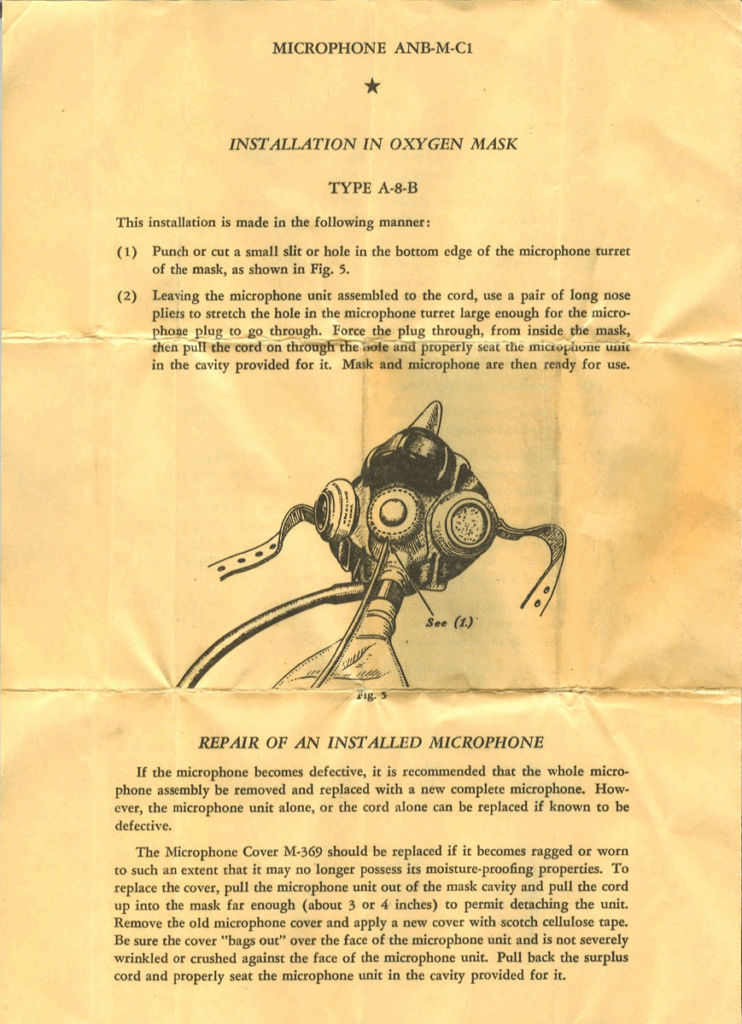
The mic was installed in the pilot’s oxygen mask as described below:
From the Company newsletter “Shure Shots,” November 15, 1943: “Captain Merle Else visited Shure for our Armistice Day Factory Meeting. Captain Else is a veteran of 119 combat missions, wears the air medal, and is in line for the Distinguished Flying Cross. Fondly handling our T-30 Throat Microphone, the youthful Captain made the thrilling statement that the T-30 has saved more lives of fighter pilots than any other piece of equipment besides guns. Said he of the T-30, ‘I have never heard of one failing.’ ANB-M-C1 Mask Microphones are also widely used by his squadron.”
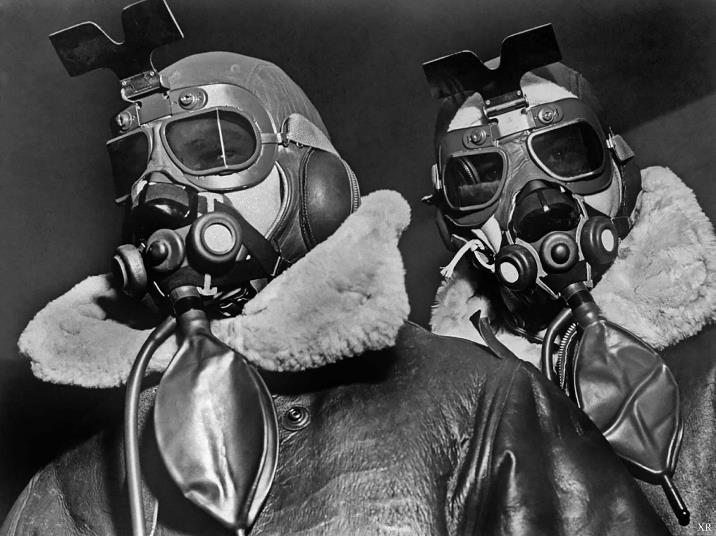
Related links: World War Two transducers made by Shure Brothers Company
Arcana – mysterious or specialized knowledge
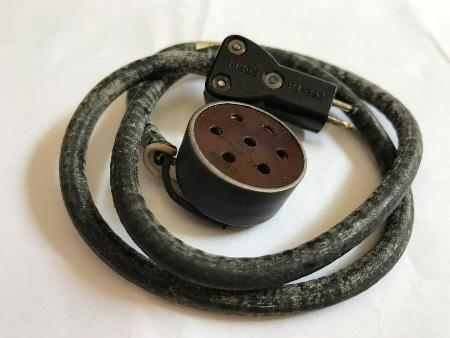
The ANB-M-C1 contained a carbon mic element, chosen as it was durable, reliable, inexpensive to manufacture, did not require scarce metals/materials, and produced a “hot” signal level that could drive the pilot’s radio to full modulation. Over seventy years later, most ANB devices still operate and meet published specifications.
***
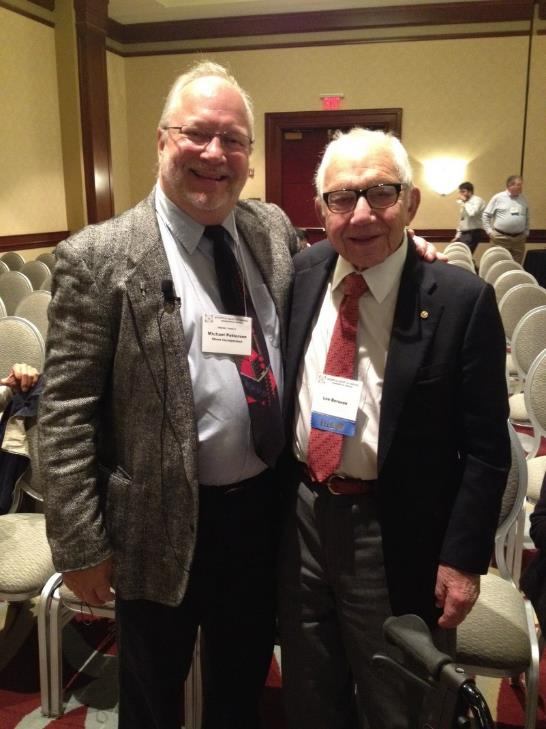
Shure archival records do not contain the meaning of the “ANB” prefix frequently seen on World War Two transducers. So, in October 2014 at the Acoustical Society of America conference, I conferred with a hero of mine, Dr. Beranek, who had recently celebrated his 100th birthday. Knowing that Leo, as everyone called him, had worked on military acoustical issues during World War Two, I inquired about “ANB.” Leo answered immediately, “ANB stands for Army-Navy-British, Michael.” Mystery solved.