
Category: Tech Topic
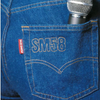
Apps Tech Tip #625: UK Ads for the Unidyne III SM58 from the 1980s
September 2026 is the 60th anniversary of the Unidyne III SM58 debut.
During the 1980s, the United Kingdom branch of Shure developed a series of advertisements for the SM58. The target customers were aspiring musicians and live sound professionals. For many Tech Tip readers, these ad images will be unfamiliar.
Note each SM58 image above has the SHURE block-letter logo, first used circa 1982/83. Our block-letter logo that slants to the right dates circa 1986.
To celebrate the 60th birthday… -more-

Apps Tech Tip #459: The First Decade of the Unidyne III SM58
Introduced in 1966, the Unidyne III SM58 was not an immediate success. It took ten years for this microphone to gain traction and find its way into the hands of top performers.
September 1966 through August 1967 was the first full year of SM58 sales. We sold fewer than one SM58 per business day that year…not a great start. By September 1972, it was ten SM58 mics sold per day. An improvement for certain, but not extraordinary. By September 1976,… -more-
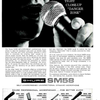
Apps Tech Tip #407: The First SM58 Advertisement
Five decades ago, Shure introduced the tagline, “Sound Of The Professionals.” The SM58 eventually made those four words ring true worldwide.
Introduced in September 1966, the SM58 Studio Microphone was initially a disappointment as only 145 units were sold in the first twelve months. Our new mic did little to impress influential studio engineers, so Electro-Voice, RCA, and AKG maintained their dominance in the radio and television markets.
While the SM58 was going nowhere in its first years of existence,… -more-

Apps Tech Tip #245R: SM58 Arcana…Happy 60th!
Each month features an updated reprise of a Tech Tip from ten years ago because many past Tips are well worth review. Also, some will benefit from updating. Enjoy the sixty-third monthly Tech Tip reprise.
September 2026 is the 60th anniversary of the Unidyne III SM58 debut. Here are twenty-five tidbits about this iconic microphone.
- The original SM58 handle was two-toned, a dark gray field with darker gray flecks.
- SM = Studio Microphone. The intended market was radio and television broadcast
Apps Tech Tip #624: The Oldest Shure Accessory
Dear reader, have you ever wondered what accessory has been sold by Shure for the longest time and remained essentially the same? Your author has and is seeking psychological help.
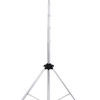
The answer is a telescoping microphone stand, like today’s S15A stand, first sold ninety-three year ago.
Shure S15A mic stand, 2026
Our 1933 catalog lists the Model 55 collapsible floor stand: Designed for those that require a floor stand that is low in price and readily portable. The three legs… -more-

Apps Tech Tip #623: Model 2A Carbon Microphone
In Spring 2026, Shure received an email from a gentleman in Texas. His father, a ham radio operator in the 1940s, had recently passed away. A Shure Model 2A carbon microphone was part of the ham radio setup. The gentleman had no use for the microphone offering to donate it to the Shure archive. Your author happily accepted as the microphone’s condition was near mint.
Model 2A carbon microphone, front viewPhoto by Julie Snyder
Model 2A carbon microphone, rear viewPhoto… -more-
Apps Tech Tip #622: HME WM250 Handheld Wireless Microphone
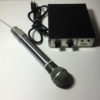
Readers may recall that Shure entered the wireless microphone market in 1953, exited in 1960, and re-entered in 1986. During the 1970s and early 1980s, we had a profitable OEM business selling mic elements, like the SM58, to manufacturers of wireless mics such as Nady, Vega, Swintek, Edcor, Samson, Telex, and HME.
HME (Harry Miyahira Electronics), San Diego, manufactured a professional VHF wireless mic system that was popular in Las Vegas and Los Angeles during the 1970s.
HME VHF wireless… -more-
Apps Tech Tip #241: The Professional Entertainer Line of Products
In the late 1960s, Shure introduced the Professional Entertainer (PE) line of microphones and circuitry. Designed for retail music stores, PE products were rebranded, relabeled, and repackaged versions of our General Line devices. During this era, many garage rock bands and “combos” did not own a PA system, so vocal microphones often were connected to the high impedance, ¼” phone jack inputs of guitar amplifiers. To meet this market demand, Shure PE mics were wired for high impedance, though certain… -more-

Apps Tech Tip #621: The Rolling Stones and Shure in 2026
In July 2026, the Rolling Stones released their newest record, “Foreign Tongues.” The album has musical contributions from Steve Winwood, Paul McCartney, Bruno Mars, and contains a song recorded prior to the death of drummer Charlie Watts.
Here is the 60 second video teaser for the new recording: The Stones In The Studio. Shure microphones appear a minimum of twelve times in the footage.
0:02 SM7 Keith Richards0:05 SM7 Keith Richards0:10 SM7 Ron Wood0:12 SM58 Ron Wood0:20 SM7 Keith Richards0:23 SM7 Mick… -more-

Apps Tech Tip #620: Shure Headquarters in Evanston 1956 to 2003
Let’s take a trip back to 1956, seventy years ago, for the opening of the mid-century modern office headquarters and manufacturing facility of Shure Brothers Incorporated. This building at 222 Hartrey Avenue, Evanston, Illinois, served as the hub of our worldwide operations. Designed and engineered by A. Epstein & Sons, this structure served Shure for nearly fifty years. The manufacturing wing produced phonograph cartridges, microphones, magnetic tape recorder heads, and other audio devices.
Shure Brothers headquarters, Evanston Illinois, 1956
Our… -more-