
Five decades ago, Shure introduced the tagline, “Sound Of The Professionals.” The SM58 eventually made those four words ring true worldwide.
Introduced in September 1966, the SM58 Studio Microphone was initially a disappointment as only 145 units were sold in the first twelve months. Our new mic did little to impress influential studio engineers, so Electro-Voice, RCA, and AKG maintained their dominance in the radio and television markets.
While the SM58 was going nowhere in its first years of existence, its eldest sibling, the SM56, was quietly gaining popularity for large rock concerts, thanks to Harry McCune Sound of San Francisco. Distracted by the lucrative market for hi-fi phono cartridges, Shure Sales/Marketing paid scant attention to the SM58 as the demand for rock ‘n’ roll microphones exploded.
To boost SM58 sales, Bob Carr, Professional Products marketing manager, placed a series of advertisements in db magazine, a new publication targeting pro sound. Please take a minute to read the text of the following ad.
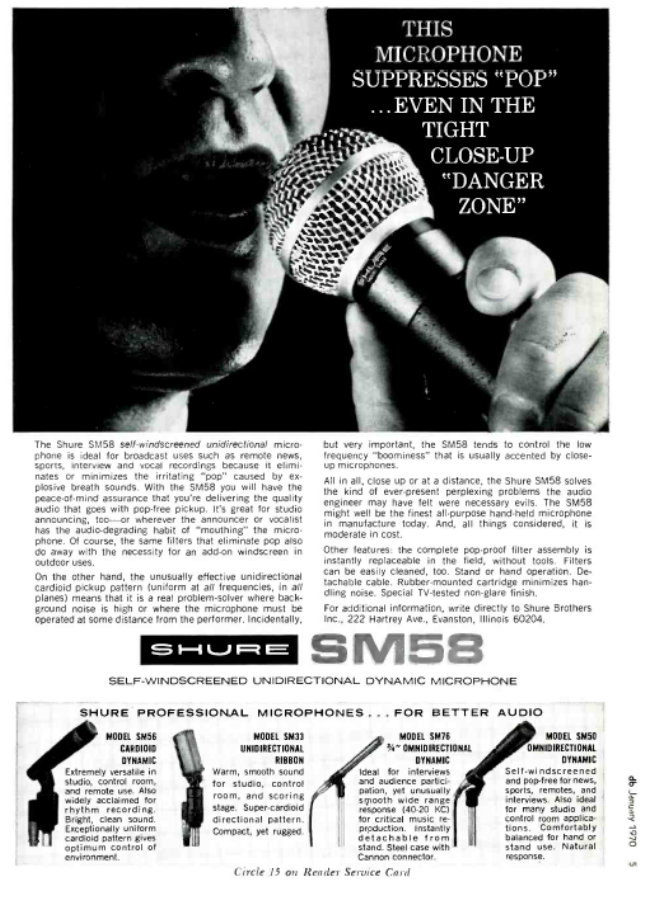
Apart from the awkward “self-windscreened,” did you notice anything odd? The targeted market for the SM58 remained “broadcast uses such as remote news, sports, interviews and vocal recordings.” The primary readers of db magazine were live-sound engineers, not broadcasters. Shure was preaching the wrong message to the right choir! The ad was aimed squarely at broadcast studio use, even mentioning “Special TV-tested non-glare finish.” There is no mention of live sound, concerts, clubs, or improved gain-before-feedback. Not surprisingly, the db magazine campaign proved ineffective as SM58 sales continued to languish.
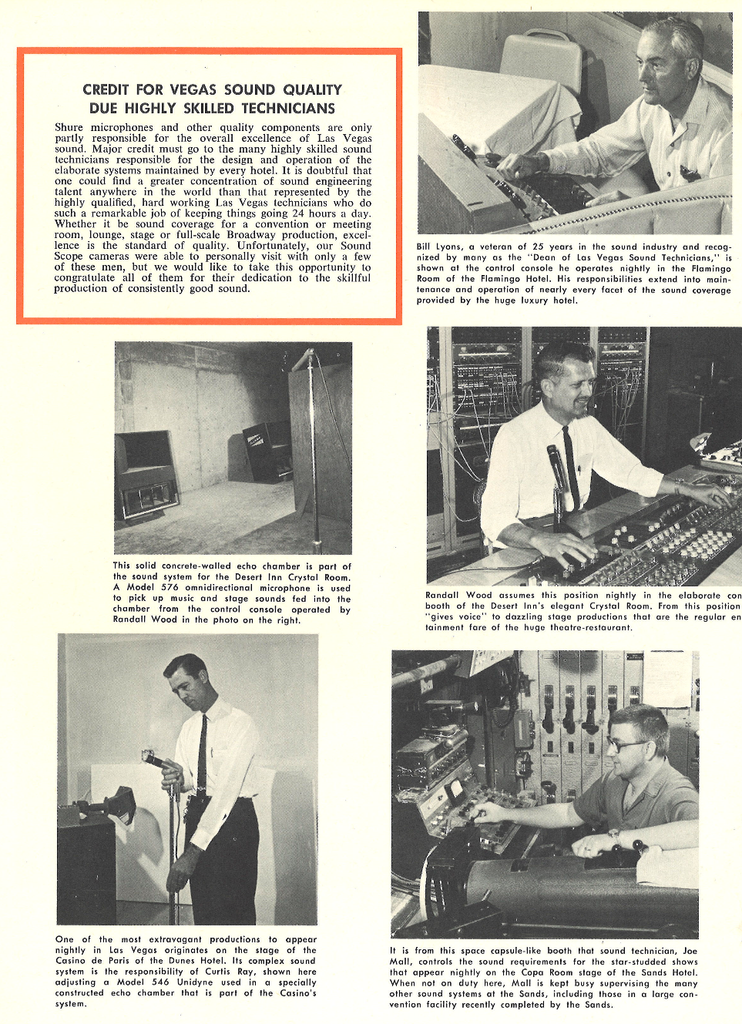
According to Roger Ponto, then Shure’s National Sales Manager, a high-level meeting was held to discuss discontinuing (!!!) the SM58, SM57, and SM56. Ponto and Carr suggested that before eliminating these models, perhaps an aggressive, in-person promotion of our SM mics to Las Vegas showroom audio engineers could be effective. Big Las Vegas shows were like TV productions with the addition of large-scale sound reinforcement because of the audience size. If the SM mics caught on in Vegas, there were numerous showrooms with money to spend on new equipment. Moreover, each venue was perpetually seeking the next great audio tool to “one-up” the other competitive hotels along Las Vegas Boulevard.
Las Vegas in the 1970s signaled the end of the golden age for “lounge entertainment,” i.e., acts developed for small, club-sized audiences. It was large showrooms that attracted high rollers as well as tourists. The stars of Hollywood and of the Top 40 charts commanded the showrooms: Frank Sinatra, Ella Fitzgerald, Elvis Presley, Dean Martin, The Supremes, Tom Jones, Robert Goulet, Bob Hope, Flip Wilson, Jerry Lewis, Jack Jones, Redd Foxx, et al. These performers were booked into the main Vegas showrooms, and they, as well as the audiences, expected high-quality sound.
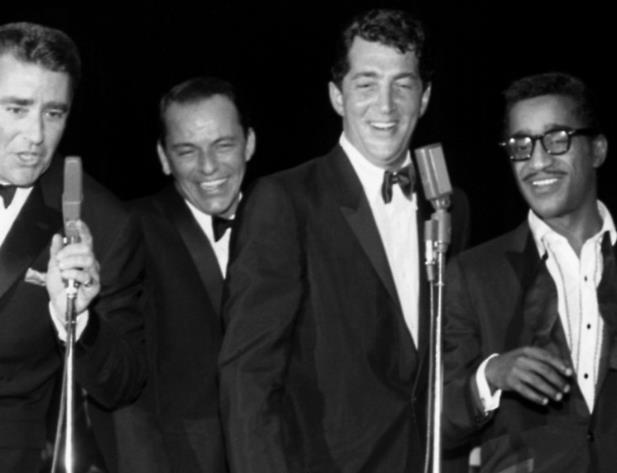
Shure ribbon mics were fixtures on the Sands main stage – Model 300 (L), SM33 (R)
The in-person promotional efforts worked as Shure SM models soon became the microphones of choice in Las Vegas showrooms. SM units were now into the hands of influential artists working in the hotels and they liked what they heard from our microphones.
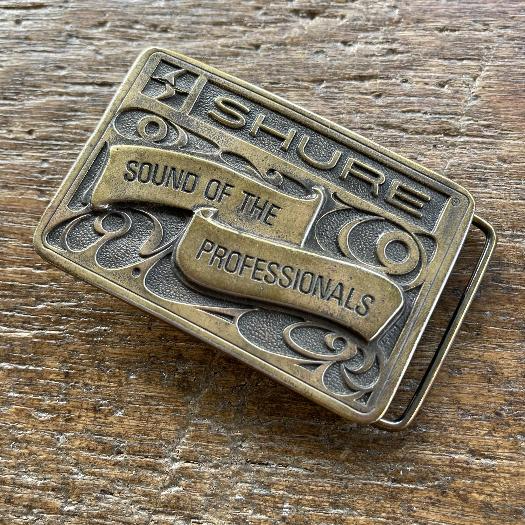
To keep competition at bay as Shure dominated Las Vegas stages, we conducted “mic repair clinics.” At the clinic, Shure mics from the showrooms were evaluated, repaired if necessary, or replaced if repair was impossible – at no cost to the audio engineer or his employer. This unique program was financially feasible only because of the exceptional durability of our mics. During each clinic, refreshments were served and the latest Shure products displayed. It was a relaxed atmosphere for the audio engineers to meet each other, exchange industry gossip, and enjoy a beverage while having their Shure mics refurbished for free. For engineers who were exceptionally loyal to Shure, they received our coveted “Sound Of The Professionals” belt buckles. These items became status symbols in the Vegas sound engineering community.
During a two-day clinic, hundreds of Shure mics were assessed and refurbished. Similar clinics were conducted in Reno, Lake Tahoe, and Atlantic City as each city was home to numerous hotel casinos with showrooms. Your author was present at many such clinics as a host and/or repair technician.
Simultaneous to the success in Las Vegas, retail music stores began selling our Professional Entertainer (PE) microphones to entry-level musicians alongside the SM line for seasoned performers. This was a major change in selling strategy. Prior to the 1970s Shure mics were primarily sold by electronic parts distributors, not music stores.
By 1975, nine years after introduction, SM58 sales had accelerated steeply, as had the sales of the SM56 and SM57. Today, many believe the SM58 was always a megahit, but history avers otherwise.
Related Information: Las Vegas in 1977
- Your author’s first visit to Vegas as a Shure associate was in 1977. My familial elders worked in factories or construction. None could comprehend how I could travel to Las Vegas and get paid for doing so.
Arcana – mysterious or specialized knowledge
Annual SM58 sales finally reached 1,000 units in 1971.
***
Retired associate Sandy Schroeder provided additional SM58 history: The handles and closing rings were painted separately. The appearance of the dark gray spatter finish often did not match when the handle parts were assembled as the spatter coat was difficult to apply consistently. The roughness of the spatter resulted in a slight increase in handling noise, plus the spatter application added cost being an extra operation. For these reasons, the spatter finish was abandoned.
***
During the 1970s, flamboyant pianist Lee Liberace was one of the top drawing performers in Las Vegas. Two decades earlier, his popularity earned him a national television show in the United States. A candelabrum, placed on the piano, became his visual calling card. Liberace died in 1987.
Liberace in Vegas 1980 – – In the video note his gold Shure Unidyne III Model 566 on the mic stand.
***
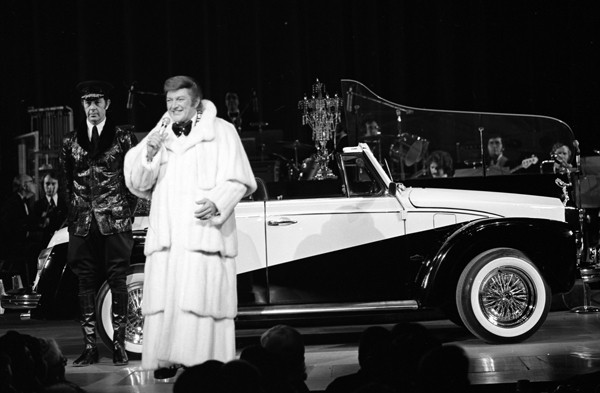
His wireless mic appears to be an HME transmitter.
The mic element is a Shure Unidyne III.
