In Spring 2026, Shure received an email from a gentleman in Texas. His father, a ham radio operator in the 1940s, had recently passed away. A Shure Model 2A carbon microphone was part of the ham radio setup. The gentleman had no use for the microphone offering to donate it to the Shure archive. Your author happily accepted as the microphone’s condition was near mint.
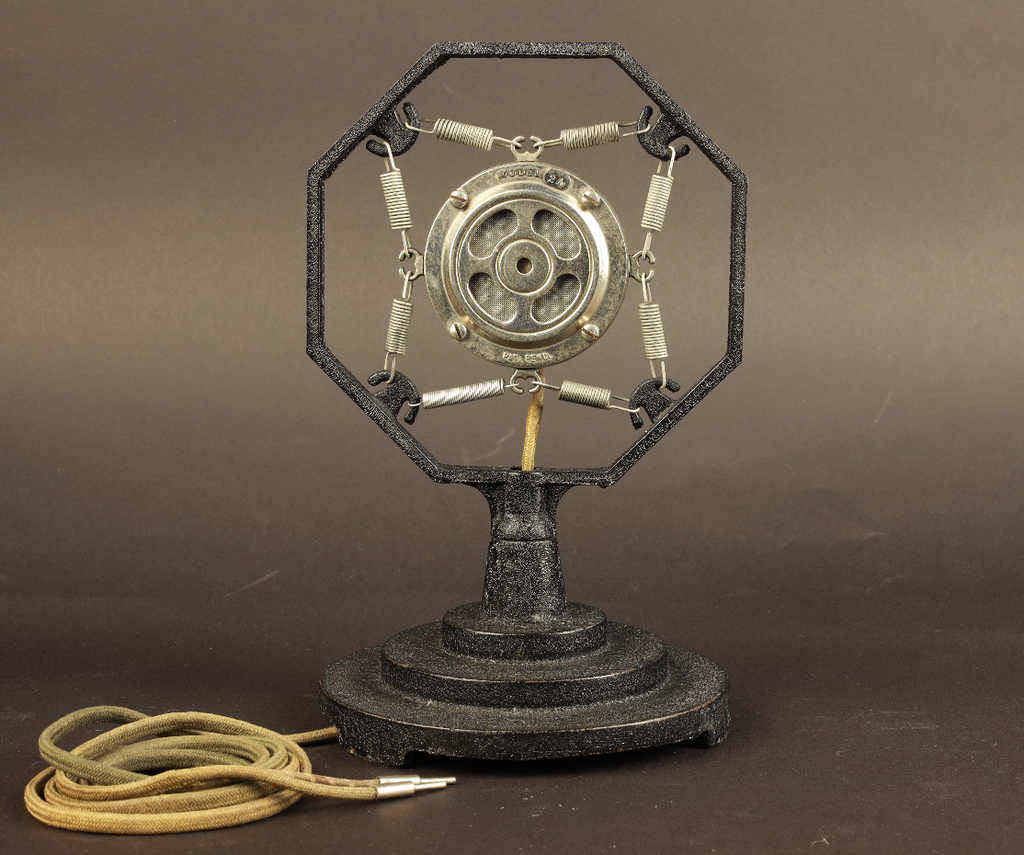
Photo by Julie Snyder
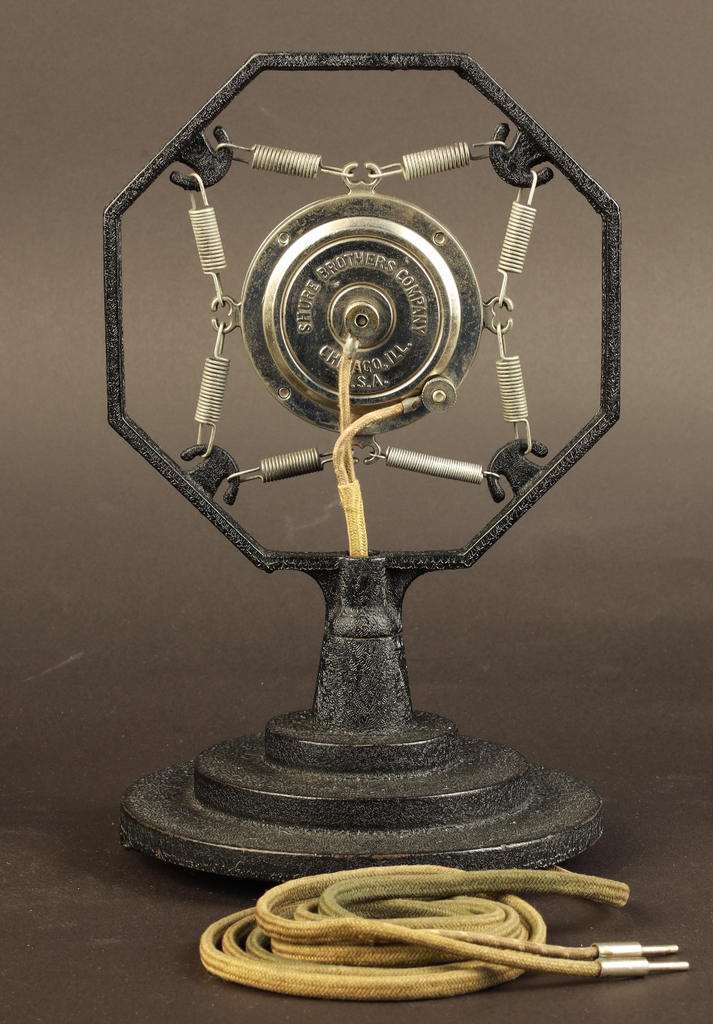
Photo by Julie Snyder
The Model 2A first appeared in our 1936 catalog. Priced at $6 [$145 in 2026 currency], the Model 2A was a single-button carbon mic that used the same housing as the Model 3A double-button. The catalog description was succinct: Suitable where voice reproduction is the main requirement. Screen protected diaphragm. Frame diameter 2.25” Net weight 5.5 ounces.
By 1938, the Model 2A had been discontinued.
Developed during the late 1800s, carbon microphones were rugged and operationally simple. Widely used in communications, no more so than in telephone handsets manufactured by Western Electric for the Bell Telephone Network, once a monopoly in the United States. It is common for a carbon microphone that is many decades in age to still work…as does this donated Model 2A.
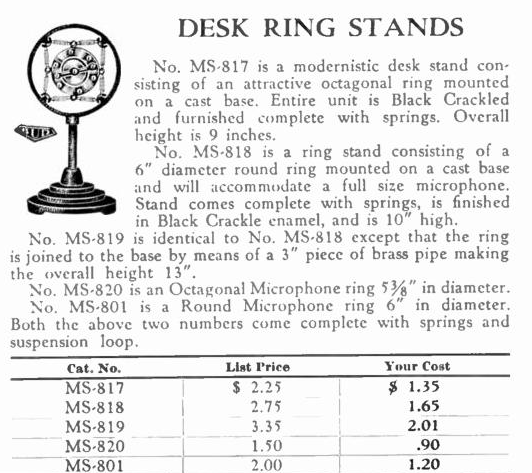
The striking black octagonal stand surrounding the Model 2A is, alas, not a Shure product. The model MS-817 table stand was sold by Bud Radio, Cleveland, Ohio. Founded in 1928 as a producer of ham radio antennas and accessories, Bud Industries today is a manufacturer of metal enclosures for the electronics and data industries.
Related information: 1936 Shure catalog
Arcana – mysterious or specialized knowledge
In the Model 2A photos above, note the lack of a mic connector on the cloth-covered cable. In the 1930s, an industry standard for microphone connectors did not exist, so mic cables were often supplied with soldered metal pins. The pin size was the same as used on vacuum tubes/valves so a tube socket could be employed as a microphone input connector.
***
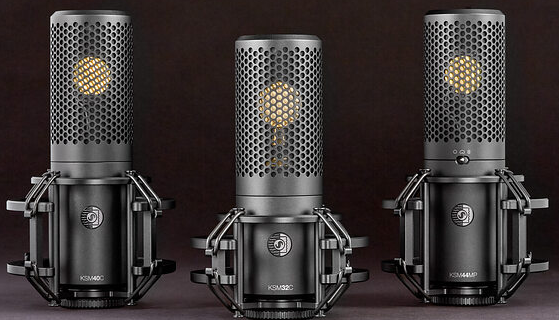
Here is a recent online review of Shure’s new KSM studio microphones.
***
Max Haas started Bud Radio; Bud was his son’s nickname. Like Shure, Bud Radio shifted to producing military products during World War Two.