
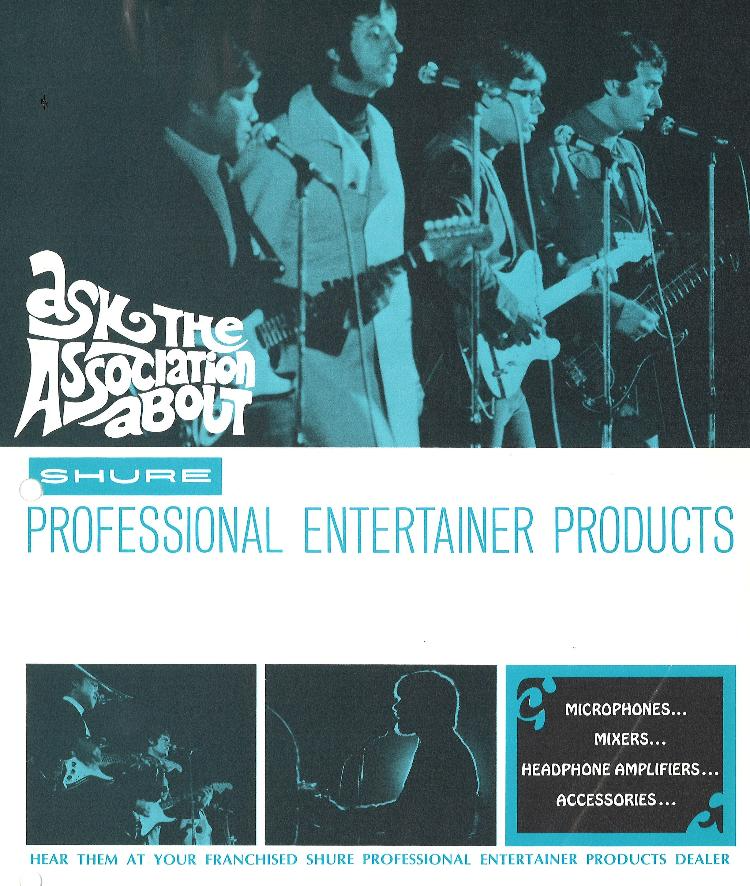
In the late 1960s, Shure introduced the Professional Entertainer (PE) line of microphones and circuitry. Designed for retail music stores, PE products were rebranded, relabeled, and repackaged versions of our General Line devices. During this era, many garage rock bands and “combos” did not own a PA system, so vocal microphones often were connected to the high impedance, ¼” phone jack inputs of guitar amplifiers. To meet this market demand, Shure PE mics were wired for high impedance, though certain models could be altered to low impedance.
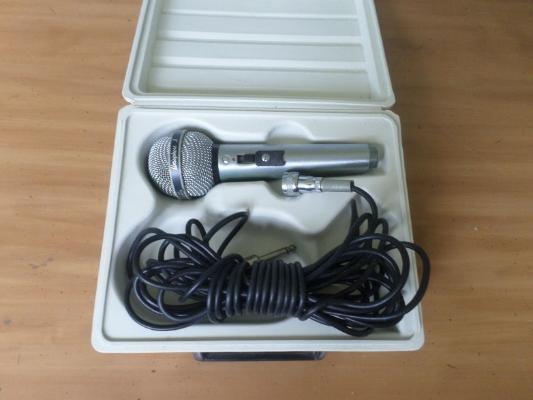
Each PE mic came ready-to-use with a prewired cable, a mic stand adapter, and a molded white plastic carrying case, frequently described as a “lunch box.” All PE mics contained moving coil dynamic elements; no condensers or ribbons were offered.
The PE line was extensive. Below are PE models with the General Line equivalents.
PE53 = 533 PE54D = 545
PE54D-CN = 545 with XLR cable PE54SH = 545S
PE55SH = 55SH PE56 = 565 without on/off switch
PE56D = 565 PE56D-CN = 565 with XLR cable
PE57 = 575 PE58 = 580
PE515 = 515 PE585 = 585
PE588 = 588 PE588B-CN = 588 with XLR cable
PE589 = 589 PE68M = M68 mixer
PE610 = M610 Feedback Controller
Some PE units were unique and did not have an equivalent in the General Line, such as:
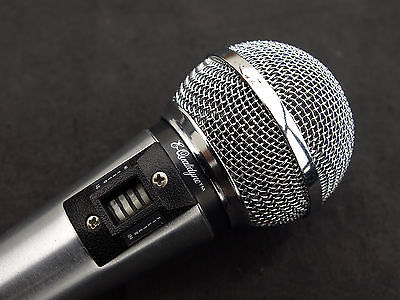
PE5EQ: EQ = Equalization. Based on the model 565S, the on/off switch was replaced by a bank of four miniature switches. Each switch altered the frequency response of the microphone. The advertising pitch read, “The control switches activate attenuation filters at crucial feedback-generating regions on the audio spectrum. Feedback control at your fingertips!”
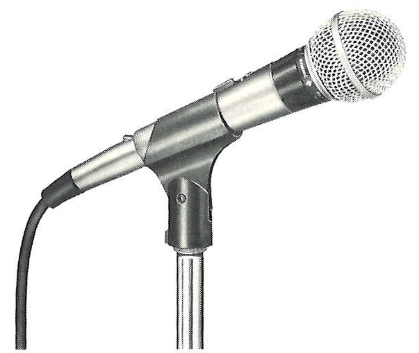
PE50SP: SP = Super Pro. An early version of the SM58S, this model was based on the 565SD. The PE50SP was painted gray like the SM58, had an SM58 grille, was low impedance, and supplied with the A95UF transformer so it could be connected into a guitar amp. “The Instant-Usage professional entertainer microphone…ready to plug in!”
PE52: This mic was dubbed “The Vagabond,” a recycling of the trademark name for the Shure wireless microphone system introduced in 1953. The PE52 employed a “noise-cancelling” element, similar in concept to the acoustical design in the SM10 headset mic. “This unique concept in stage miking is designed for close-up (1/4” to 1”) pickup of sounds within the voice range. More distant sounds, no matter how loud, such as amplified musical instruments, stage monitor loudspeakers, or applause, are effectively shut out for maximum vocal impact.”
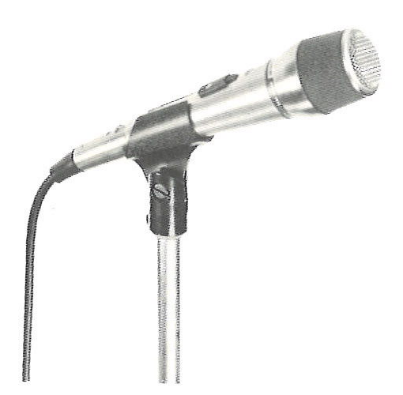
PE566 GOLD: Add gold plating to the model 566 for instant bling. “The Microphone with Everything.”
PE548V: V = Volume. Add a volume control to the model 548S to create the PE548V. “Now…Control the Volume right on stage. Among the most ingenious microphones ever designed. A volume control is built right into the microphone handle…enables you, the performer, to change the loudness of the sound system at the microphone location.” Hmm, wonder if letting the lead singer control their own volume level was a good idea?
PE585V: V = Volume. Add a volume control to the model 558 to create the PE585V.
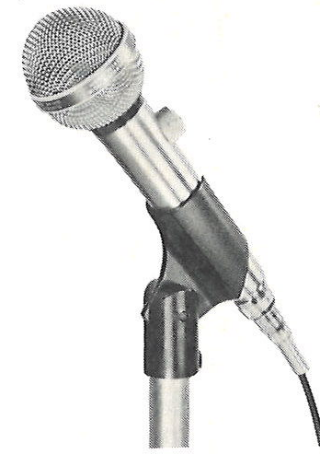
PE53V: V = Volume. Add a volume control to the model 533 to create the PE533V.
PE70RM: A four-input microphone mixer with built-in spring reverb!
By 1980, the PE line needed an update. Low impedance PA systems had become the norm and the white plastic PE lunchbox carrying case was decidedly uncool. The entry-level music market wanted low impedance mics, with a non-reflective dark finish, and a zippered gig bag.
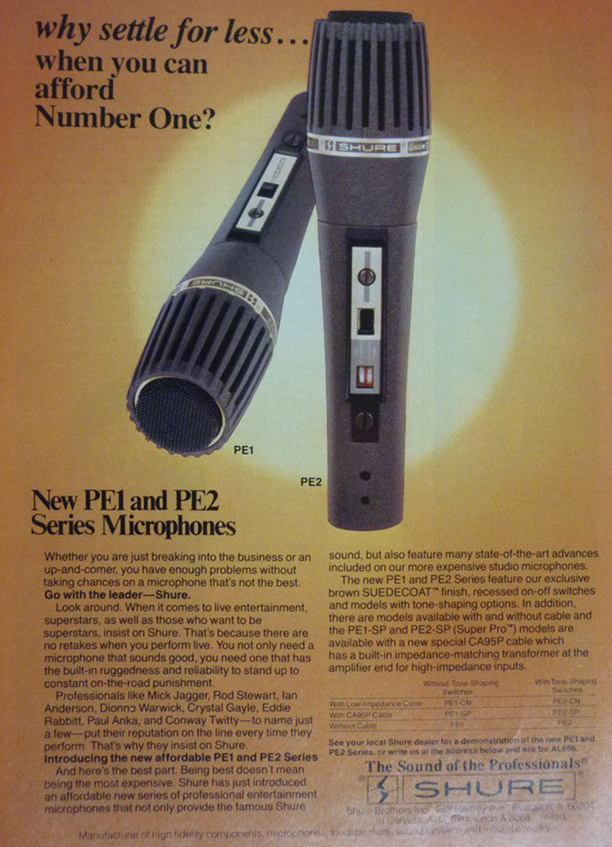
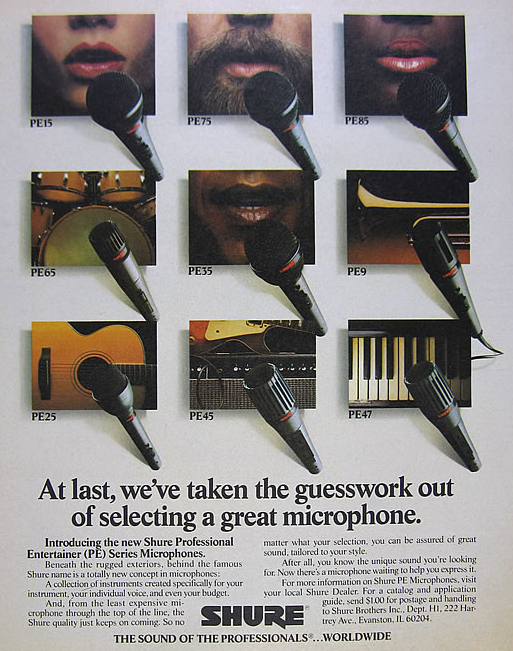
A revamped PE product line debuted between 1981 and 1984. Like the original PE line, the new PE mics were variations of existing models:
PE1 = 548 with Suedecoat finish PE2 = 548 with two EQ switches, Suedecoat finish
PE5 = SP19 PE9 = 515
PE15 = 588 PE25 = 579
PE35 = 585 PE45 = 548
PE47 = 548 with two EQ switches PE65 = 545 SD
PE66 = SM57 PE75 = 565SD
PE85 = SM58S PE86 = SM58
By the 1990s, the PE line had lost momentum and was discontinued. Today in 2026, the PGA product line serves the same customer as the PE series, i.e., the aspiring musician.
Related information: 1976 Professional Entertainer catalog
Arcana – mysterious or specialized knowledge
The PE585 is prominently featured in the new (2026) Rolling Stones video “In The Stars.”
***
In 1967, your author purchased a Shure PE585. In 1970, I loaned my mic to an acquaintance; it was returned to me in a non-functioning state. I shipped my broken PE585 to Shure; the flat repair rate was $10. Two weeks later, I received a brand-new PE585 from Shure Service and thought, “What a cool company!” Six years later, on October 11, 1976, I began my Shure career as a regional sales manager trainee.
***
Shure stopped offering gold-plated microphones because the finish durability is poor. Gold is expensive so the plating must be thin to keep the cost reasonable. Gold plating soon wears away as the microphone is handled.
***
Suedecoat was a unique finish employed for a small number of Shure microphone models. With Suedecoat, the mic handle had a soft, rubber-like feel. Suedecoat proved to be less than durable. After several years in the field, a Suedecoat finish would start to peel away from the metal handle. The PE1 and PE2 were promptly discontinued once the field quality issues of Suedecoat were discovered.
