
Sidney N. Shure often said he was building an organization of people, not an organization that built products. Early in the Company’s history, he established human relations as a cornerstone of Shure’s success. Mr. Shure approached such issues as individual growth and development, job satisfaction, morale, and productivity with the same discipline and innovation that defined the Company’s products. He studied management and sought the advice of experts in hiring, training, and team building. As in all of his other pursuits, he endeavored Employees deserve the best . . . always to find the best practices and then applied them. His guiding principle was: “Every job in the Company is important, and so is every individual. Everyone has the need for personal fulfillment, for dignity, and for recognition. It is management’s responsibility to provide the climate and the means for satisfying those needs.”
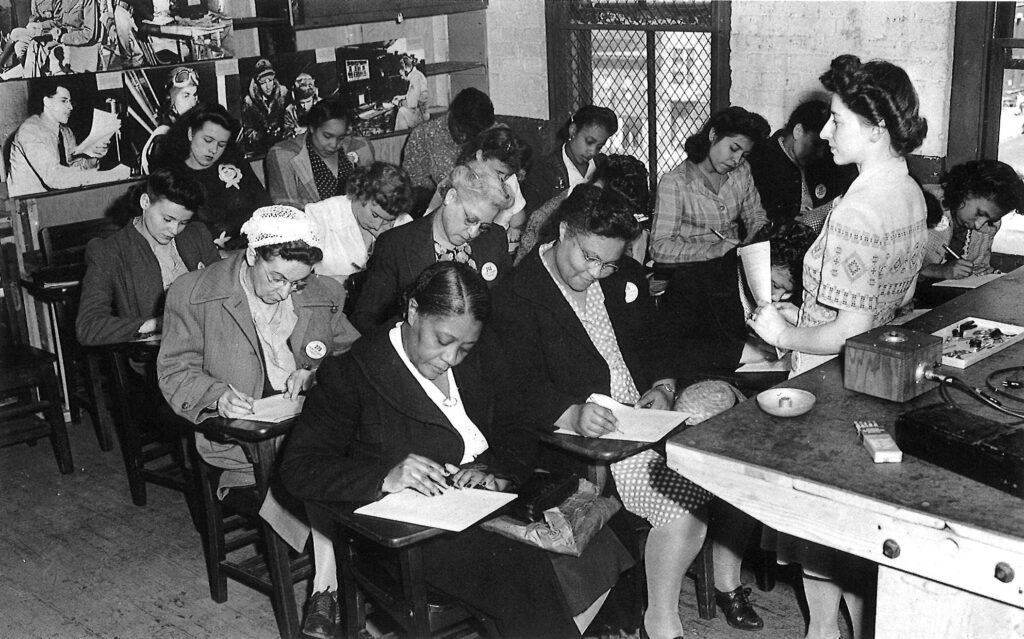
As one of Mr. Shure’s colleagues pointed out, “Even when Sidney N. Shure had a small company, he ran it like a big company.” Beginning in the 1930s, Shure developed aptitude tests for potential employees and was one of the first firms in the nation to introduce formal psychological testing in the hiring process. One of the questions that Mr. Shure sought to address was: “How do you most accurately discern whether a person tends to think in qualitative or quantitative terms?” By learning what natural skills individuals had and by understanding how they handled problems, Shure was able to place people in positions that best suited their talents.
According to an employee who was with Shure for more than 40 years: “Shure gave everyone an opportunity to reach their potential. When I started looking for a job in the 1940s, many companies simply put people into jobs; and if you didn’t have a high school diploma, you would not be considered for office positions. But Shure was different. People were trained to do jobs based on their skills; and if you did well, you could move up in the Company.”
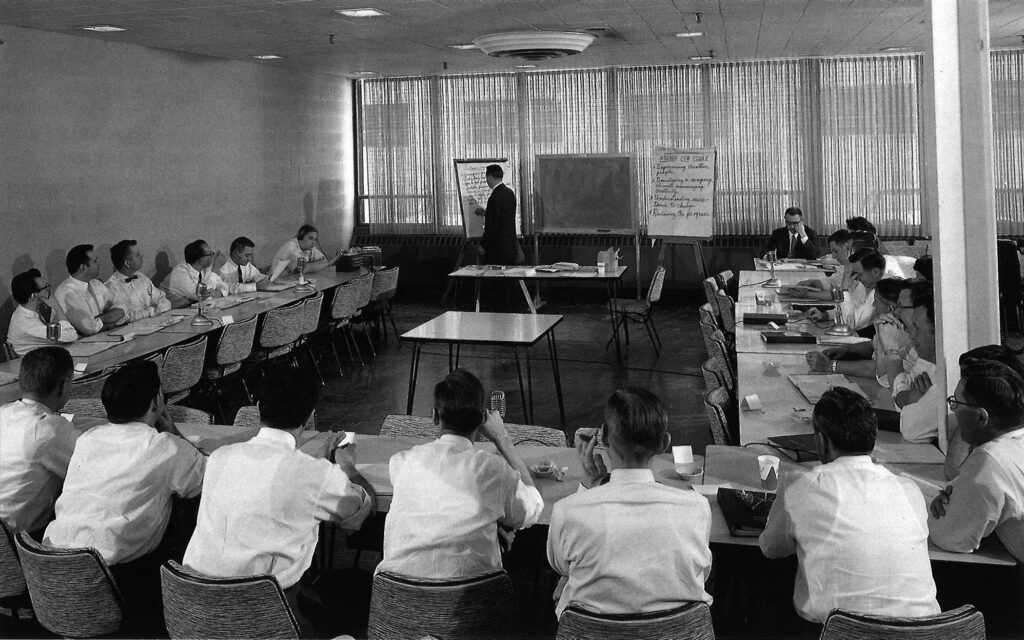
As part of the hiring process for management employees, Shure has used psychological testing to determine intellectual abilities, personality traits, and other qualities since the mid-1930s. Employees in manufacturing assembly positions were tested for dexterity in handling small parts, and candidates for office positions were given tests related to their job responsibilities.
Beginning in 1936, the Company provided paid vacations to factory personnel. At the time, only a small number of firms granted this benefit to manufacturing workers. In 1942, personnel policies covering sick leave, leaves of absence, and promotions were formulated and published. Group insurance coverage for life, accident and sickness, hospitalization, and surgery was available to all employees in 1941.
