A Personal Stereo Monitor (PSM) system may be employed as an Interruptible Fold Back (IFB) system for live or recorded broadcast programming. An on-air newscaster often wears one earphone. From this earphone, she hears the broadcast audio signal, minus her own voice, but also hears a director providing instructions, such as, “There is a breaking story. We will cut away in five seconds.”
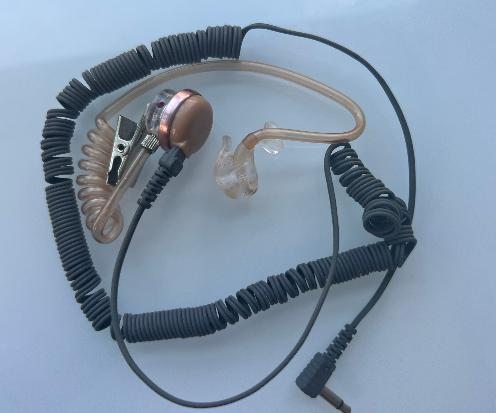
Because the broadcast audio is “folded back” into the newscaster’s ear and the director can “interrupt” the broadcast audio, the system is called Interruptible Fold Back, or IFB.
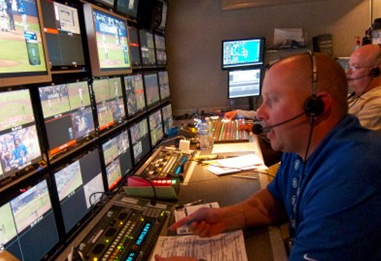
A wireless PSM (Personal Stereo Monitor) system allows a musician to hear himself and the other performers while performing live. It can also be a type of “musical IFB” as in some situations the sound engineer at the mixing board can talk privately to the performing musicians via their earphones.
Broadcast IFB systems have traditionally provided a monaural signal and low fidelity. Stereo and high fidelity were not required if the only desired signal was the spoken word. However, on-air talent has become more demanding about the audio quality delivered by the IFB system. They hear high fidelity stereo from their mobile phones and iPads, so they expect the same from an IFB system.
Increasingly, Shure PSM systems are being employed for IFB applications. The application could be a television news studio, or a radio remote from the Lyric Opera in Chicago, or a trackside interview during the Kentucky Derby. A PSM system has desired IFB features such as superb sound quality, stereo or dual-monaural operation, and rechargeable body-pack receivers.
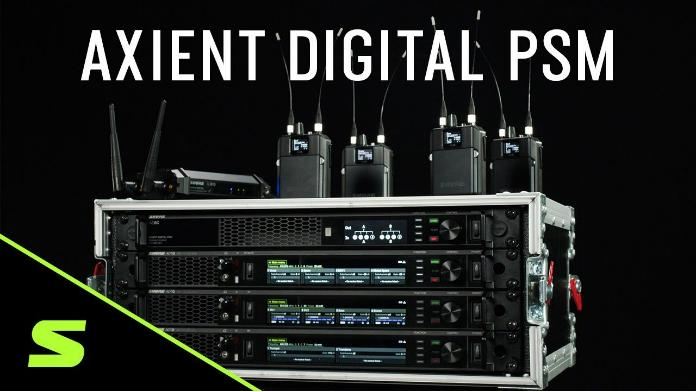
The IFB market for PSM systems continues to grow. Any organization or institution that produces live or recorded programs with on-screen/on-air talent requires an IFB system, such as broadcast studios, universities, government agencies, sports venues, etc.
Related links: Shure PSM as IFB
Arcana – mysterious or specialized knowledge
“Interruptible Fold Back” is a term from England, coined by the British Broadcasting Corporation – also known as Auntie Beeb or The Beeb. Leave it to Beeber…
***
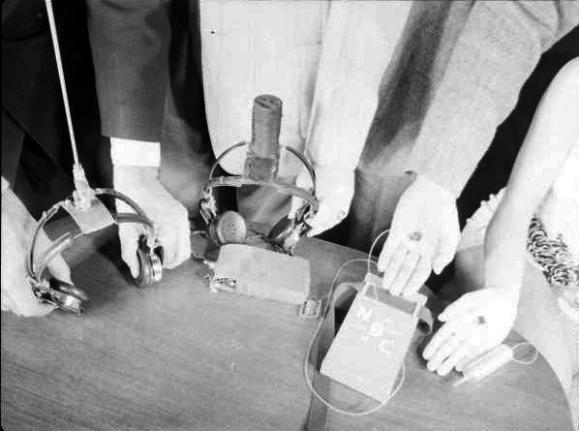
In 1944, the National Broadcasting Company’s “Radio Ear,” a one-way wireless voice link, was employed to communicate from broadcast control to floor reporters at the U.S. political conventions.