
The popular Shure Unidyne and Uniplex Microphones, introduced in 1939, were based on a patented engineering achievement—the Uniphase acoustic system. The system was a great leap forward in addressing problems created by feedback, background noise, and reverberation, because it gave the user more control over the pattern of sound picked up by the microphone.

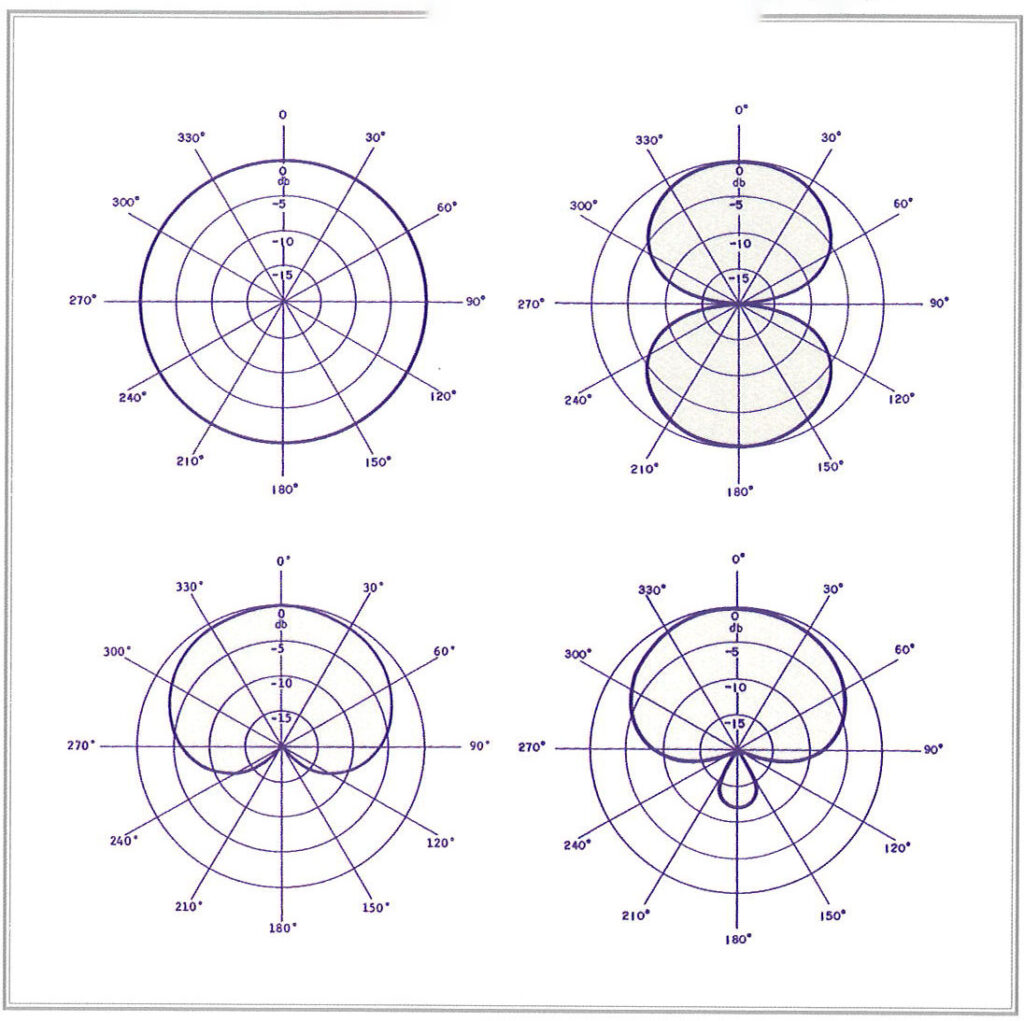
Prior to Shure’s Uniphase technology, the most common way of creating a microphone with unidirectional response was to use an omnidirectional (nondirectional) element combined with a bidirectional (“figure-eight” pickup pattern) element in a single housing. If the outputs from both cartridges were mixed together electrically in equal proportions, the results would yield a cardioid pattern. This pattern allowed sound entering from the front of the microphone to be picked up, but it rejected sound coming from the back.

Early sound engineers could obtain cardioid, supercardioid, omnidirectional, or bidirectional patterns simply by controlling the relative balance of the two cartridges with a multi-position switch or pan-pot. Unfortunately, these early dual-element unidirectional microphones had many drawbacks. First and foremost, they tended to be large and bulky. Performance was lacking as well. Since the omnidirectional and bidirectional elements did not possess the same frequency response and they were in different locations in the housing, their resulting combined frequency response and polar pattern were irregular and difficult to control. Overall, the concept was far from perfect—but better than nothing when facing serious feedback or noise problems.
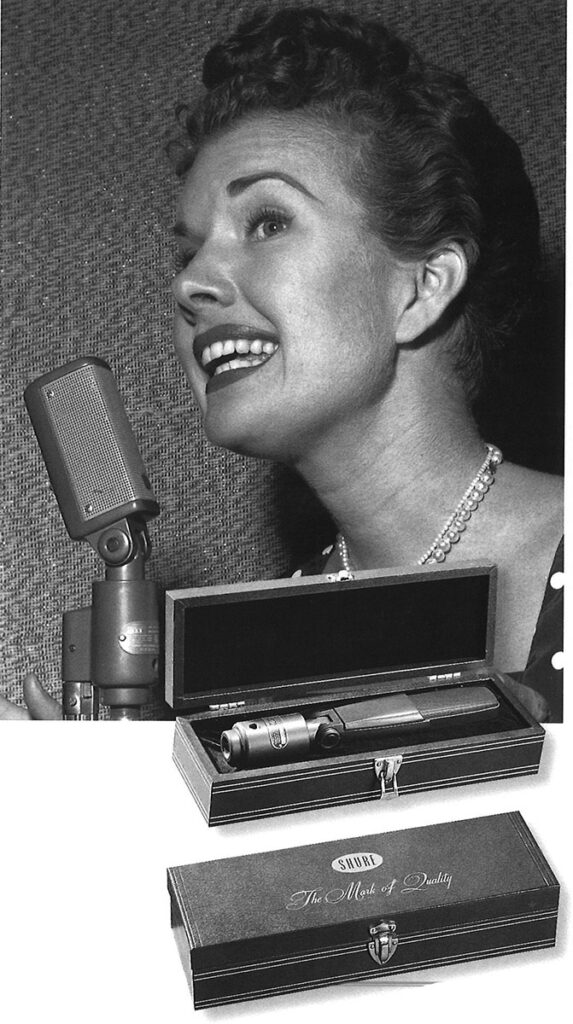
The primary advantage of the Uniphase principle over a two-unit system was economy. The Unidyne and Uniplex employed only one microphone cartridge. Moreover, they did not use ribbons or delicate moving parts; so they were far more rugged. An internal spring suspension and an advanced cushioning system enabled the unit to withstand severe mechanical shocks and handling without damage.
Shure included Uniphase technology in a number of microphone models, including the 333 Studio Microphone. Introduced in 1954, the slim, small 333 was designed for professional applications such as motion pictures, radio and television stations, and professional recording studios.
