Neither the wire recorder nor the tape recorder was available to the public until the late 1940s. So how did a hobbyist save a favorite radio broadcast in the early 1940s? By cutting a record at home using a magnetic disc cutter head, mounted on a unique tone arm attached to a special turntable.
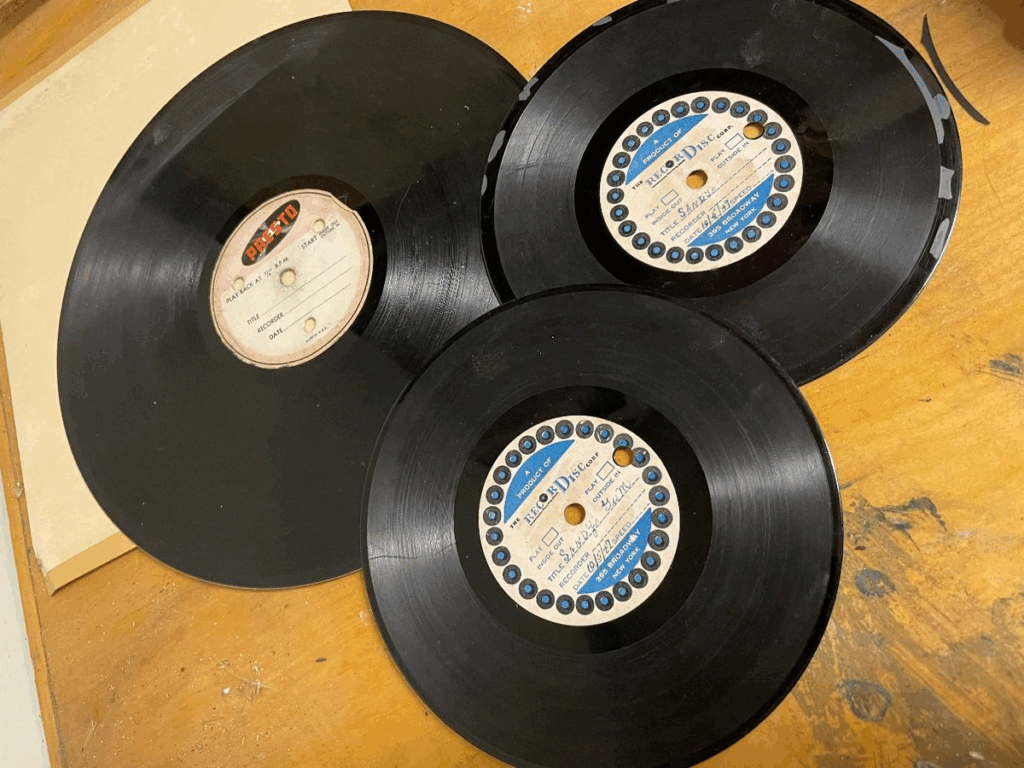
These recordings were called “transcriptions.” Mr. Shure owned a disc transcription device, kept in his home, and used it to record radio speeches of Allied leaders during World War II. To raise morale at Shure Brothers Company, he regularly played these recordings over the factory paging system. A selection of these transcription discs resides in the Shure Archives.
Below are photos of the Shure Model 96-11B Magnetic Cutter Head mounted in a tone arm. This cutter head, manufactured in August 1941, was an OEM (Original Equipment Manufacturer) product, i.e., sold directly to the transcription turntable manufacturer and included as part of their product offering.
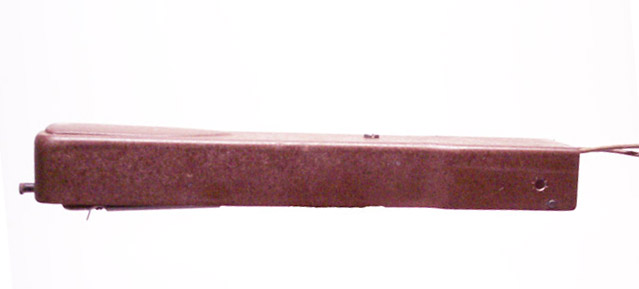
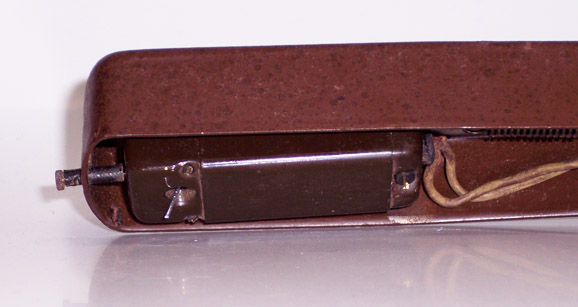
A label, adhered to the top of the recording head, reads:
Shure Magnetic Cutter Head
Type 96-11B
4 ohms (D.C.)
10 ohms at 100 C.P.S. [= Cycles per Second]
Shure Patents Applied For
Made in U.S.A.
28-98
13553
841 [= August 1941]
Using a rubber stamp, the above text in red italics was added to the label. This procedure permitted the outer case and the label to be used for each OEM variation of the cutter head.
How was the home disc recording system operated? A signal from a microphone positioned in front of the radio’s loudspeaker was amplified to drive the Shure magnetic cutter head. Or wires connected directly to the loudspeaker terminals carried the drive signal to the cutter head.
Every cutter head had a sharp, replaceable cutting stylus (needle) that inscribed a groove into a spinning blank disc placed on the turntable. Discs were made of shellac or a similar semi-malleable material.
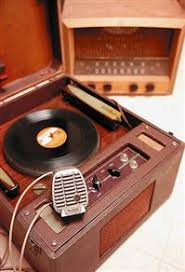
With this set-up, a hobbyist could record a radio broadcast, though a single disc would only hold 3 to 5 minutes of programming per side. Radio broadcasting facilities of that era employed transcription set-ups that offered better fidelity and longer recording times. Shure magnetic cutter heads however were targeted for the home disc recording market thus were rarely used in professional studios.
Related links: https://en.wikipedia.org/wiki/Electrical_transcription
How Shellac Records Were Made at RCA – 1942
Arcana – mysterious or specialized knowledge
Recording World War Two on Wire and Film
***
In 1941, a Shure magnetic disc cutter head was $11; $240 in 2025 currency.
***
***
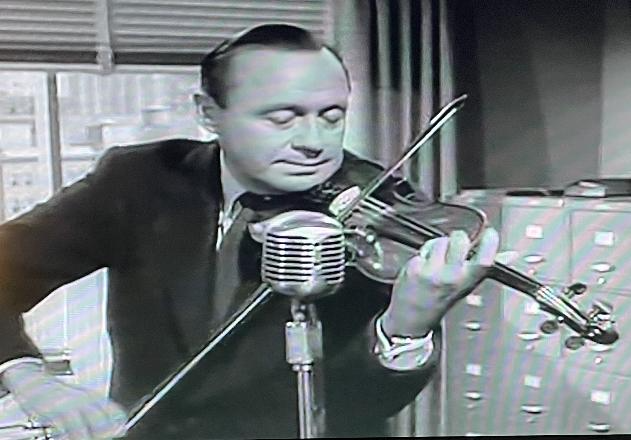
In 1955, Jack Benny played violin on his television show using our Unidyne I Model 556. The mic was allegedly feeding a disc recorder.