
In the early 1970s, the vinyl record industry was reaching its peak, with millions of albums and 45-rpm records sold every week. The music industry was issuing new albums in great numbers in a wide range of musical categories, from classical to country and jazz to rock and roll. People all over the world were beginning or adding to their record collections, and one of the most important components was the phonograph cartridge used for playing the records. These small devices, placed at the end of a tone arm in a record player, were critical to getting good sound quality from a recording. However, the tiny stylus (needle) in the cartridge gradually wore down and needed to be replaced.
The largest segment of the phonograph cartridge market was young people, who were buying millions of albums every year. One record magazine stated in 1975: “For young people, records represent the freedom that came with the technology.” These thin, lightweight discs, housed in cardboard holders imprinted with colorful images, were portable expressions of musical taste. Teenagers and college students were often seen carrying stacks of their favorite records to parties, backyard barbecues, school dances, and even the beach.
At the height of the demand for phonograph cartridges, Shure was producing more than 28,000 units a day. Approximately 25,000 came from a Shure plant built in Phoenix, Arizona, specifically for the manufacture of phonograph cartridges. The remaining 3,000 were made in Shure’s plant in Evanston, Illinois.
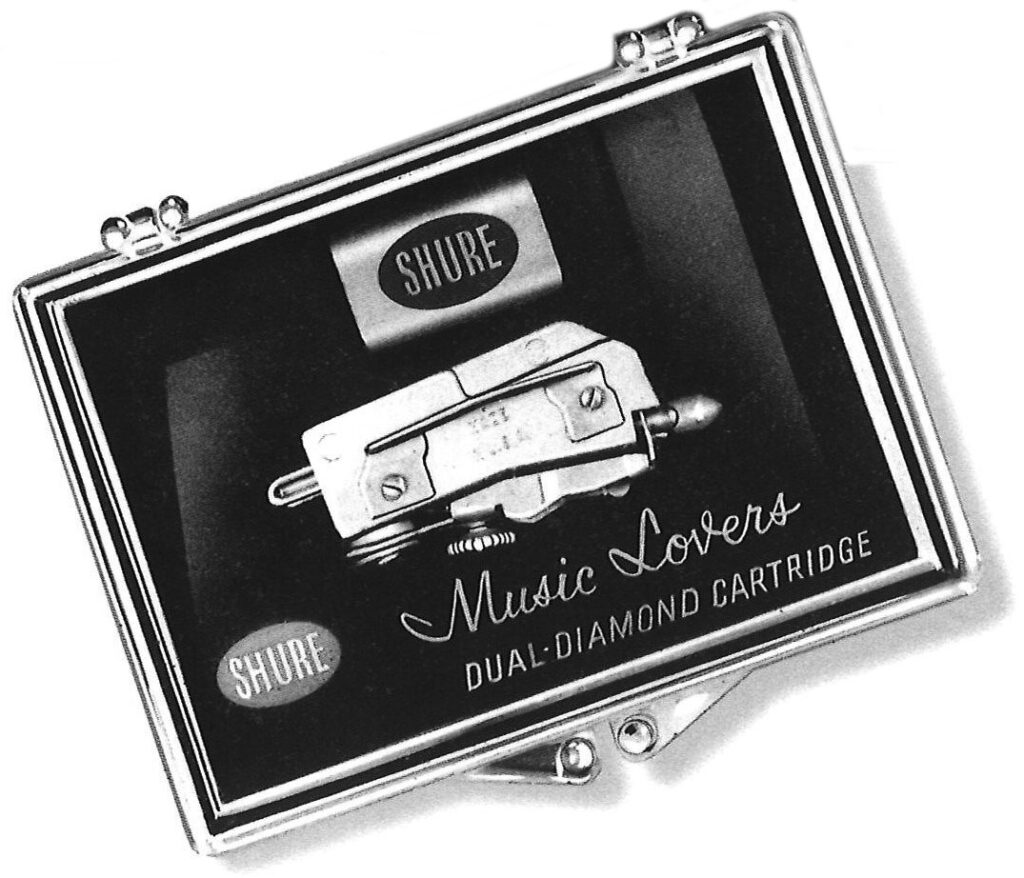
“We had a highly efficient plant, making a variety of Shure cartridges—in large quantity with very high quality,” explained Al Burton, Plant Manager for Shure Electronics of Arizona for 17 years until it closed in 1986. “We were all very proud of what we were able to accomplish, and we were proud to know that our products were being used around the world.”
The production lines operated with speed and precision, following techniques developed by Shure to achieve a high degree of quality and consistency. The ability to produce large quantities of cartridges with uniform quality was considered a remarkable achievement in view of the intricate process of cartridge
production.
“We worked like watchmakers, assembling many very small, intricate parts to produce a cartridge. But we also worked quickly,” noted one of the employees at the Phoenix plant. “Many of us had never worked on a production line; so we had to learn the skills required. Shure trained us very well, and we all worked closely together to maintain the standards of Shure products.”
Keeping pace with consumer demand
In the 1970s, Shure had dozens of models of phonograph cartridges in production. The entire line provided consumers with models that were designed for any type of record and also offered “quality models for a variety of budgets.” The cartridges were developed by Shure’s Engineering Department, which included specialists in mechanical, acoustic, and electrical engineering. Their combined talents produced designs of uncompromising quality and durability.
“We all brought a different perspective to the development of a product, and that was important to designing a cartridge that had excellent pickup qualities, would stand up to repeated use, and could be manufactured efficiently,” stated Bernie Jakobs, Senior Vice President, Engineering Department, who contributed to the design of several phonograph cartridges.
Shure’s commitment to engineering excellence and quality control nearly threatened its ability to compete in the phonograph cartridge market of the late 1950s. As stereophonic records began to replace monaural records, the Company was among the last major manufacturers to introduce a stereo cartridge. “Some might say we were slow, but it would be more accurate to say we were deliberate,” said a Shure engineer. “We did not want to bring a stereo cartridge to market that could not perform to our standards.” When Shure introduced the M3D in 1958, it was greeted with rave reviews, including a recommendation from Consumer Reports in 1959. While the public made the M3D a best seller, Shure devoted time and work to make stereo a widely accepted standard. This included providing radio stations across the United States, “which had a large investment in monaural equipment,” with detailed explanations for broadcasting stereo recordings using their monaural equipment.
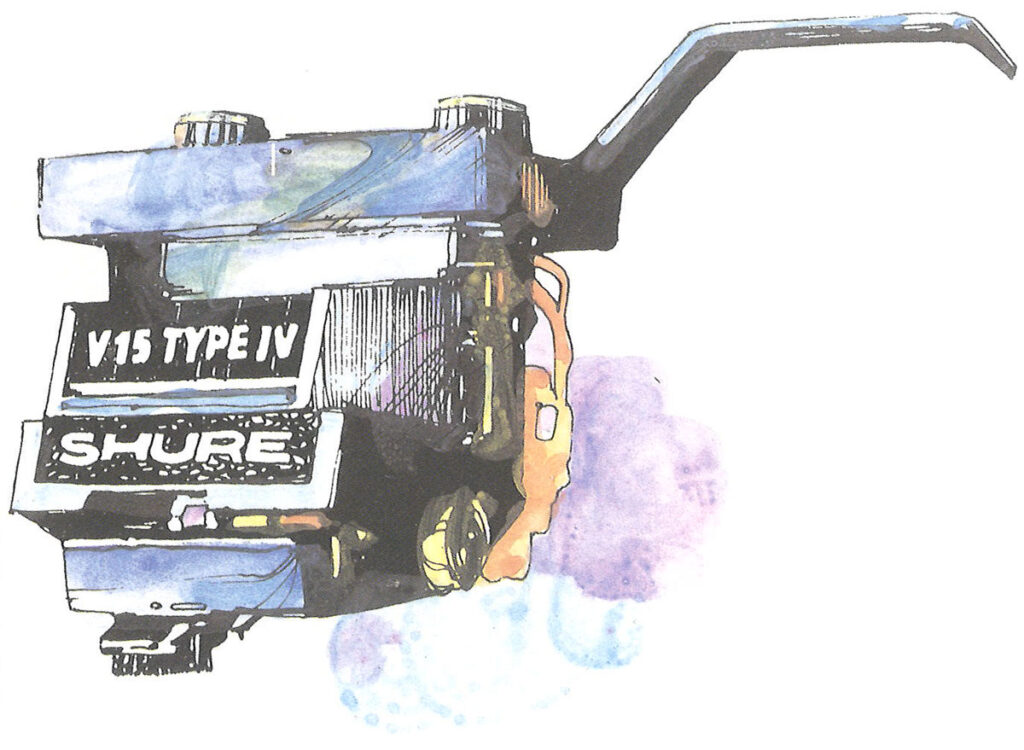
Shure cartridges were sold almost exclusively in high-fidelity music and audio stores, ensuring that customers received excellent service from knowledgeable audio professionals. However, consumers did not always recognize the advantages of buying Shure over other, often lower-priced, brands. In response, the Company developed a number of innovative programs designed to allow people to actually discover for themselves the difference between Shure cartridges and other brands.
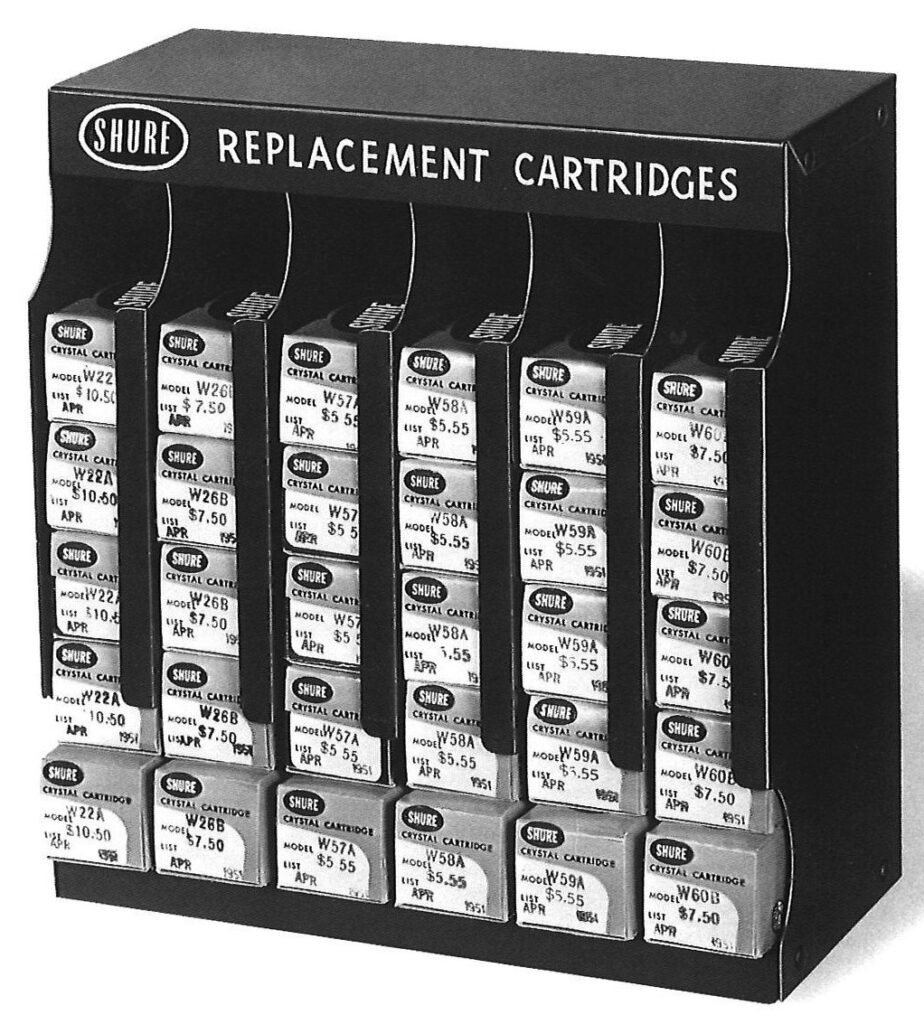
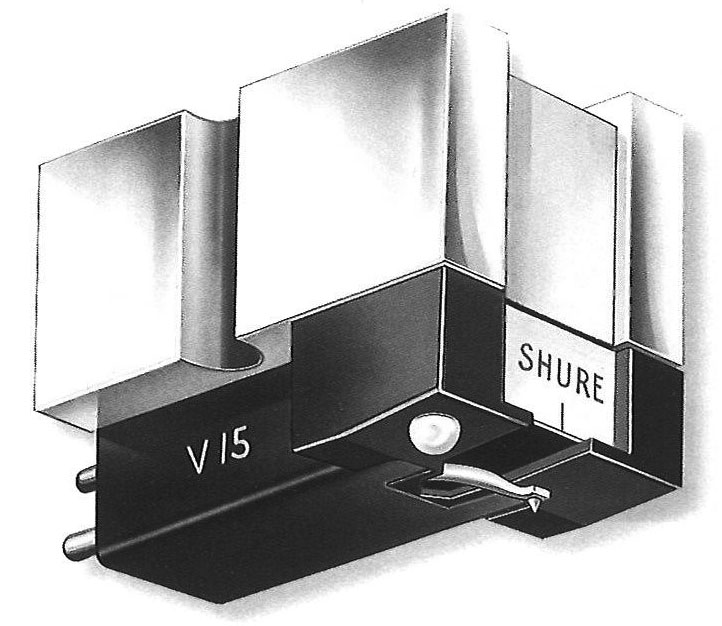
For example, starting in 1966, Shure’s Marketing Department conducted a series of Cartridge Clinics at high-fidelity stores in major cities. The participating stores invited customers to bring in their cartridges for an objective test and evaluation. The customers were given a demonstration of the Shure V-15 Cartridge, the Company’s most advanced model, and could compare its performance to that of their own cartridges.
The transition from LP to CD
The combination of innovative engineering, high-quality production processes, and successful marketing strategies contributed to making Shure the premier manufacturer of phonograph cartridges.
In the late 1980s, as the market for phonograph cartridges declined after the introduction of the compact disc (CD), Shure closed its plant in Phoenix. The Company continues to produce its famous cartridges, however, for the many consumers who still enjoy listening to vinyl records. Although the CD has become the industry standard, vinyl albums continue to be produced and experienced a revival in the 1990s, increasing the market for Shure phonograph cartridges.
