
With a futuristic profile, perfectly suited for a 1930s science fiction movie, Shure 55 Series Microphones exhibit a timeless design that has come to symbolize the very idea of “microphone.” Although the elegant chrome grille and sculptured lines have made the 55 the most recognizable microphone produced, inside the classic exterior is an equally impressive engineering accomplishment.

The Shure 55 Unidyne Microphone, the first in the 55 Series, debuted in 1939. It was a time of practical invention and distinctive design in the United States: the ballpoint pen The Unidyne: An enduring design and a respected performer appeared, Teflon was introduced, Fiberglas was perfected, and nylon was patented. FM radio receivers were presented to consumers. And the first television broadcast was produced when the National Broadcasting Company televised the opening ceremonies of the New York World’s Fair to approximately 200 experimental receivers in the New York metropolitan area. Sixty years later, all these miraculous new technologies are still around, including the Shure Unidyne.
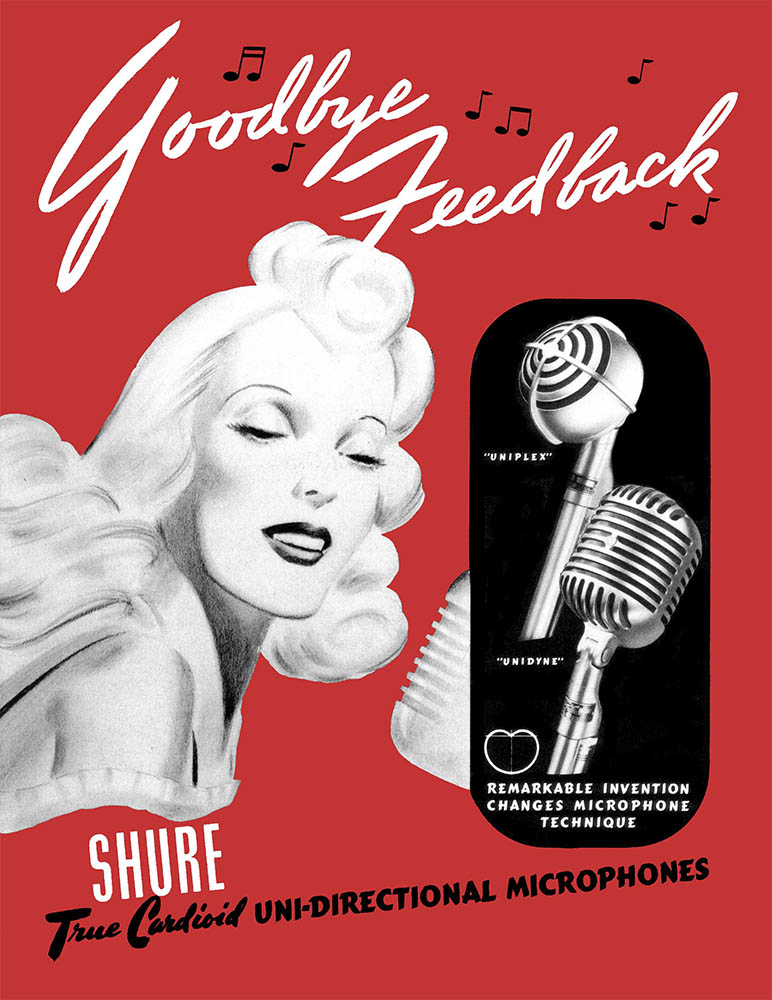
The original 55 was created as a rugged, high-performance public address microphone, but it was so superior in capturing the voice of the speaker while minimizing background noise that the 55 quickly became a mainstay of audio professionals.
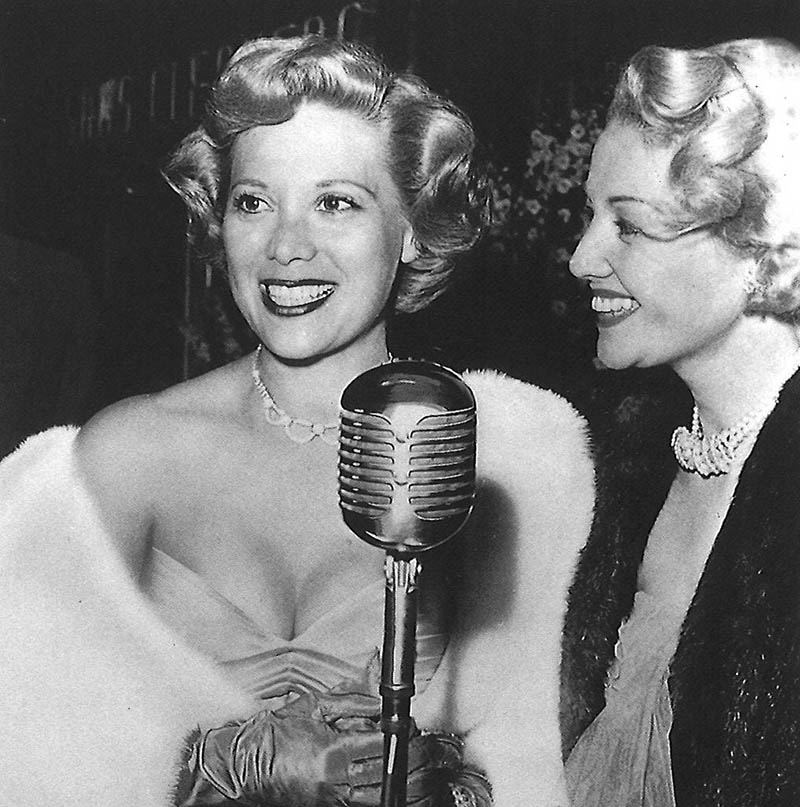
In the 1940s, the audio industry was in its infancy, and sound recording required a complex set of equipment— from microphones to record cutters to speaker systems. Each component was critical in capturing and delivering good sound quality. With the 55, Shure gave the world the first professional tool to reproduce sound in vibrant tones and rich textures—without the complex setup requirements of other types of microphones.

The Model 55’s reputation soon spread among microphone users. Speakers, entertainers, politicians, radio stations, ham radio operators, and even the military came to rely on this gifted performer. In photographs, films, television programs, and forums for public speaking from the 1940s to 2000, the Unidyne was found in the company of royalty, presidents, and generals. From the sound stages of Hollywood to political stages in countries around the globe, the Unidyne became well known, widely recognized, and highly respected.

The 55 also worked with Frank Sinatra and Doris Day during the Big Band era, Elvis Presley in the early years of rock and roll, and countless other performers over the past 60 years. Like a classic Rolls-Royce automobile or a vintage Wurlitzer jukebox, the 55 has become an enduring symbol of style and performance.
Rethinking sound, the Shure way
The development of the Unidyne reflected Shure’s willingness to address the most challenging issues in audio and to create products that were both technologically advanced and capable of performing under the most demanding conditions.
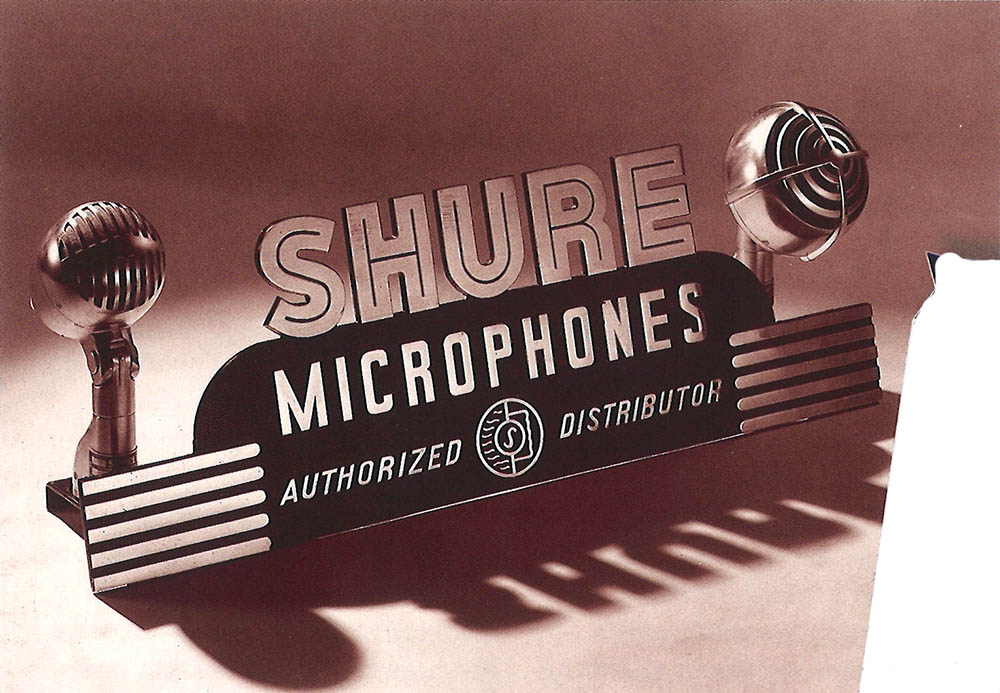
Shure Chief Engineer Ben Bauer is credited with being the driving force behind the first Unidyne. He began developing the microphone in early 1937 with this objective: create a unidirectional microphone with a single dynamic element. He began examining the physics of a single pickup element exposed to sound on its front side to obtain an omnidirectional response. With that in place, Mr. Bauer knew that if he could partially block the backside of a microphone cartridge, in theory he would achieve a cardioid response. The result of his effort was what Shure would later name the Unidyne, which used a proprietary “uniphase” technology. No other microphone could duplicate it.
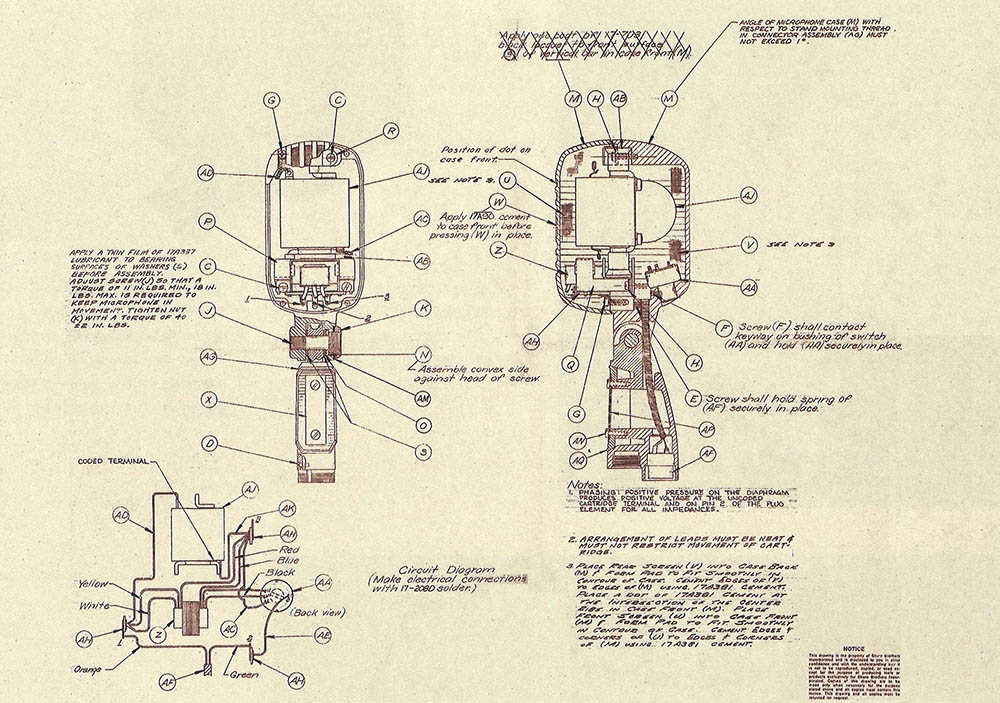
Like most great innovations, Mr. Bauer’s Unidyne was elegantly simple. The microphone had a series of front and rear openings that allowed sound waves to reach both sides of the diaphragm. The sound waves reaching the diaphragm from the rear had a longer path and passed through openings that produced a time delay between the sound entering from the rear and sound waves striking the front of the diaphragm. By varying the amounts of acoustical resistance encountered at the rear openings, Mr. Bauer was able to achieve cardioid, supercardioid, or hypercardioid patterns using a single element; and the first true unidirectional dynamic microphone became a reality.
In the early 1940s, the Unidyne was sold in three distinct configurations. Each configuration had a different impedance to satisfy specific microphone applications. The Model 55A utilized a low-impedance design for operation in 35-50 ohm systems. Model 55B was for 200-250 ohm systems, and the Model 55C was built expressly for use with high-impedance equipment.
The original Unidyne was the best-sounding microphone available, and it set a new standard of high-quality audio reproduction. True to Mr. Bauer’s design theories, the directional response was more predictable and better behaved than its predecessors. It offered a tremendous new ability to control feedback and reduce the pickup of ambient noise. It was also smaller than other microphones, giving performers and audio engineers greater flexibility in setting up and using the Unidyne.
Between 1939 and 1946, the Unidyne design remained largely the same, with the exception of new model numbers. However, Shure was able to adapt Unidyne technology to other products, including the Model 555, introduced in 1940 as a broadcast microphone. The 555 had an improved isolation mount and an external call-letter plate. By 1947, the broadcast version had become Model 556. Three separate models designed for use with different impedances were replaced with one single model (Model 55), which was equipped with its own multi-impedance selector switch, located under the case at the rear.
Making it bigger by making it smaller
In 1951, after nearly 20 years of unprecedented success in the microphone industry, Shure was preparing to introduce another breakthrough, again led by Chief Engineer Ben Bauer. The idea was to make the Unidyne an even bigger success by making it smaller. First unveiled in 1951, the new “Small Unidyne” Microphone (featuring the Unidyne II cartridge) improved upon all the features that had made the original Unidyne such a success.
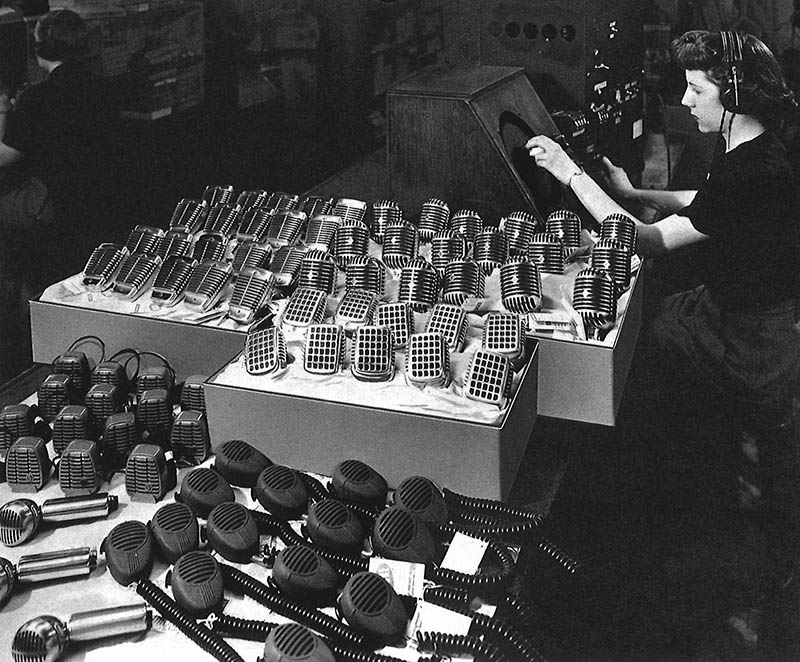
As the name implies, the Small Unidynes were lighter in weight and more compact than the originals. Compared with their predecessors (which were still offered as “Standard Unidynes” in 1951), the Small Unidynes were about two-thirds the size of the original and were available in two model configurations. The Model 556S had sound pickup characteristics suited for broadcast, and the Model 55S was engineered for general-purpose use. Internally, the new cartridge improved performance across the board, with the addition of better magnetic materials, diaphragm suspension, and cartridge isolation. Ambient noise pickup was reduced even further, and frequency response was improved.
Small Unidynes were also equipped with a multi-impedance selector switch. The new cartridge extended the success of the Unidyne Series and expanded the market for this popular microphone model. In 1988, Shure again updated the cartridge in the Unidyne.
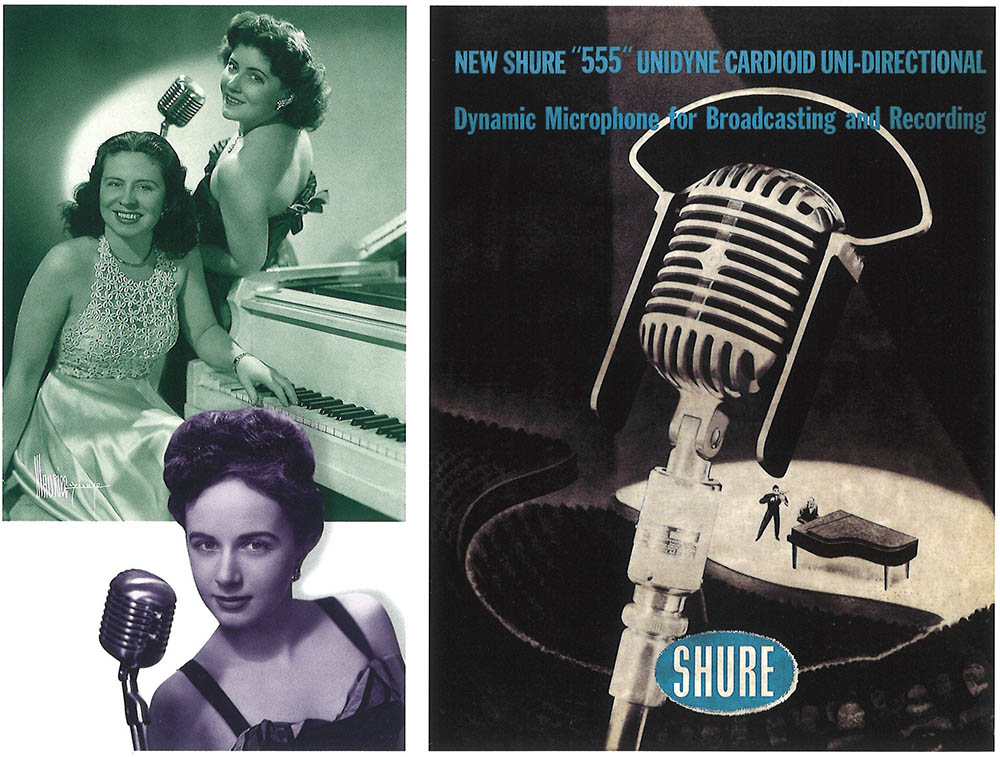
The Model 555 Broadcast Cardioid Dynamic Microphone, unveiled in 1940, “solved troublesome sound pickup problems in studio and remote applications.” The double wind screen was one of the unique features that “cut down reflection and reverberation effects, and reduced background noise pickup.”
The microphone offered in 2000 is outwardly almost identical to the 1951 version. Other than a modification made to each model’s base in 1962 and the elimination of the multiimpedance selector switch in the late 1970s, the only other visible changes made were to the lining material in the housing. This was reddish-brown silk in the earliest models, but it was changed to blue, then black, and finally to black foam.
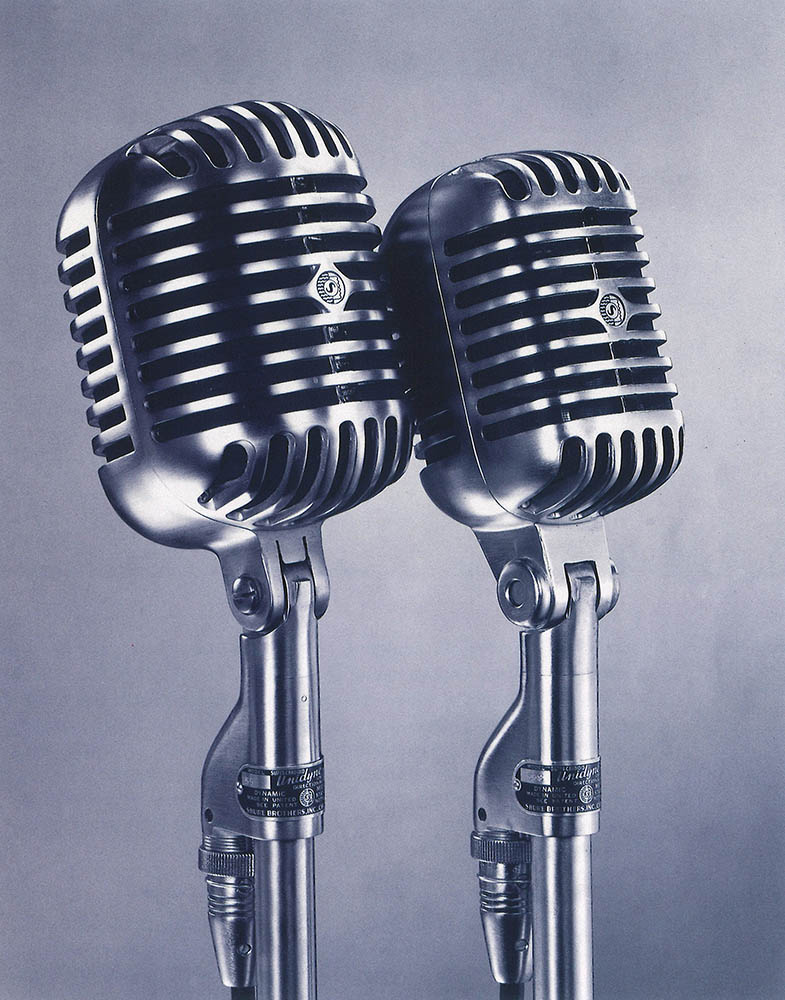
Shure’s 2000 catalog shows the 55SH Series II, which is as reliable as all of its predecessors. The microphone’s cardioid/dynamic design has even better frequency response and directional characteristics. It continues to be the benchmark of performance and dependability established by the original Unidyne.
The status of an icon
As the oldest microphone still in production, the Unidyne has become the focus of much scrutiny and analysis. Like a legendary movie star, a classic building, or a famous painting, the 55 inspires people to speculate about its unique qualities and why it remains popular more than 60 years after it debuted.
“Part of the answer lies in the fact that Unidynes have become cultural icons,” suggested Tim Vear, of Shure Applications Engineering, in 1996. “Technically speaking, they also had the luck of being ‘dynamic’—which was the microphone design that won out over everything else. Carbon and crystal microphones fell by the wayside, but dynamic microphones live on.”
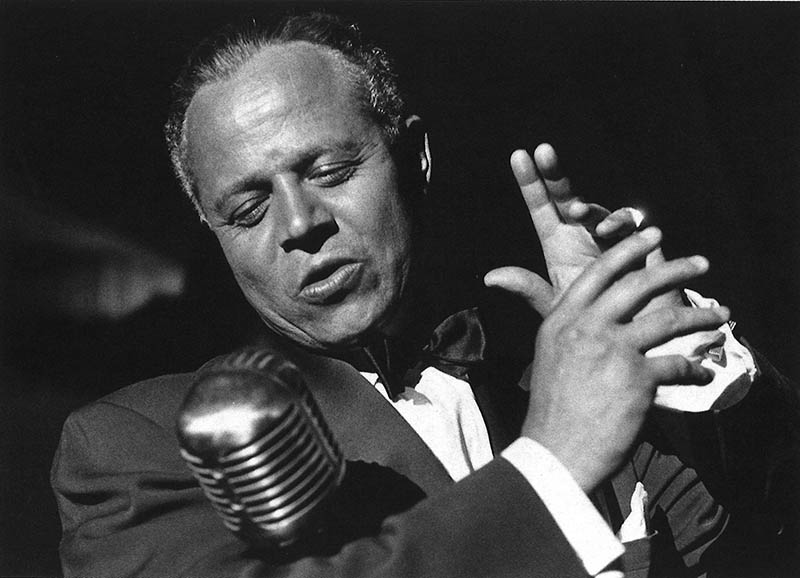
As a student of Shure history, Mr. Vear has studied the development of the 55 Series and the stories surrounding its long and distinguished history. “With a few exceptions, I don’t think there are any other microphones in production today that go back as far as the 55 Series models,” he stated. “The reality of having been around for generations has helped make these products an icon, both internally here at Shure and to the rest of the world. If you look around our offices, you’ll find 55 Series pins, engravings, posters, etched paperweights, and bookends. The image has even served as a watermark on invoices. When people within our industry see a 55 Series Microphone, they can’t help but think of Shure. Conversely, when people outside of the industry see one, they may be transported to a different era. Something I refer to as a ‘coolness quotient’ also adds to the icon status of the 55 Series. Viewed from a design perspective, they exude all of the coolness of a 1957 T-bird [automobile], a Stratocaster guitar, or a James Dean movie. They are, however, much more than a symbol. They are real microphones, which adhere to the Shure tradition of excellence in performance and quality.”
