
Beginning in the 1930s, Sidney N. Shure developed an interest in photography. He took his camera on sales trips throughout the United States, and his photos were often on display in the factory. His son Bob recalls his father’s passion for the art of image making: “He built a darkroom, studied processing chemistry, and did a lot of photographic studies of light on different objects. He considered it a hobby, but he approached it like a professional. As in anything he tried, he wanted to excel at it.”
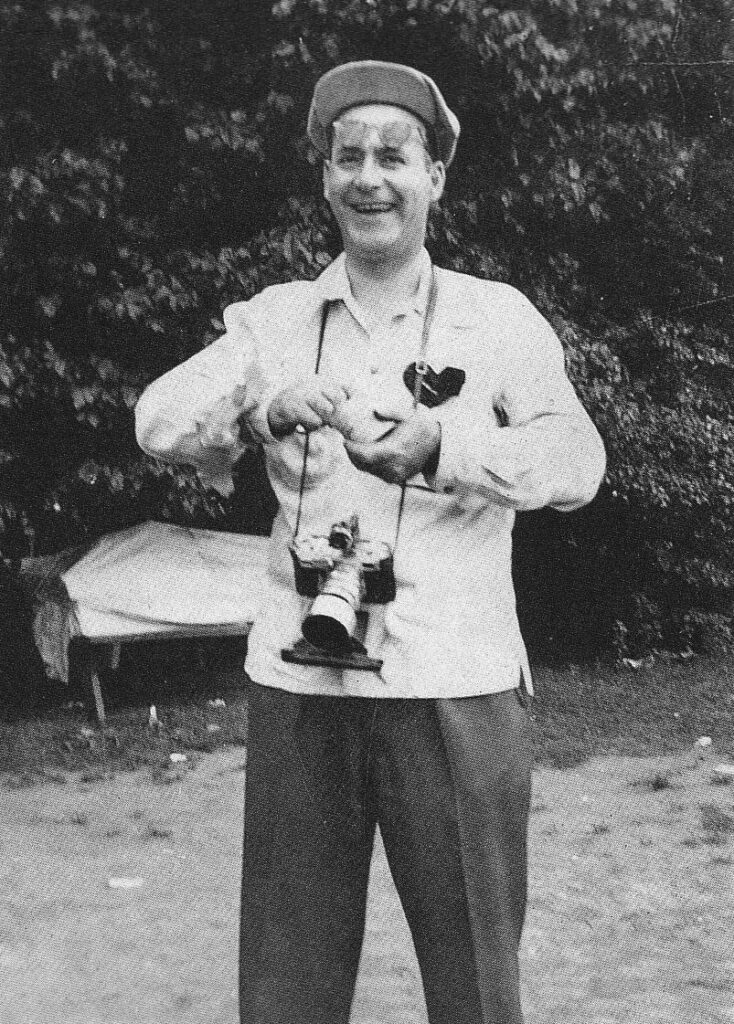
Sidney N. Shure is prepared to take photos at the first Company picnic in 1942.
In the 1940s, his interest in photography extended to his job as President of the Company. During World War II, the number of employees rose dramatically to more than 1,200 people. Each employee wore an identification badge with a photograph taken by the Company photographer — Sidney N. Shure. It was an excellent way to practice his hobby and meet new employees. On the first day of work, each new employee was directed to a camera installation, designed by Mr. Shure, to be photographed.
Mr. Shure took the job as Company photographer seriously, making every effort to please each person. If a photograph was not as “flattering” as the employee had hoped, Mr. Shure would gladly take another. He held his position as photographer for two years until, as one executive said, “He had to quit the extra job to concentrate on his primary job.”
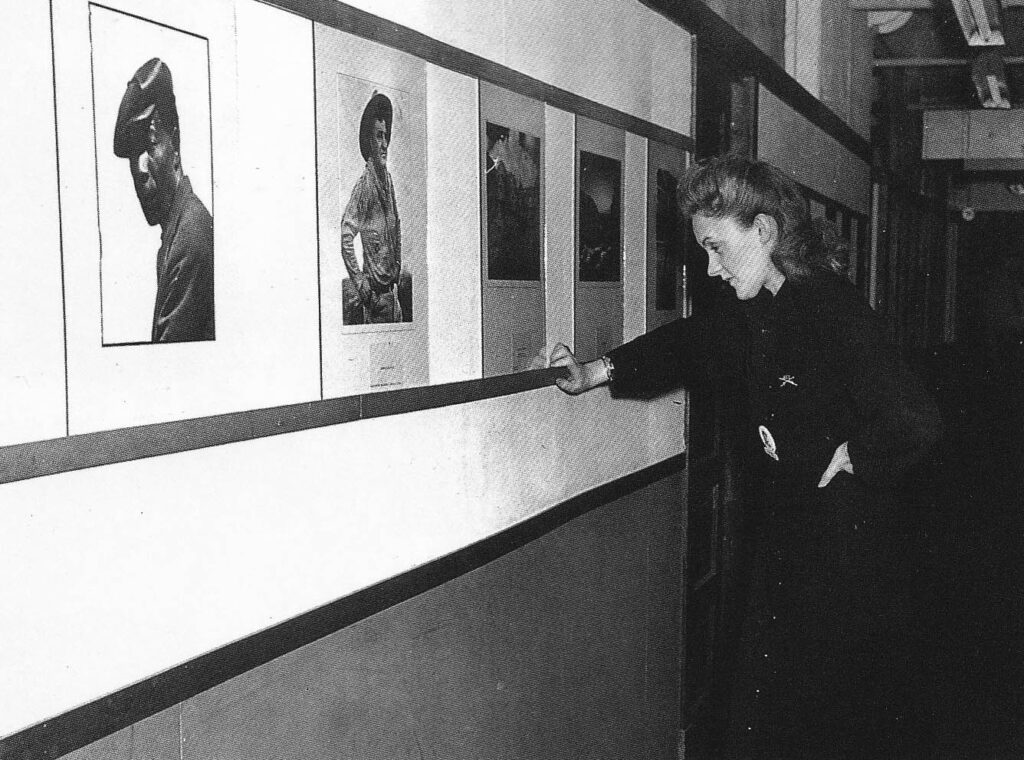
On May 20, 1943, Dene Raterman looks at an exhibit of Sidney N. Shure’s photographs in the gallery located on the fourth floor of the plant. The gallery opened in 1942 and featured photographs of New Orleans, Yosemite, Times Square, Seminole Indian arrow makers, and the Chicago Bears football team.
Mr. Shure continued his photography into the 1950s, compiling an impressive collection of images from vacations and business trips.
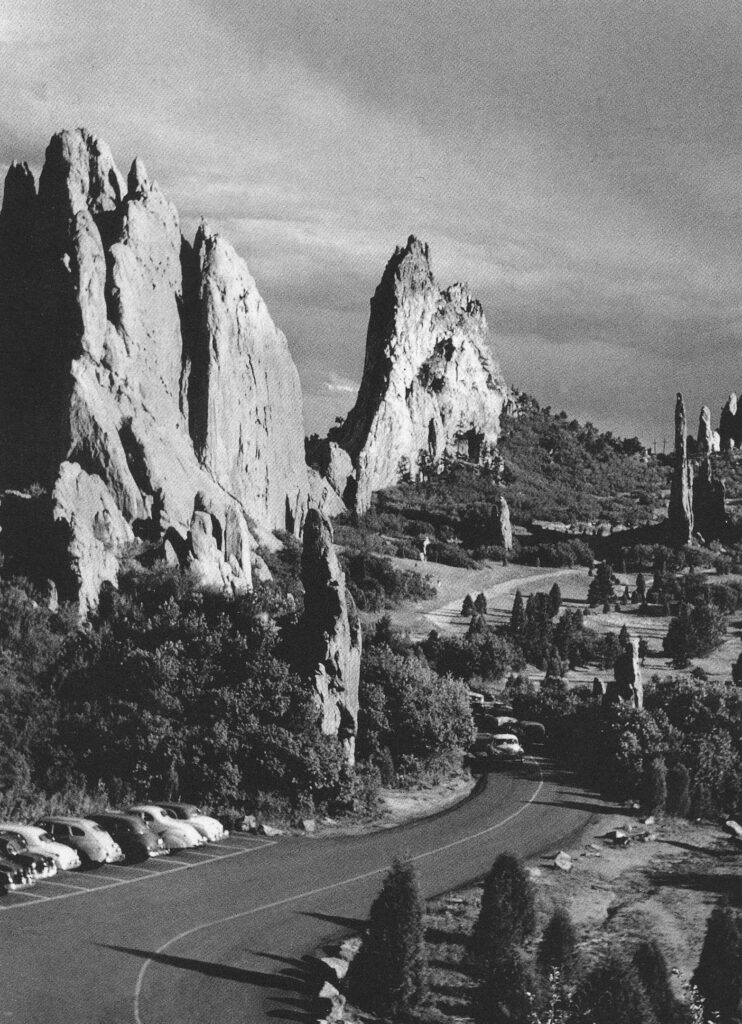
Photo by Sidney N. Shure, circa 1939.
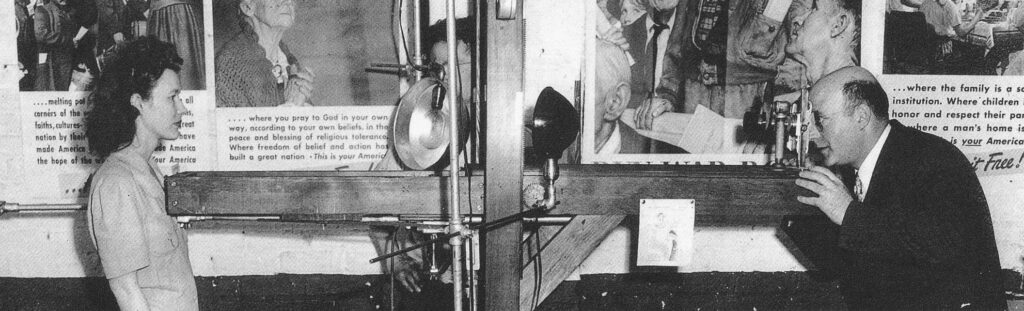
On June 12, 1943, Sidney N. Shure, who served as Company photographer for two years, prepares to take an employee identification photo of Ruth Mitchell. Steve Mikolaczyk (partially hidden by the camera) assists by operating the lights.
The machine used to take the photos was a complete studio on wheels, designed by Mr. Shure and built under the supervision of Joe Marty. The portable studio was very efficient, since the camera was always in focus and corrected to the light used to illuminate the subject.
Two photographs of each employee were made, as government regulations required at the time. One was used on the employee’s pass card; the other was kept on file in the Personnel Department.
