
In the late 1920s, the Chicago metropolitan area was growing rapidly, and its image was changing from the “hog butcher to the world” to a modern industrial and commercial city. During this transformation, Chicago developed many of its most enduring cultural institutions. By 1928, the Field Museum of Natural History was a dazzling new building just south of the center of the city. Nearby were the John G. Shedd Aquarium and the Adler Planetarium. In the 1990s these were combined to make a museum campus. Furthermore, the Art Institute and Orchestra Hall added to what was called “the largest, oldest, and most architecturally impressive ‘cultural center’ in the United States.”
As the city was creating institutions for the public, an emerging technology called radio was being billed as an instrument capable of bringing culture directly into the home. Two Chicago radio stations were among the first in the country to broadcast live musical events, news programs, and radio dramas. The market for radio sets was growing, and Shure was among the many local companies competing to meet the demand.

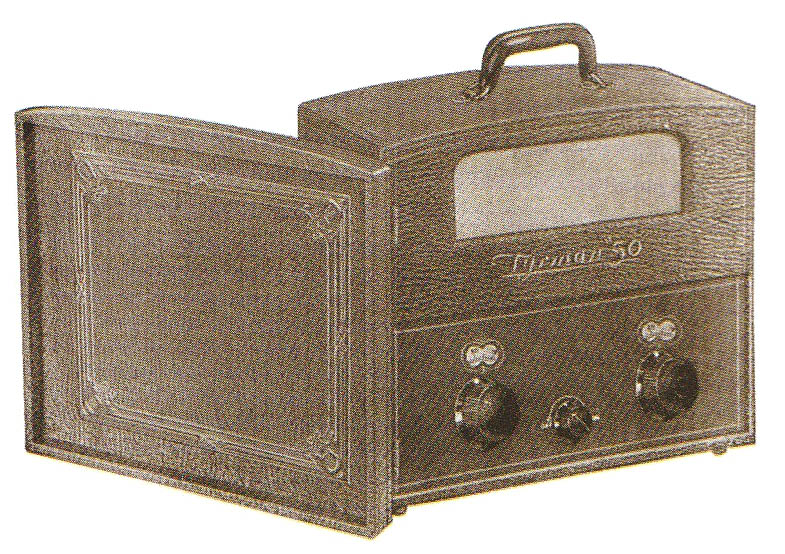
The Shure 1929 catalog featured a number of fully assembled portable radios, including the Tyrman 50, which was “made by the same engineers who introduced the shielded grid tube to the American market.” The Tyrman 50 weighed 241⁄2 pounds, and the domed case was dark brown artificial leather “to match the finest luggage.” Retail price: $64.50.
Around Chicago, consumers could find elaborate displays of parts kits for building radios in electrical equipment stores, shops for musical instruments, hardware stores, department stores, and even sporting goods shops. Specialized radio shops also sprang up, and there were hundreds of door-to-door salesmen pitching a variety of radio equipment.
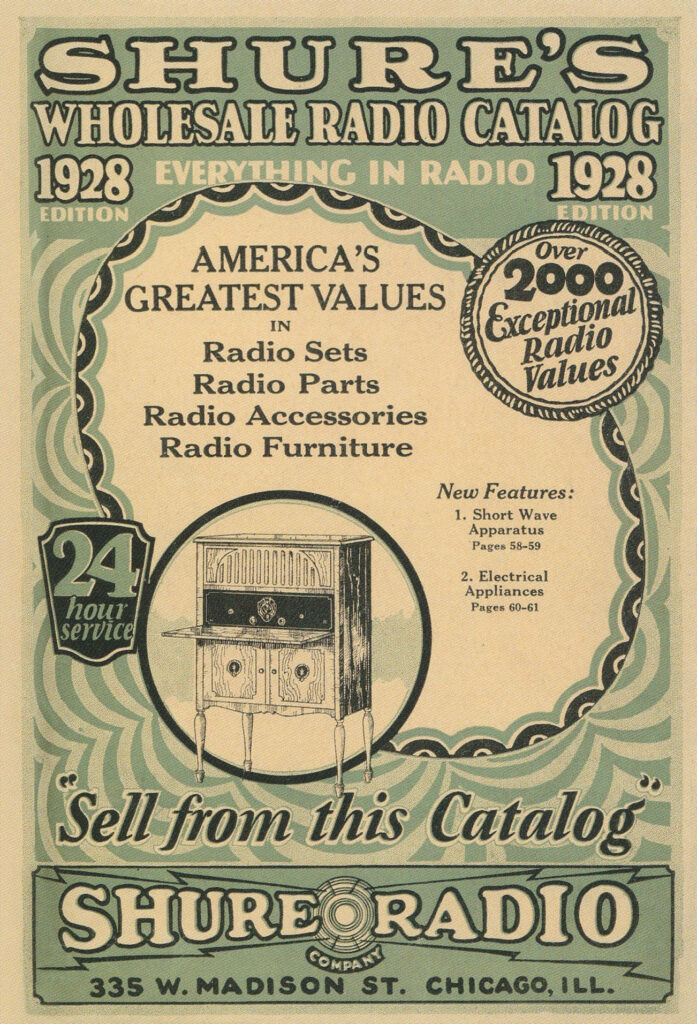
A 1928 edition of the Shure catalog showed a wide selection of radio sets and components. At the time, radio was gaining popularity, and custom-built radios constructed from kits were being replaced with factory-built radios. In 1930, radios accounted for 90 percent of sales in the electronics industry. By 1932, Shure had made the transition from a radio parts wholesaler to an audio equipment manufacturer.
To stand out in the crowd, the Shure catalog was designed to be eye-catching and informative. The 1928 catalog featured a full line of radio kits and stylish radio furniture. One popular kit was the 720 Screen Grid Six Receiver, advertised in the catalog as delivering “performance with a vengeance.” The ad also claimed that the receiver “brought in, consistently, both East and West Coast stations. Think of it! KFI [broadcasting from Los Angeles, California] was heard in Chicago through WCFL, a very powerful local radio station, one mile away.” The retail price of this 18-pound marvel was $72.50, an average worker’s wages for about four weeks. To build customer confidence, Shure backed this product, as it did all the products it sold, with a “10-day, money-back, without-a-question guarantee.”
By the 1930s, more than half of American homes had radios, and Shure began a transition from distributor to manufacturer. The Company’s first manufactured products, microphones and accessories, were used by radio stations for their broadcasts. Most of the early radio stars of the 1930s and 1940s used Shure products, from newscasters and comedians to country music stars and civic orchestras. During this era, before the introduction of the tape recorder, radio broadcasts were “live,” and Shure products proved to be reliable and versatile performers in the studio.
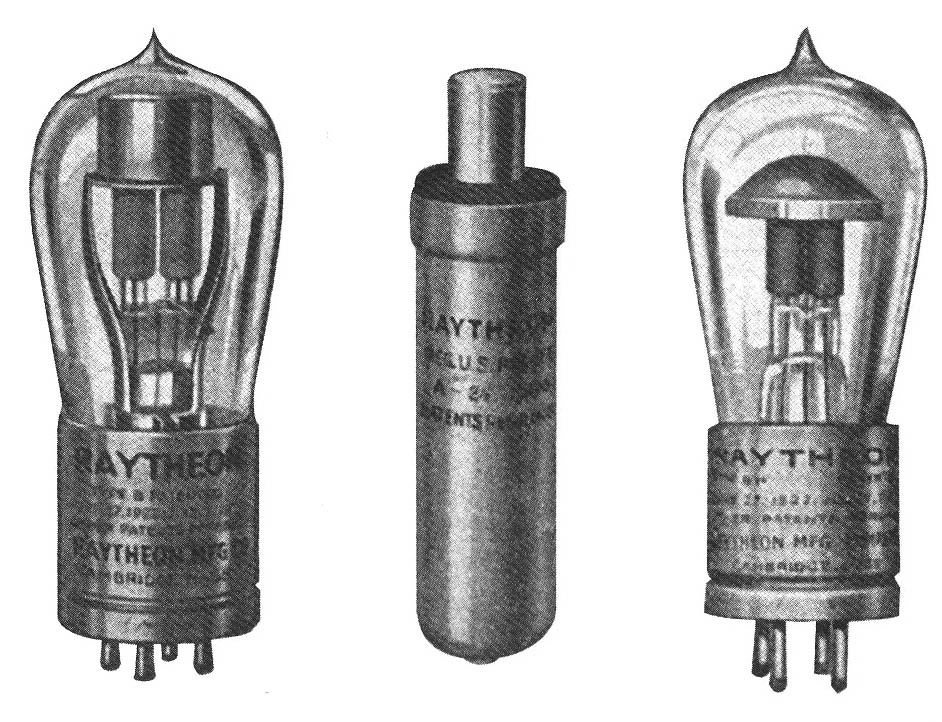
Tubes from Raytheon were among the many radio components that were featured in the Shure catalogs in the late 1920s.
