Inside the cockpit of a World War II military plane, the noise was deafening. Whirling propellers and roaring engines made it all but impossible for the flight crew to communicate with each other as well as with other aircraft and military command centers. Conventional microphones could not easily distinguish the background noise from the voices of the crew. The solution was an innovative throat microphone, the T-30, that Shure began manufacturing in 1942. These small, sensitive devices were sewn into the middle of an olive-drab strap that held the unit against the speaker’s Adam’s apple, allowing the microphone to pick up vibrations in the throat. The vibrations were then translated into sound that could be heard inside the planes and across the airwaves.
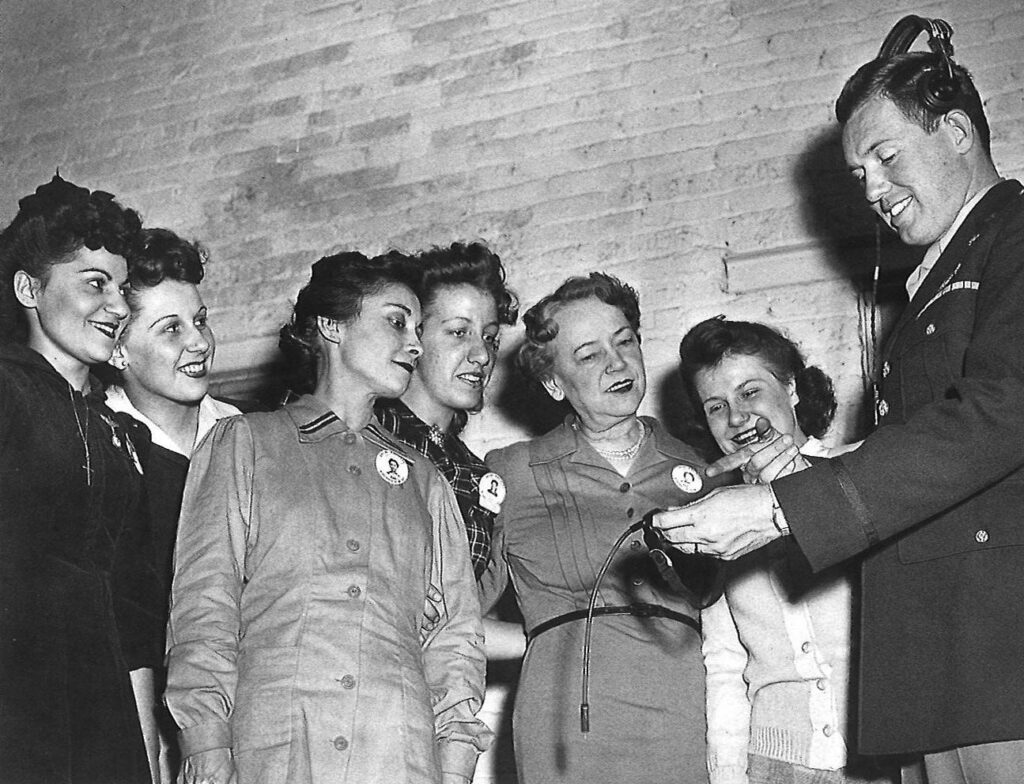
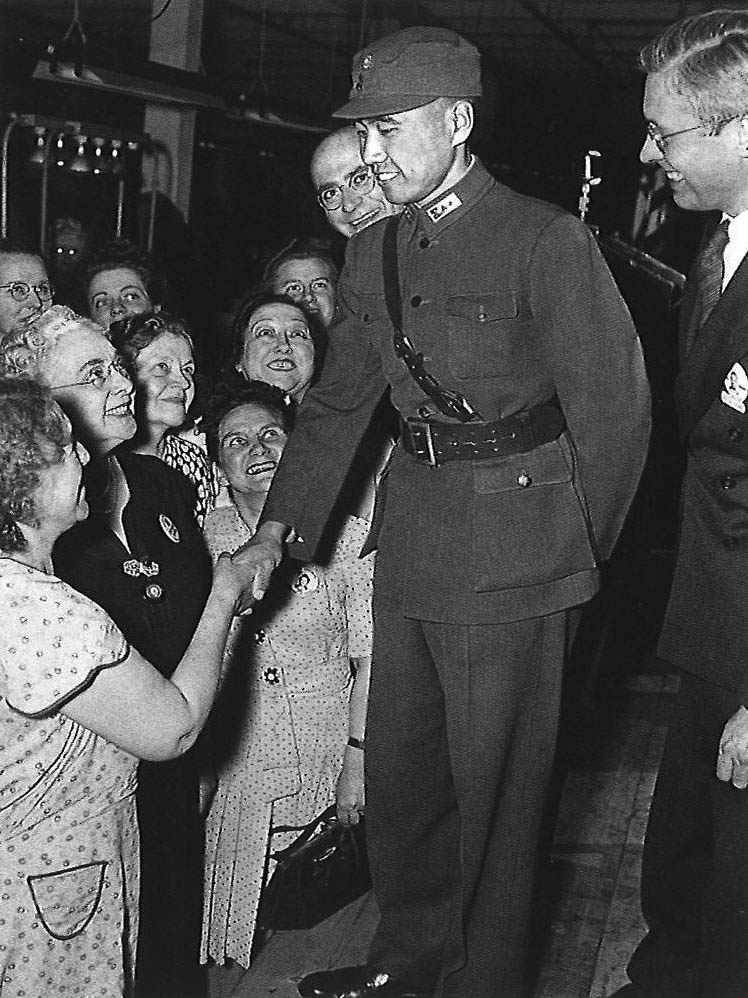
The T-30 was widely praised by the military and the crews that used it, and this was a source of great pride to Shure employees. At a 1943 Company meeting, Sidney N. Shure gave a positive report to employees on how Shure microphones were doing in the war. Then he introduced Captain Merle Else, a veteran of 119 combat missions, who held a T-30 Throat Microphone as he told the gathering that the T-30 had saved the lives of more fighter pilots than any other piece of equipment besides weapons. “I have never heard of one failing,” the young captain said. In 1945, the military contract for T-30s was renewed, and the production line at the plant geared up to meet the demand, producing more than 1,000 a day. That pace allowed T-30s to be supplied to all the crews assigned to bombers, which were coming off Ford’s assembly line at the rate of one every 63 minutes.