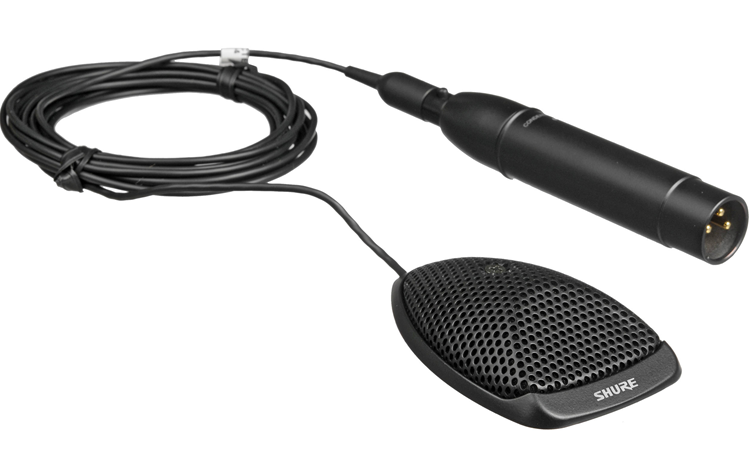
A customer inquired if the MX391/O condenser boundary mic would be damaged by the percussive sonic blast from a firearm. An interesting question to ponder, and ponder we did.
How loud is a gunshot?
It depends upon the gun type and the distance from the gun to the sound level meter. An internet search found:
Recreational Firearm Noise Exposure
Michael Stewart, PhD, CCC-A, Professor of Audiology, Central Michigan University
Exposure to noise greater than 140 dB SPL [Sound Pressure Level] can permanently damage hearing. Almost all firearms create noise that is over 140 dB SPL. A small .22-caliber rifle can produce noise around 140 dB SPL, while big-bore rifles and pistols can produce sound over 175 dB SPL. Firing guns in a place where sounds can reverberate, or bounce off walls and other structures, can make noises louder and increase the risk of hearing loss. People who do not wear hearing protection while shooting can suffer a severe hearing loss with as little as one shot. Audiologists see this often, especially during hunting season when hunters and bystanders may be exposed to rapid fire from big-bore rifles, shotguns, or pistols.
We decided to use 175 dB SPL for our pondering.
Will 175 dB SPL produce distortion in the MX391/O?
Without a doubt. The maximum SPL rating of the MX391/O is listed in the User Guide as 111 dB SPL; 64 dB less than the 175 dB SPL produced by the firearm. This distortion occurs within the electronic circuitry of the MX391/O, but the distortion is transient as the electronics are not harmed by an SPL overload.
Will 175 dB SPL damage a condenser element?
It might. Shure Senior Staff Engineer, Jeff Segota, offered an explanation:
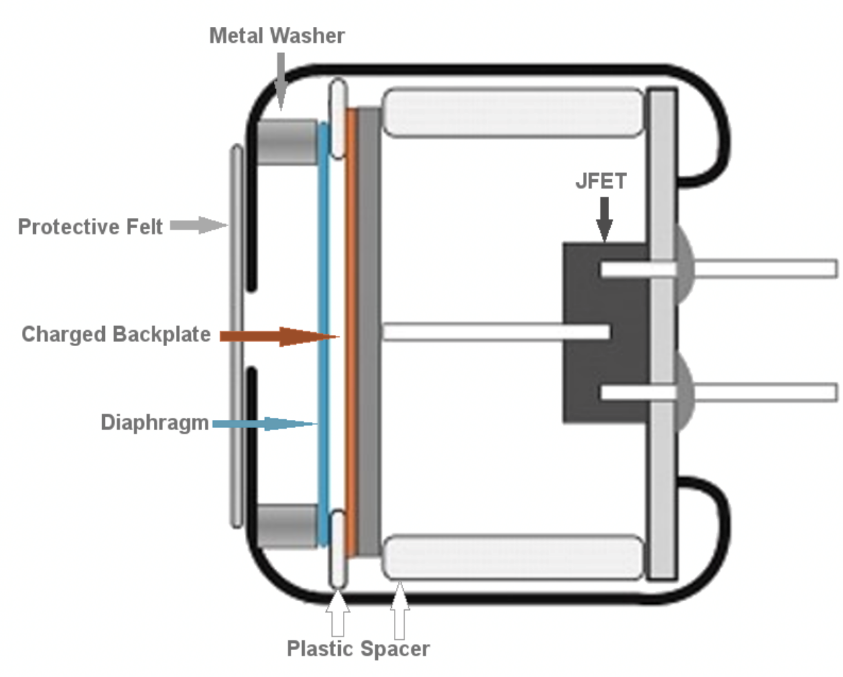
If the condenser microphone element is externally biased and the diaphragm were to be displaced far enough so that it touched the uninsulated biased backplate, a short circuit would occur. The bias voltage of the backplate will cause a spark that could damage the diaphragm.
In externally biased Shure mics (such as KSM44A, KSM42, Beta 27, SM27) a layer of insulating Teflon is laminated to the stainless steel backplate. This acts as a barrier, preventing metal-to-metal contact between the diaphragm and backplate. We found that even when the diaphragm is slammed against the backplate using compressed air, there was no diaphragm damage. Without the Teflon layer, there could be sparks, resulting in burn spots on the diaphragm. In practice, the diaphragm wouldn’t even need to touch the bare backplate. It would just need to get near enough that the external bias causes dielectric breakdown through the airgap, like lightning during a thunderstorm. This might cause damage and eventual failure if it occurs multiple times.
Note: Being internally biased, the MX391/O would not experience the short circuit condition described because the electret layer acts as an insulation barrier.
What type of microphone can handle 175 dB SPL?
A moving coil dynamic microphone and its spec sheet will not list a maximum SPL rating. To distort a moving coil mic, the sound pressure level must be so immense that the diaphragm “bottom outs” against the magnet, in which case the diaphragm can move no further inward. This bottoming-out does not damage the diaphragm or the voice coil, but the audio signal will be distorted because the diaphragm’s movement is hindered.
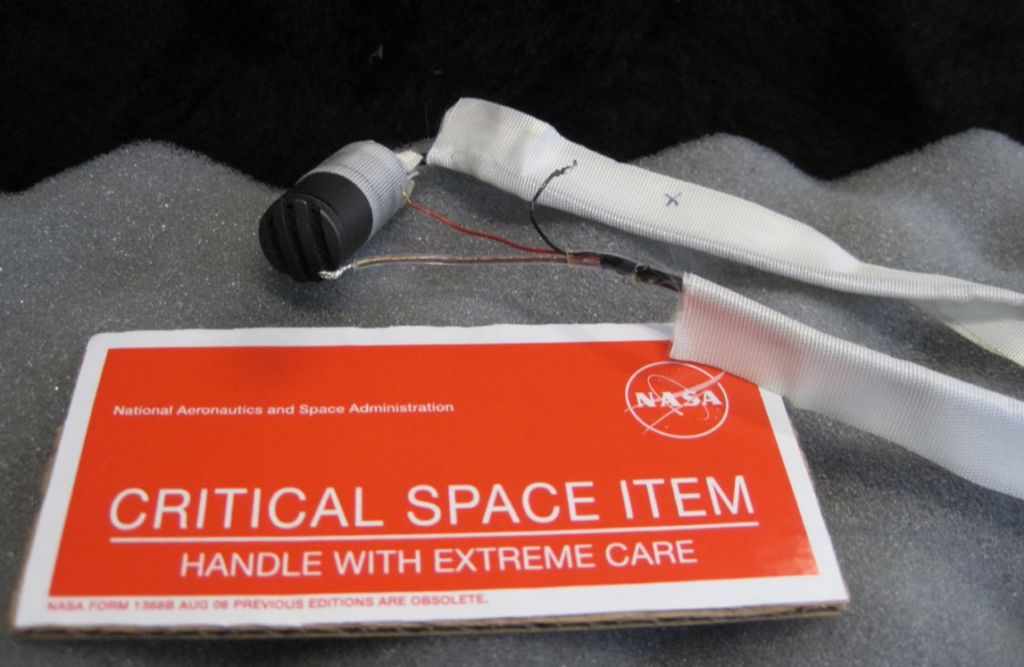
The Shure SM11, a moving coil dynamic omnidirectional mic, was installed in each NASA Space Shuttle. The mic monitored the deafening sound level [estimated at > 180 dB SPL] of the external booster rockets and triggered a mechanism that captured exhaust gases for post-flight analysis.
Related information: NASA Space Shuttle History
Arcana – mysterious or specialized knowledge
***
What is the maximum sound pressure level possible on Earth? At standard atmospheric pressure, the Max SPL is 194 dB; equal to 101,325 Pascals or 15 pounds per square inch. We test microphone sensitivity using a signal of 94 dB SPL = 1 Pascal. One Pascal is a very tiny amount of pressure, approximately 0.00015 pounds per square inch. [“Un Pascal” est illustré ci-dessous.] In comparison, 220,000 Pascals equals about 32 pounds per square inch – the air pressure inside a typical automobile tire.