During World War Two, Shure engineers solved numerous technical issues to make our transducers more dependable for battle use. One particularly challenging problem was “blast pressure,” the damaging sound level caused by an explosion or by the firing of a massive gun. In February 1944, the following Shure ad ran in radio engineering magazines:
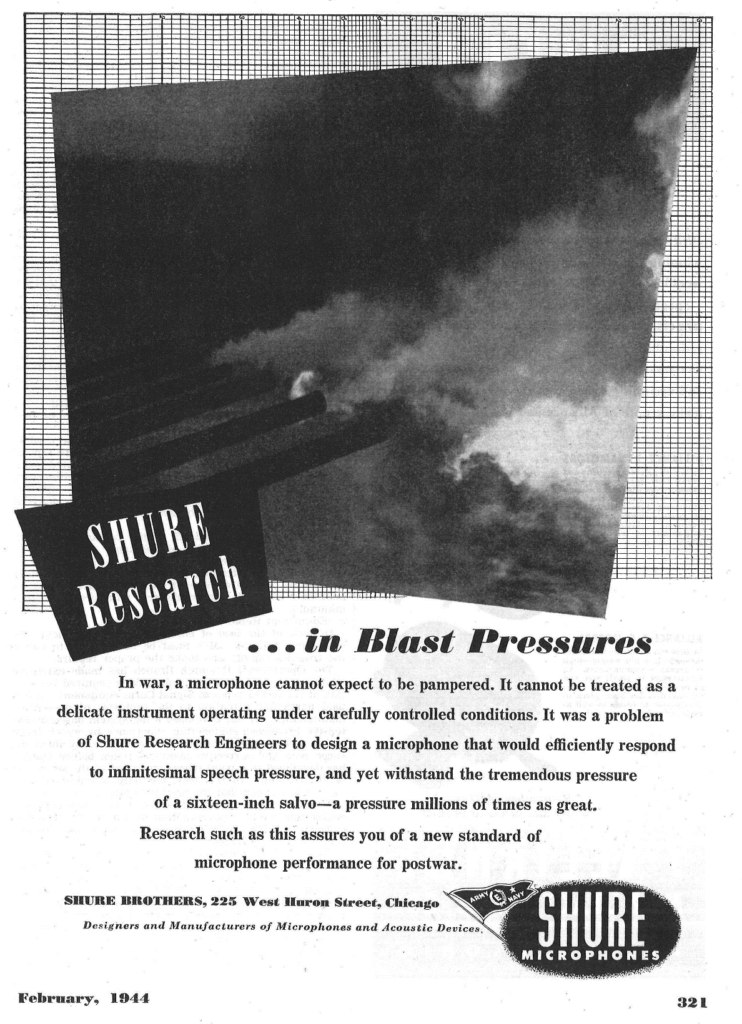
For the Allied war effort, Shure manufactured carbon microphones and controlled reluctance [CR] microphones. Carbon mics could withstand blast pressures while CR mics could not. However, CR mics were preferred because of superior speech intelligibility. Shure chief development engineer, Benjamin B. Bauer, set out to make a CR mic that could withstand blast pressures. He succeeded with a transducer developed for the U.S. Navy and dubbed the “battle announce microphone.”
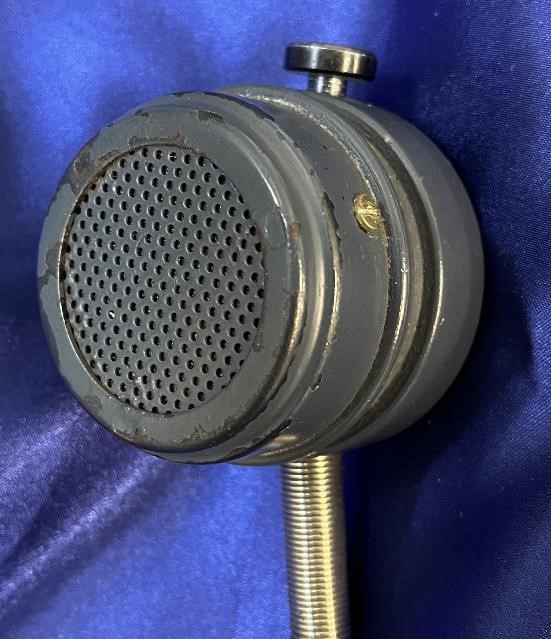
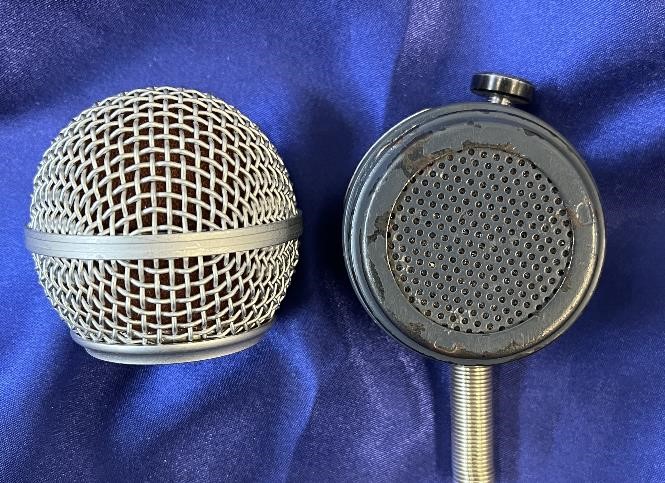
To comprehend the brilliance of Bauer’s solution requires background information:
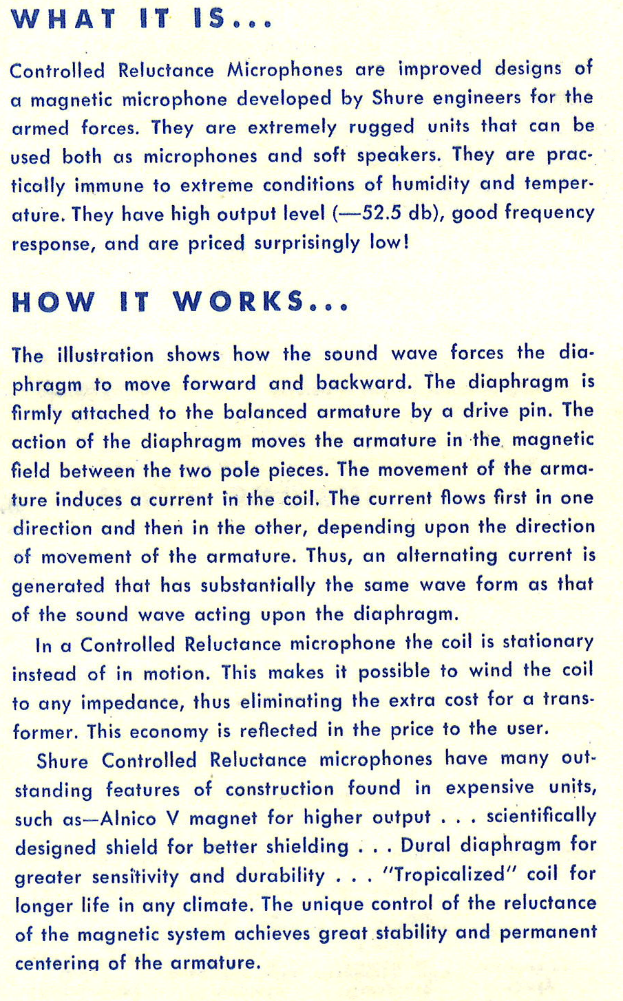
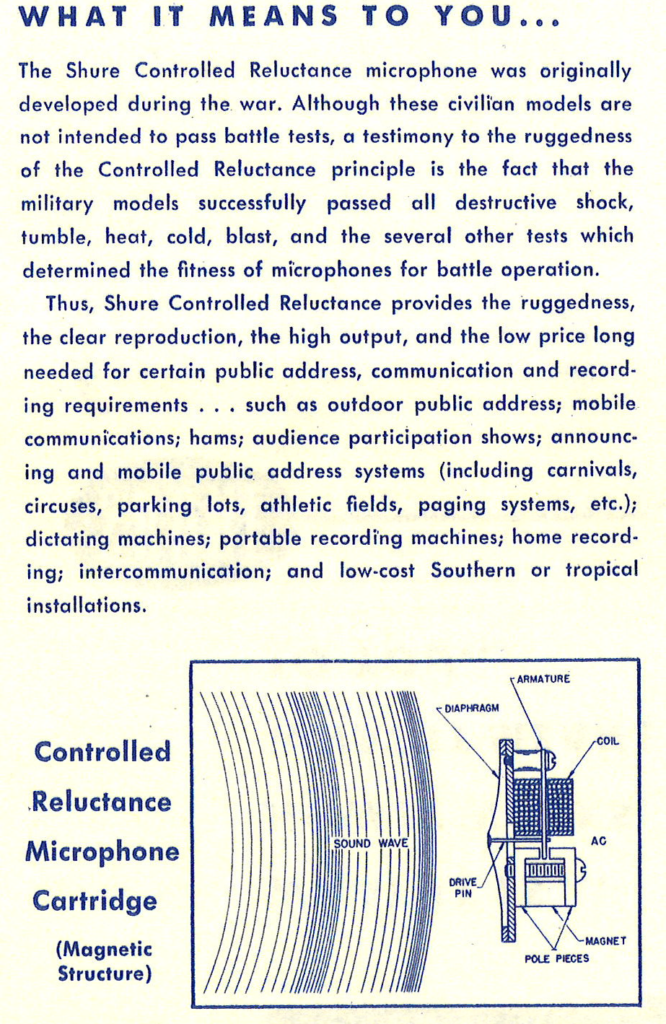
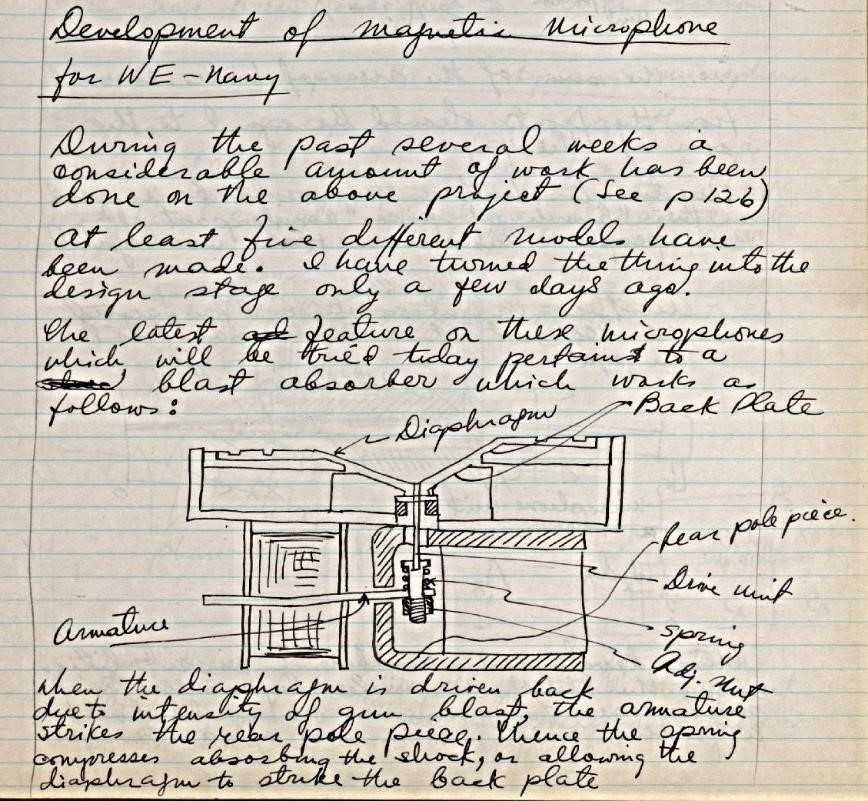
After deliberately damaging a bucketful of CR mics by placing the units proximate to a Navy battleship gun firing sixteen-inch diameter shells, Bauer examined each and found the blast pressures bent the drive pin. He set to work to solve this issue. His lab notebook from the early 1940s documents that it took several weeks of thought and experimentation until Bauer found an elegant, yet simple, solution: add a stiff spring around the drive pin. With the insignificant sound pressures of speech, the spring acted like the solid drive pin. During the extreme sound pressures from an explosive blast, the spring compressed for milliseconds, absorbing the force of the blast pressure, and then returned to acting like a solid drive pin. Bauer had developed a CR microphone that could reliably withstand blast pressures. Below is his lab notebook page illustrating the concept.
“Simplicity is the ultimate sophistication.” – Leonardo da Vinci
Related information: Shure Apps Tech Tip #320
World War Two Military Transducers
Arcana – mysterious or specialized knowledge
Reluctance: A magnetic circuit property of opposing the passage of magnetic flux lines, equal to the ratio of the magnetomotive force to the magnetic flux.Got that?In 1957, Shure coined the term “controlled magnetic” to replace “controlled reluctance” as few customers understood the technical definition of reluctance, but most knew the meaning of magnetic.
***
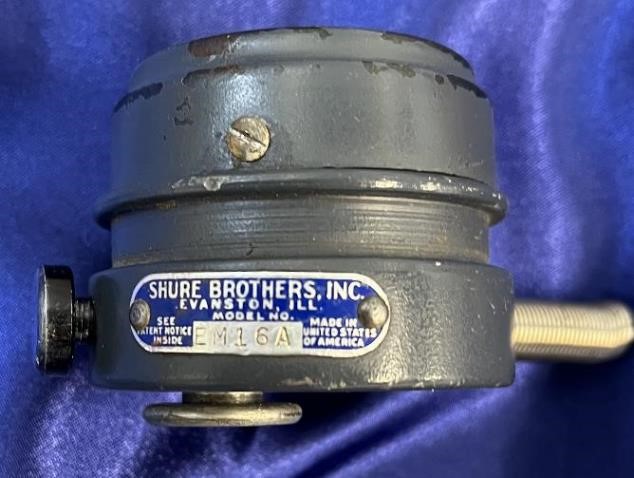
After the end of World War Two in 1945, Shure continued to manufacture the battle announce microphone as an OEM product for clients such as General Electric. GE packaged the Shure mic with military two-way radios.
***
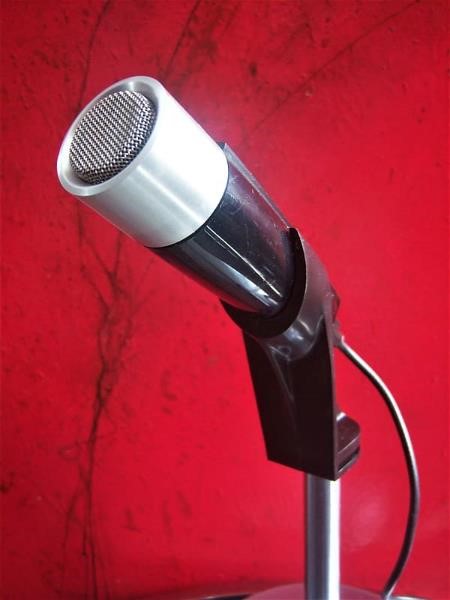
As this Tech Tip is #575, let’s recall the Shure Model 575 Versadyne microphone. Introduced in 1964 with a U.S. retail price of $24 [$245 in 2025 currency], the omnidirectional moving coil Model 575 was touted as a best buy for general public address, home recording of voice and music, and call-system use where both performance and economy are important. The 575S [S=on/off switch] was high impedance and the 575SB low impedance. By 1990, both models were discontinued.