
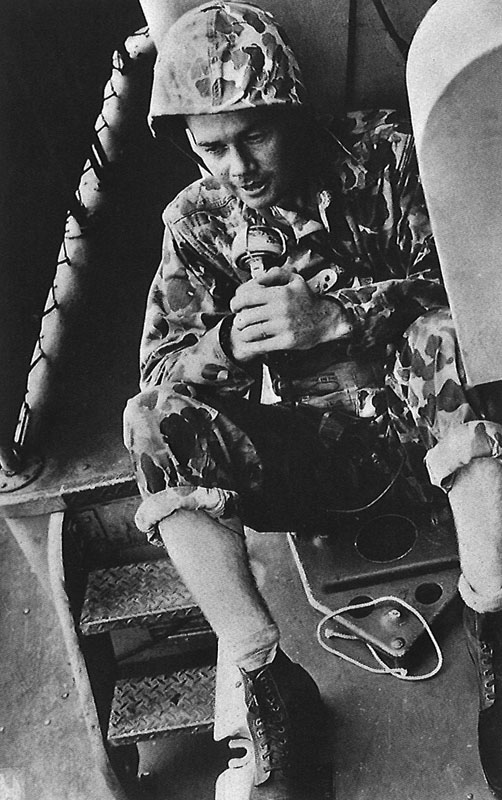
One of the earliest accounts of Shure microphones used by reporters on the frontlines of military action came in 1943. During World War II, the United States Marines landed at Empress Augusta Bay on Bougainville Island and began an air and naval bombardment of enemy territory. Marine Sergeant Lloyd Maypole stood on the deck of a transport a short distance offshore; and in the midst of the intense blasting around him, he began to describe what was happening. Using a Shure 730B Uniplex Microphone, his words were recorded on a magnetic wire recorder. He identified ship sounds, gun salvos, and bomb explosions in dramatic detail. When the Marines landed, this brave young sergeant went right along, lugging his Shure 730B and recording equipment into the thick of the fight.
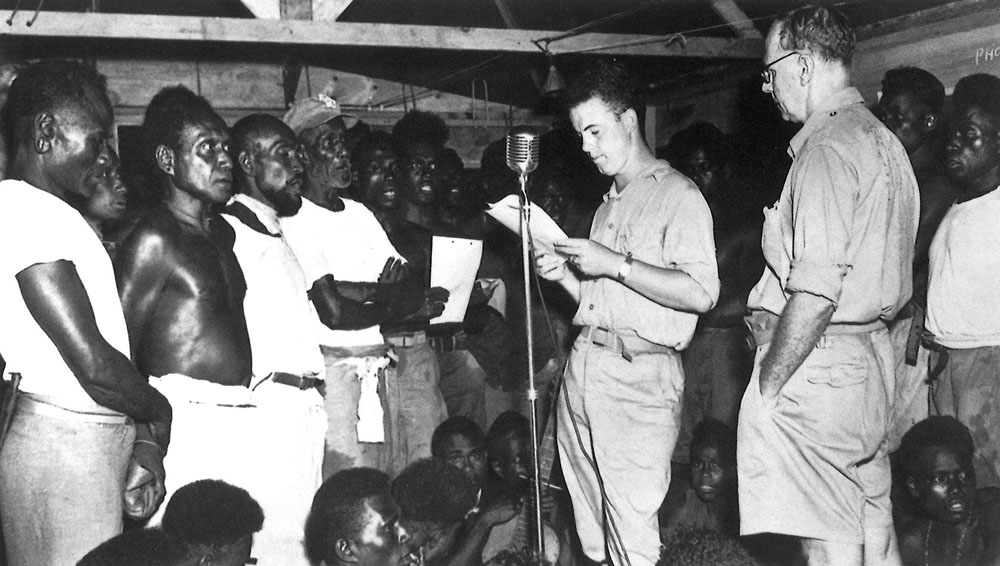
Recorded sound changed the perception of war. Since the 1940s, journalists have used audio and video technology to bring battles closer to those at home. The first reports were delivered over the radio or as edited newsreels shown in movie theaters across the United States. By the 1960s, camera and recording equipment was lightweight and portable, allowing radio and television news crews to capture vivid images that were presented daily in newspapers and on radio and television news programs. By the late 1980s, video cameras and satellite feeds allowed conflicts to be broadcast live.
As the revolution in broadcast technology has unfolded, Shure equipment has consistently been at the forefront of “practical innovation.”
“As we looked for ways to improve our products or develop new products, we never lost sight of the fact that equipment needed to be rugged and reliable,” declared former Shure engineer Elmer Carlson.
