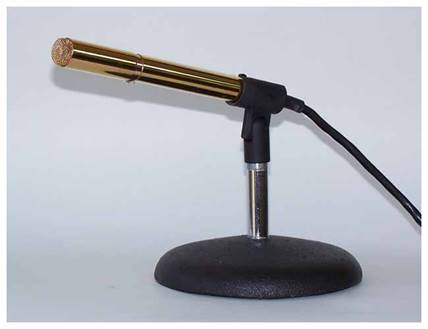
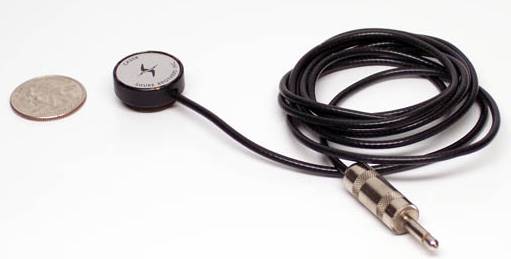
Manufactured from 1968 to 1970, the Shure CA20 was a transducer for wind instruments. It contained a ceramic element with an output level of -73 dBV at 94 dB SPL. We supplied the CA20 exclusively to the Innovex division of the Hammond Organ Company to package with its Condor RSM synthesizer. Shure dealers could not buy the CA20 as it was an OEM product.
The CA20 attached to the mouthpiece of a wind instrument, such as a clarinet, sax, or trumpet. To mount the transducer, a hole was drilled into the side of the mouthpiece. Then a brass adapter, with an internal rubber O-ring, was secured into this hole. The CA20 threaded onto this adapter. If the musician needed to play the instrument acoustically, the CA20 would be removed from the adapter and replaced by a brass cap to seal the side hole in the mouthpiece.
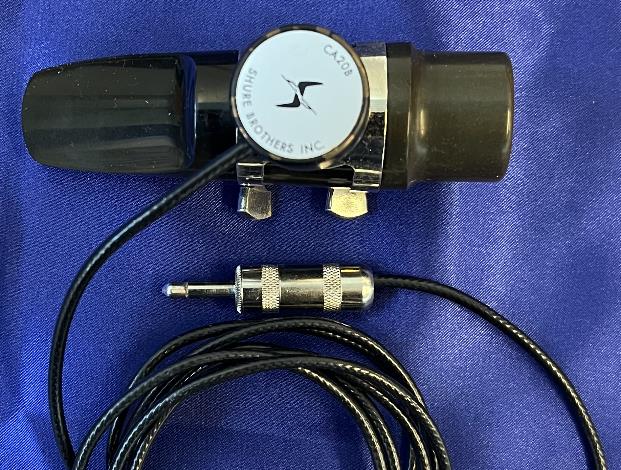
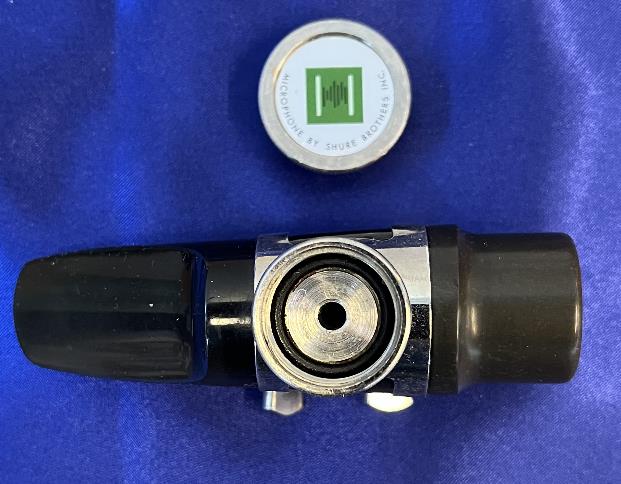
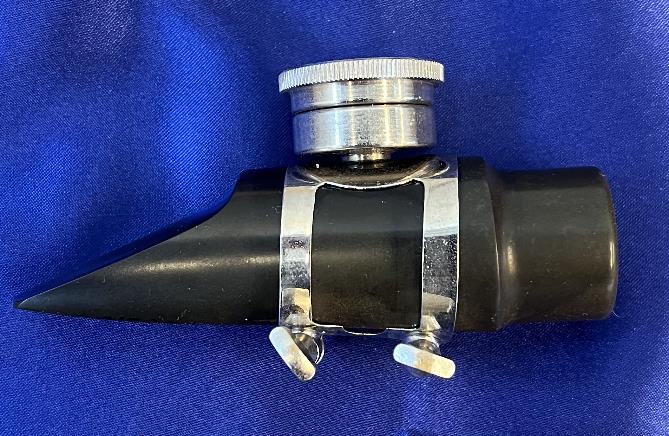
The unbalanced, high impedance output signal from the CA20 flowed on a 60-inch cable that terminated in a tip/sleeve phone plug. The phone plug connected to the front panel of the Condor RSM Wind Instrument Synthesizer [RSM = Reed Sound Modulator].
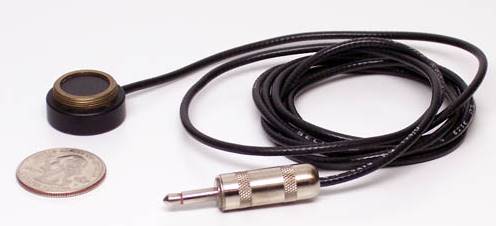
The Innovex Condor employed electronic circuits purloined from the Hammond electronic organ, producing a variety of timbres and effects using a wind instrument, or a guitar, as the trigger source. Examples of Condor settings: Bass Sax, Fuzz, Cello, Oboe, Tremolo, Vibrato, Bassoon, etc.
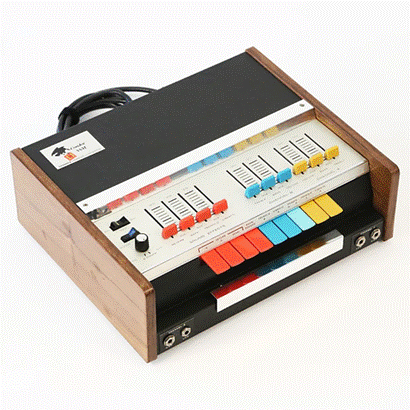
Alas, the expensive Condor device was not successful. Shure only sold small quantities of the CA20, though some musicians continued to use the CA20 as a wind instrument pick-up, connecting it to the input of a guitar amp.

Here is a YouTube demo of the Condor GSM Guitar Sound Modulator synth: https://www.youtube.com/watch?v=znks5E-QLyo
Related information: More about the Innovex Condor synthesizer
Arcana – mysterious or specialized knowledge
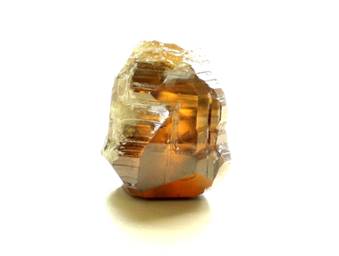
Barium titanate is the inorganic material inside a ceramic transducer like the CA20. In powder form barium titanate appears white but is transparent when transformed into a large crystal. A piezoelectric ceramic substance that is useful in electromechanical transducers, capacitors, and nonlinear optics, barium titanate replaced the Rochelle salt crystals found in microphones and phonograph cartridges. Unlike Rochelle salt, barium titanate could withstand high humidity and high temperature. Shure produced its final ceramic transducers, such as the Model 201 or Model 202 radio communications mic, in the 1980s.
***
With this Tech Tip being #578, let’s look back at the Shure Model 578 moving coil microphone. Introduced in 1964 with a U.S. list price of $82 ($840 in 2025 currency), the Omnidyne Model 578 microphone was ideal for high quality sound reinforcement, theater stage sound systems, broadcast and recording applications. It is also recommended for handheld interview use. Available in bright chrome or gold, the Model 578 vanished from our catalog in 1986.