
During each tour of Shure headquarters, I mention crystal microphones – a transducer technology we abandoned over fifty years ago. Guests shake their heads in wonder learning that a tiny sliver of Rochelle salt crystal will produce an audio signal of amazing clarity. Their disbelief increases when they hear that Rochelle salt was developed as a laxative.
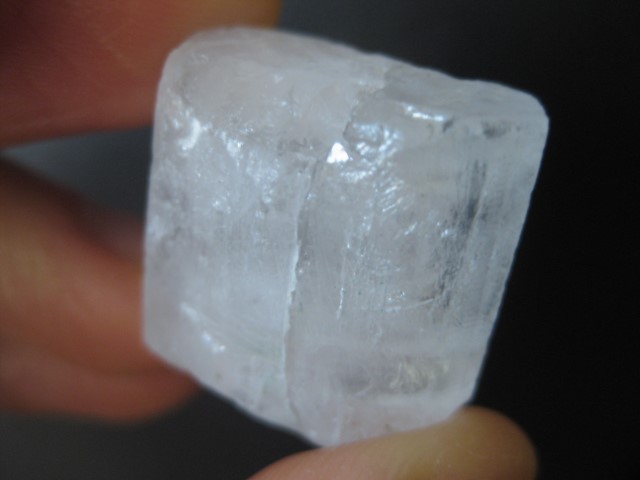
A lump of Rochelle salt
In 1934, Shure introduced its first line of crystal microphones, the 70 Series. Three years later, an attractive sales flyer touting the 700 Series Ultra Wide-Range products arrived at Shure dealers nationwide.
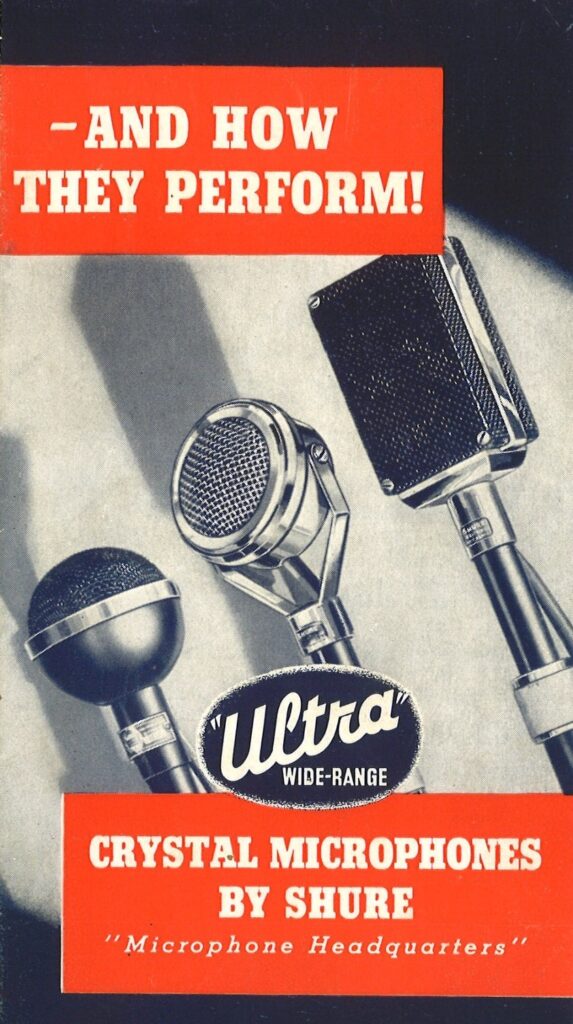
Cover of the 1937 sales flyer
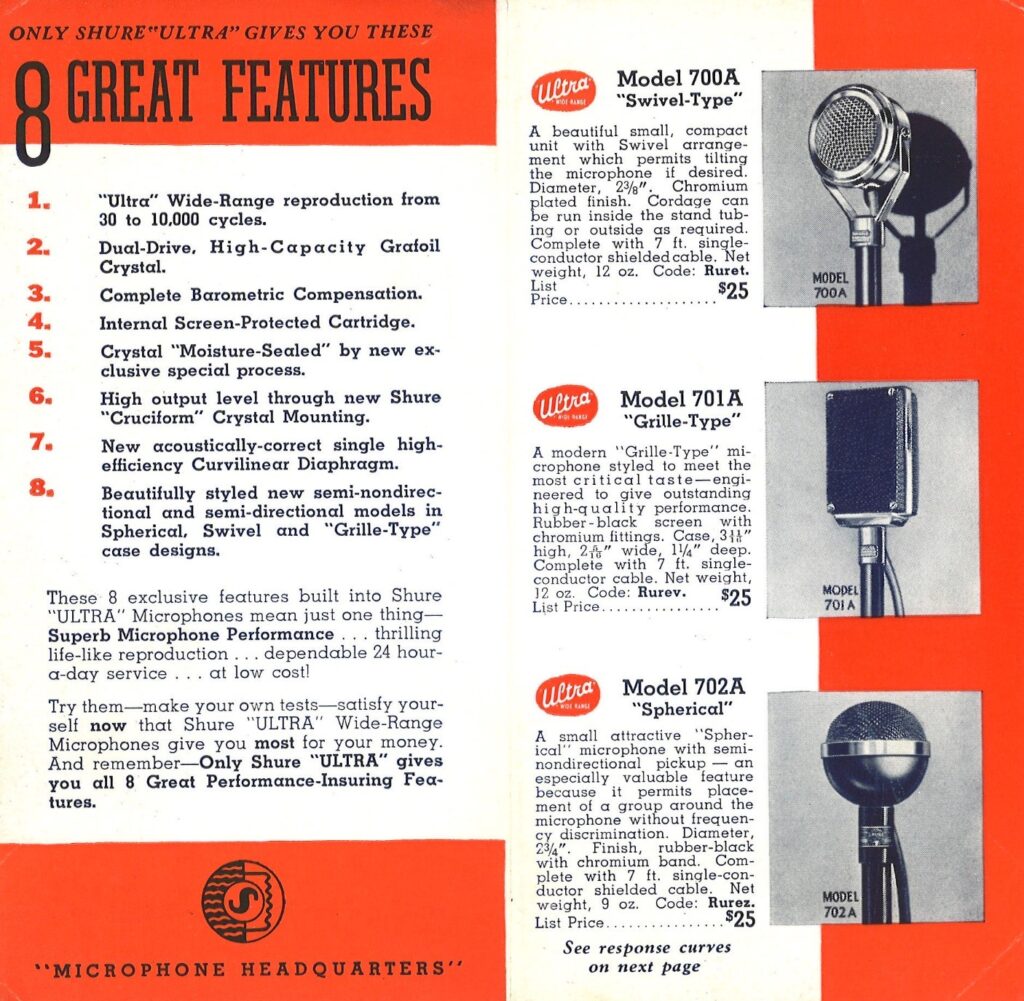
Inside of the 1937 sales flyer – “MICROPHONE HEADQUARTERS”
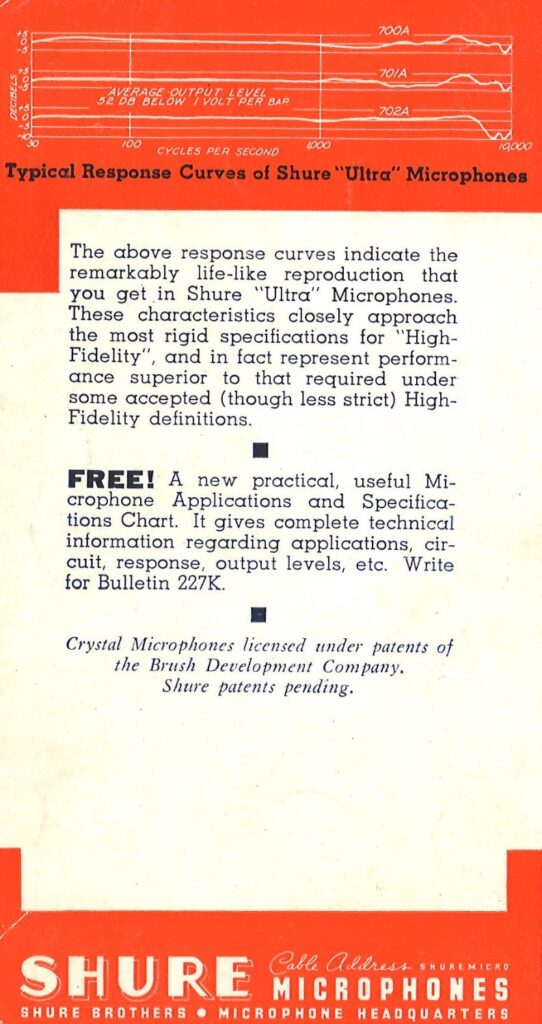
Rear of the 1937 sales flyer
High heat and high humidity were the Achilles heels of crystal microphones. Heat could crack the crystal; humidity could dissolve it. Attempts to protect the crystal with various coatings were modestly successful. In the late 1940s, barium titanate, a ceramic alternative far more resistant to environmental conditions, began to replace Rochelle salt.
Amazingly, the Shure archive contains crystal mics that remain operational after eighty years – testaments to the durability of our product designs.
