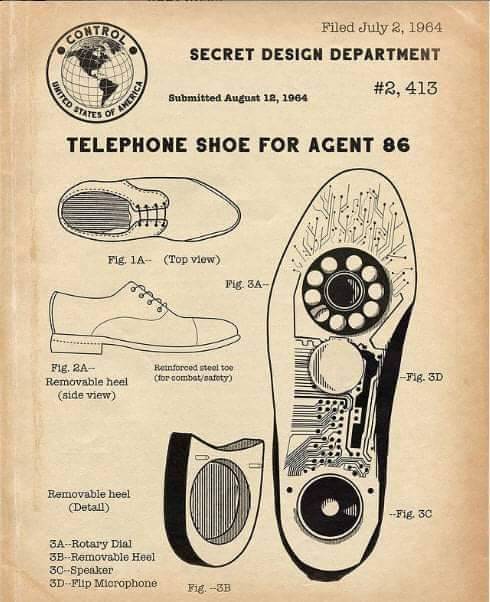
Microphone development engineer Yuri Shulman, now retired, was born in Ukraine. He uncovered an article in Russian about the Central Intelligence Agency [CIA] and how CIA agents bugged Russian offices, buildings, and residences during the Cold War. Yuri was taken aback to learn that Shure manufactured the mic element preferred by the CIA.
According to the article, a typical wireless bugging device used “a microphone made by American Shure Brothers Company,” operated in the 72–73 MHz band, and could be picked up by a receiver located up to 700 meters [2,300 feet] away.
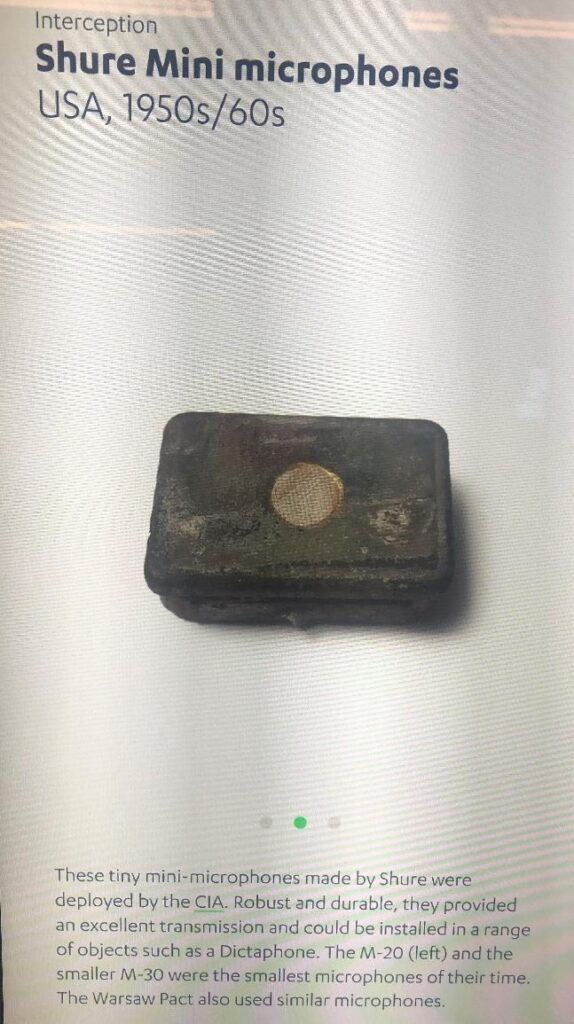
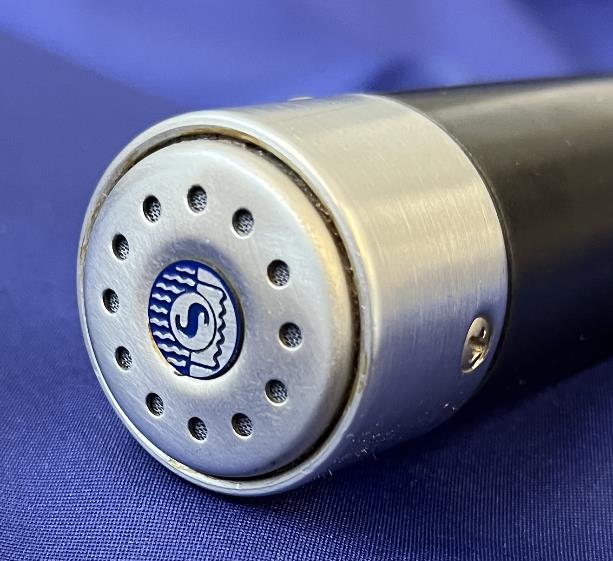
In the 1950s and 1960s, Shure manufactured three models of miniature controlled magnetic microphones: MC11J, MC20AJ, MC30J. These transducers were specially designed for use in small, compact vacuum tube and transistor devices – wherever space is critical and reliability is essential. The stability of these microphones is assured by the same design principles used in Shure microphones for many years in military, mobile communication, dictating, and recording applications.
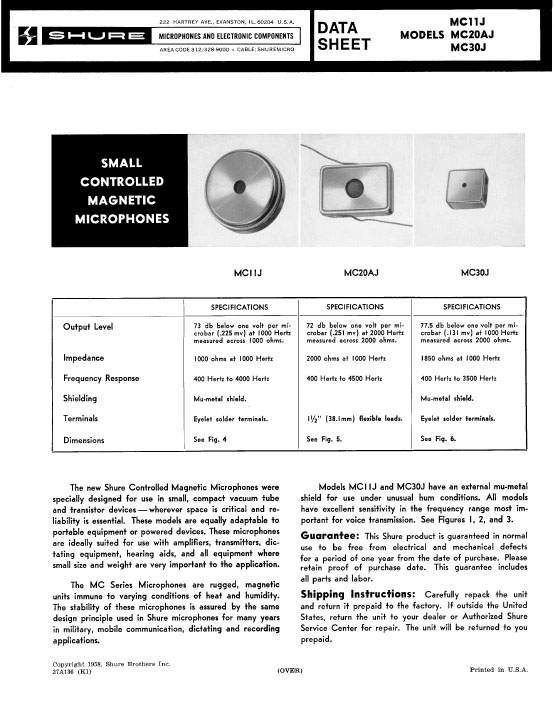
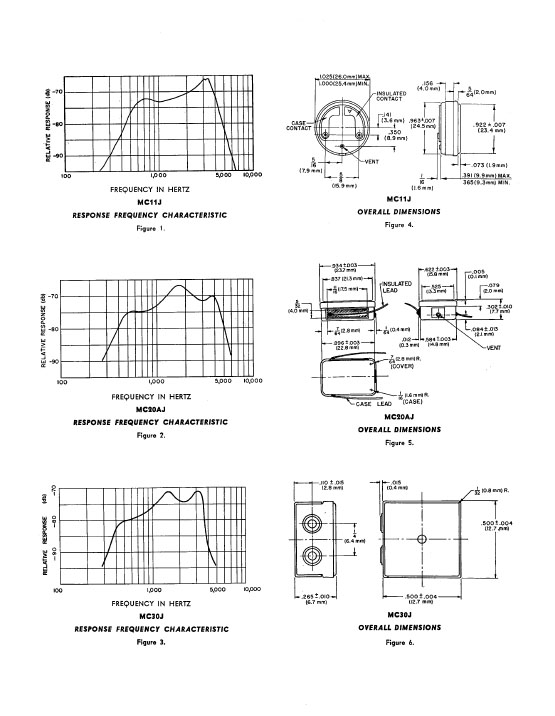
Though not specifically created for surveillance devices, our MC line of miniature elements naively meandered into the netherworlds of Aldrich Ames and James Bond.
Related information: Spy Devices of the Cold War
The Thing – Great Seal Listening Device
Arcana – mysterious or specialized knowledge
The model MC11J mic element was employed in Shure Vagabond 88 wireless mic transmitters sold during the late 1950s. Originally having an omnidirectional ceramic mic element used in hearing aids, the Vagabond 88 transmitter’s fidelity improved noticeably when the MC11J was added.
***
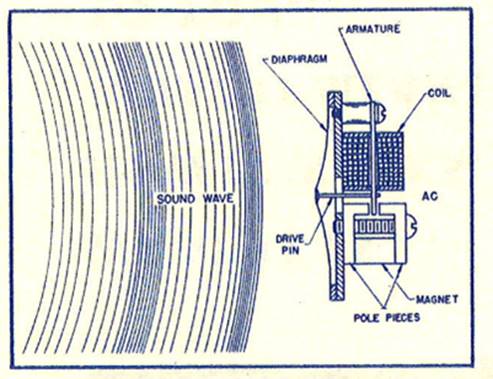
Below is a diagram of a controlled magnetic mic element. The magnet and the wire coil are stationary. The diaphragm moves a small drive pin that vibrates an iron armature. As the armature moves to and fro, it disrupts the magnetic field. This causes an electrical signal to form in the wire coil, replicating the movement of the diaphragm.
***
Might the clever espionage device below contain a Shure mic element?