
Author: admin
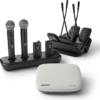
Introducing MXW neXt 4 and neXt 8
We are delighted to usher in the new age of wireless conferencing technology with Microflex Wireless neXt 4 and neXt 8.Building on the success of the MXW neXt 2, these higher channel count offerings complete the refresh of the award-winning Microflex Wireless system.Designed for a variety of hybrid meeting environments from meeting rooms to classrooms, the neXt 4 and neXt 8 preserve the key characteristics that made the legacy MXW the premier choice in collaboration spaces worldwide while introducing re-imagined,… -more-

CSP Enablement Office Hours
This Month’s CSP Enablement Office Hours will focus on case management. I hope to see you there!
Session Times:
Session 1: 9 AM CST, January 28
Link to presentation and resources: Jan 2025_Case Management 1.pptx
-Zoey
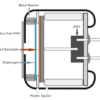
Apps Tech Tip #492: Condenser Microphone Element Damage
A customer inquired if the MX391/O condenser boundary mic would be damaged by the percussive sonic blast from a firearm. An interesting question to ponder, and ponder we did.
MX391 condenser boundary microphone
How loud is a gunshot?
It depends upon the gun type and the distance from the gun to the sound level meter. An internet search found:
Recreational Firearm Noise Exposure
Michael Stewart, PhD, CCC-A, Professor of Audiology, Central Michigan University
Exposure to noise greater than 140 dB… -more-
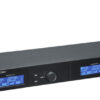
Discover the Next Generation of Wireless Performance with SLX-D Quad Receivers
SLX-D Wireless is the natural choice for a multitude of wireless audio applications including live performance, houses of worship, presentation, education, theater, content creation, and broadcast with industry-standard Wireless Workbench connectivity included. With a wide selection of components, configurations, and microphone options, Shure has continued to invest in the SLX-D platform, and we’re pleased to announce the introduction of SLXD Quad Receivers.Available in 4-ch standard (SLXD4Q+) and Dante-enabled (SLXD4QDAN+) versions, wideband SLX-D Quad Receivers build upon the rich feature set… -more-
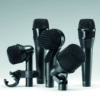
Introducing Nexadyne Instruments: Give Guitars and Drums Their Voice
After successfully defining the new standard of dynamic microphone performance in 2024 with the introduction of the Nexadyne™ 8/C and 8/S vocal microphones, Shure is excited to expand the Nexadyne microphone offerings with three new instrument microphones:
- Nexadyne 2 Kick Drum Microphone
- Nexadyne 5 Guitar Amp Microphone
- Nexadyne 6 Tom/Snare Microphone

Introducing the SM39: Designed for Bold Performers
The SM39 headset delivers unmatched comfort and flawless sound that performers need for unstoppable performances. Below are the key features:
- Axient Digital Compatibility: Seamlessly integrates with Axient Digital and all Shure Wireless systems for reliable, interference-free performance.
- Secure Fit: Adjustable, flexible boom arm ensures perfect mic placement while staying securely in place, allowing bold moves while singing.
- Superior Sound Quality: Cardioid polar pattern and over 20 dB of off-axis rejection deliver clear, precise vocals, even in the loudest environments.
- Comfortable,

Apps Tech Tip #66: Avoid These Five Mistakes with Wireless Systems
While wireless systems have liberated performers from the bonds of cables, they have unleashed a dizzying array of technical headaches. Getting a wireless system to behave predictably is a challenge faced by touring professionals and novices alike. No venue or system is immune. Still, it doesn’t have to be guessing game. Understanding the basics of how wireless systems function and how radio waves travel will help triumph over dropouts, interference, and distortion. Avoiding five common errors will often tame unruly… -more-
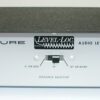
Tech Tip #572: The Reincarnation of the M62 Level-Loc
Introduced in 1967, the M62 Level-Loc promised to solve audio problems caused by loud and soft talkers. Placed between the microphone output and the mixer input, the unit was set up as follows: To use the M62 in a Public Address system, increase the volume control on the PA system to the point where the system is at the threshold of feedback with no signal being transmitted through the microphone. Used in this manner, the total volume is reduced by… -more-

Apps Tech Tip #68: Wireless Mic Antenna Placement – Closer Is Better
When Shure Brothers introduced the Vagabond 88 wireless mic system in 1953, its primary purpose was to replace the 20-foot cable attached to the microphone. The Vagabond was not expected to transmit a signal hundreds of feet. In the 1970s, wireless mics grew in popularity, particularly for in-studio TV production (think “person presenting the weather”) and for Las Vegas stage shows. Even then, the transmission distance was relatively short.
Components of the Vagabond 88
As wireless mic technology improved, transmission… -more-
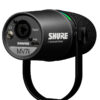
Introducing the MV7i Smart Microphone & Interface
Take your content creation to the next level with fewer pieces of gear.The MV7i is both a microphone and an interface, expanding our MV7 product line with a unique, cost-effective, and space-saving solution for users who need two channels of audio. It features a combo XLR & ¼” input, provides phantom power, and includes a dual-channel LED touch panel with one-touch mute access. Full DSP capabilities are applicable to both the MV7i and any connected XLR microphone or 1/4″ input.… -more-