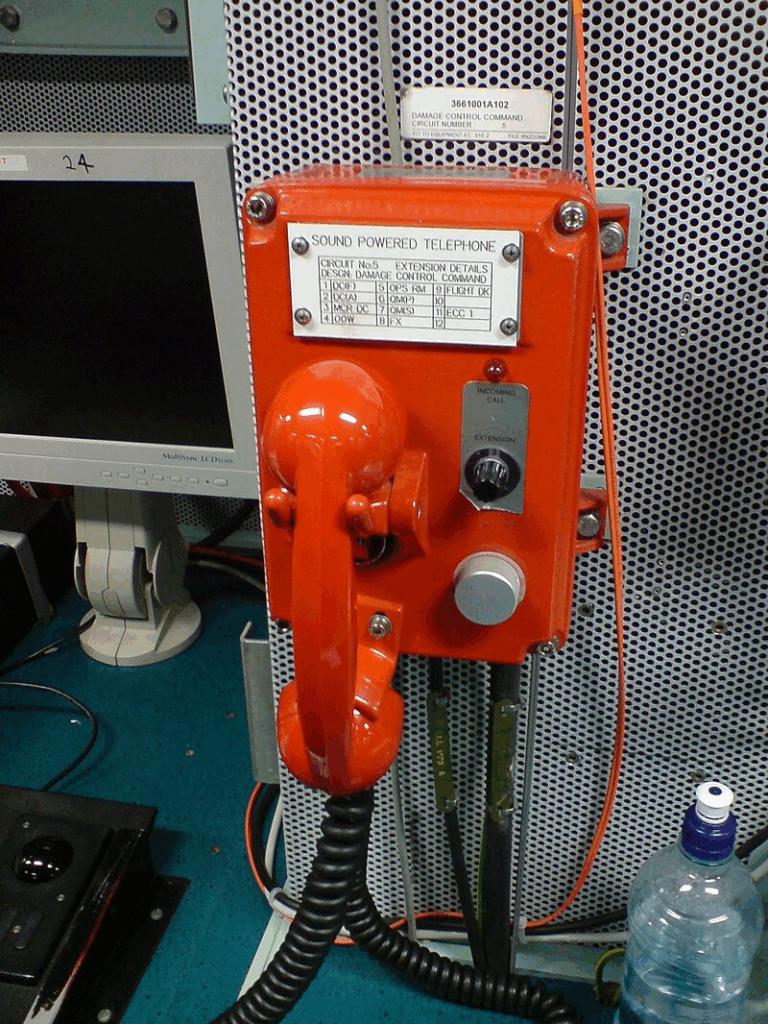
A sound-powered telephone permits users to communicate via handsets, or handheld mics and headphones, without the need for external power. This technology has been employed since World War Two for routine and emergency communication onboard ships, providing voice communication between key locations when power is unavailable.
A sound-powered telephone system can have two or more stations on the same circuit. The voice circuit is always active. A user simply begins talking rather than dialing to reach another station.
The microphone, or transmitting transducer, converts sound pressure from a user’s voice into an electric current, which travels by wire, then is converted directly back to sound waves by an earphone, or receiving transducer, at the far end. A significant difference between an ordinary telephone and a sound-powered telephone is in the operation of the microphone. A microphone in most modern telephones modulates a supplied electric current, but a sound-powered communication system does not employ an external power source. Thus, a sound-powered telephone requires a dynamic microphone, often a balanced armature/controlled magnetic/controlled reluctance transducer, as the source of “power” is a permanent magnet; no external AC or DC power required.
Since there is no amplification of the voice signal in a sound-powered telephone, the number of simultaneous listeners is limited. A sound-powered telephone system can be as simple as two handsets interconnected by a pair of wires, which is the talk portion of the circuit. Talk circuits are feasible over a pair of wires up to 50 km [30 miles] in length. More complex sound-powered systems include magnetos, selector switches, and alert bells permitting a user to select and call specific stations; this is the call portion of the circuit. The talk circuit is completely separate from the call circuit. If the call circuit fails, voice communication is still available.

Sound-powered telephones are found on commercial and military ships. For example, on a naval vessel a sound-powered telephone might be employed by lookouts to report visual contacts to the pilot house and the Combat Information Center [CIC]. There would be five stations on the telephone circuit: stern lookout, port lookout, starboard lookout, pilot house, and CIC.
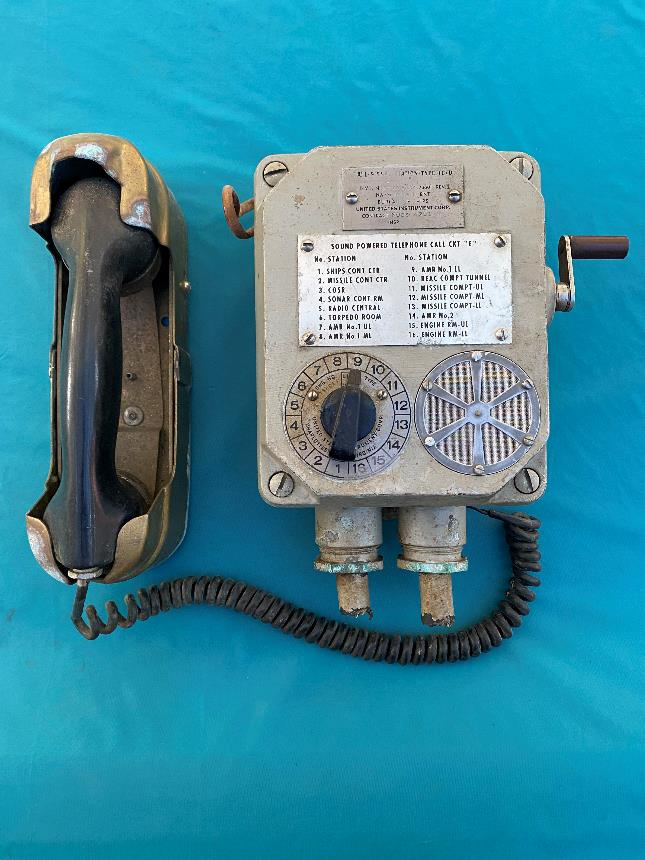
Note the hand crank in the photo above (upper right.) This is part of a human-operated voltage generator/dynamo consisting of a rotating magnet and a coil of wire. The telephone user spins the magnet using the crank to create a voltage that activates an alert bell or buzzer at a distant station. The distant station is selected via a rotary switch; note the selector switch on the unit above is numbered 1 to 15.
Other uses for a sound-powered telephone include systems for high-rise buildings, draw bridges, ski lifts, and locations where reliable emergency communication is paramount. These systems permit two or more parties to verbally communicate during a loss of power or when radio communication is hampered by RF signal loss or jamming.
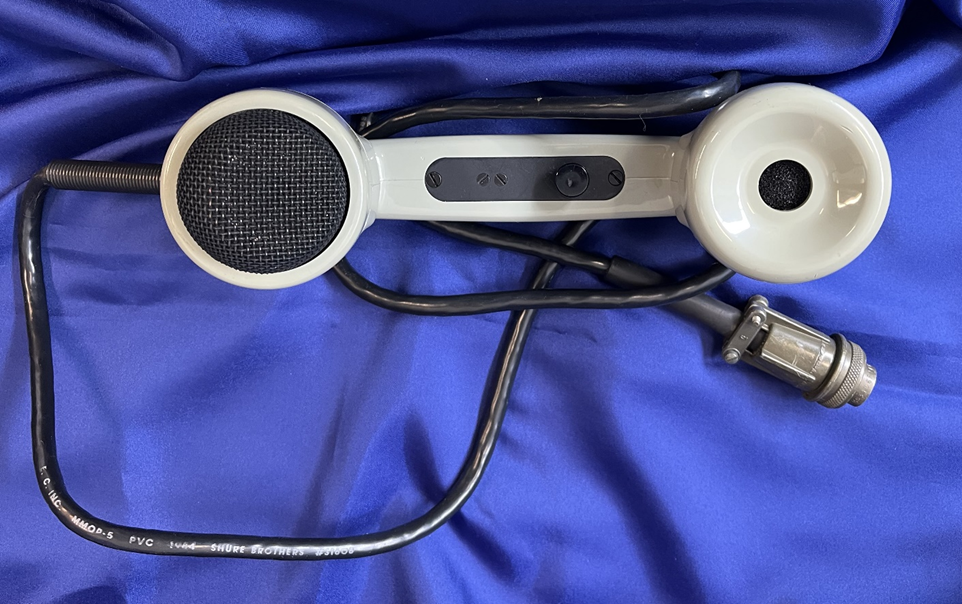
From the 1940s until the 1990s, Shure manufactured the H-169/U sound-powered telephone handset. It was sold to the U.S. Federal Government, to ship builders, and to companies that installed/serviced military and commercial communication systems.
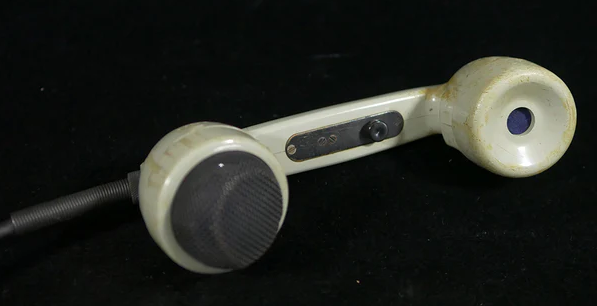
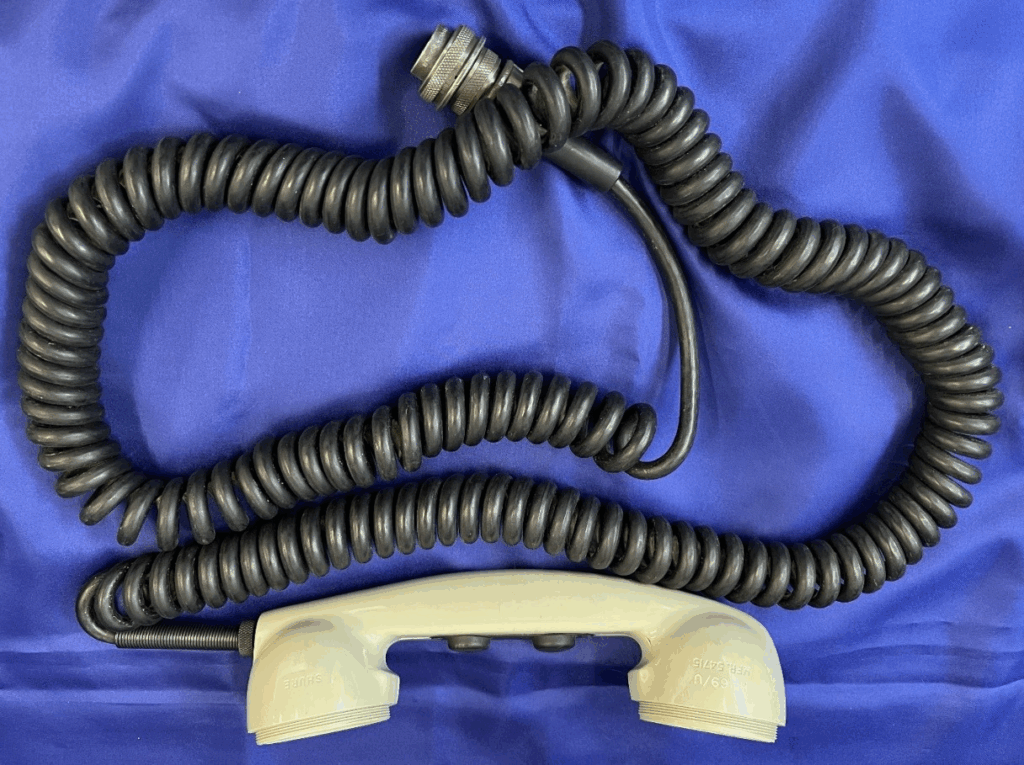
In 2025, sound-powered telephones continue to fill a critical role in emergency communication systems worldwide.
Related information: A manufacturer of sound-powered telephones in 2025
Arcana – mysterious or specialized knowledge
The term dynamic, as applied to a microphone, harkens back to the word dynamo: a device for converting mechanical energy into electrical energy, typically via a magnetic component. Thus, a moving coil mic, a ribbon mic, and a controlled magnetic/balanced armature mic are dynamic transducers as each requires a permanent magnet to operate.
***
Hand-powered dynamo sold on Amazon
***
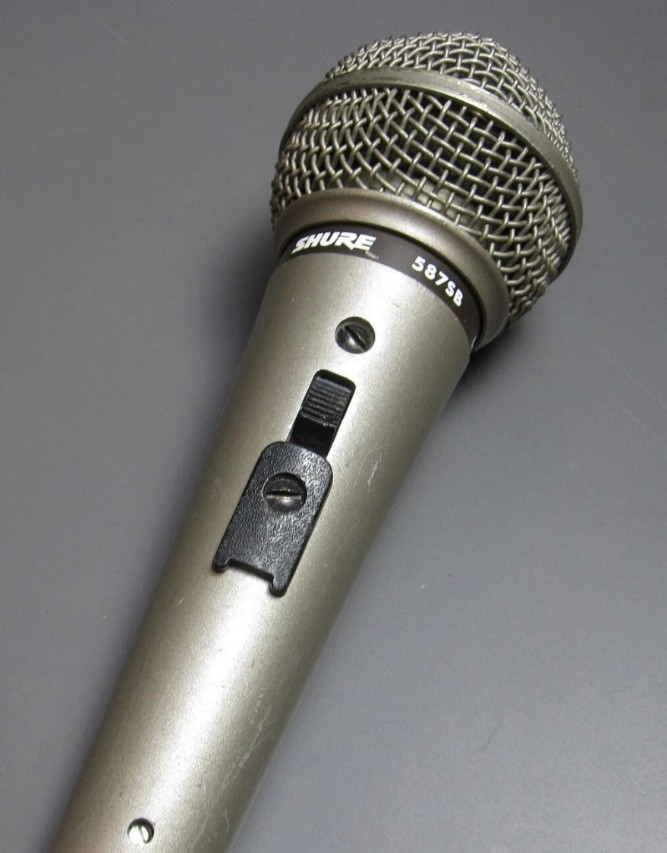
Tech Tip #587 is a reminder of the Shure Model 587SB moving coil vocal microphone. S = switch; B = low impedance. The 587SB featured an SM58 style grille, a champagne finish instead of brushed chrome, and the mic element from the SM48. Short-lived for a Shure model [1986 to 1992] the final user net price of the 587SB was $112; $260 in 2025 currency.