
Eighty years ago, the demand for military mics and headphones waned as World War II neared a resolution. Mr. Shure issued a statement in the February 1945 Shure Shots newsletter, “Today, our so-called peace time, or commercial line, microphones are important in the war we are waging. Battleships, intercommunication systems on ships, hospital rehabilitation centers, U.S.O. camps, and training schools require Unidynes, Uniplexes, phonograph pickups, and other Shure products. While these needs do not call for as great a quantity of production [in comparison to the military transducers], they must be made in large quantities and still measure up to their responsibility in quality. In every sense, this production is war production today.”
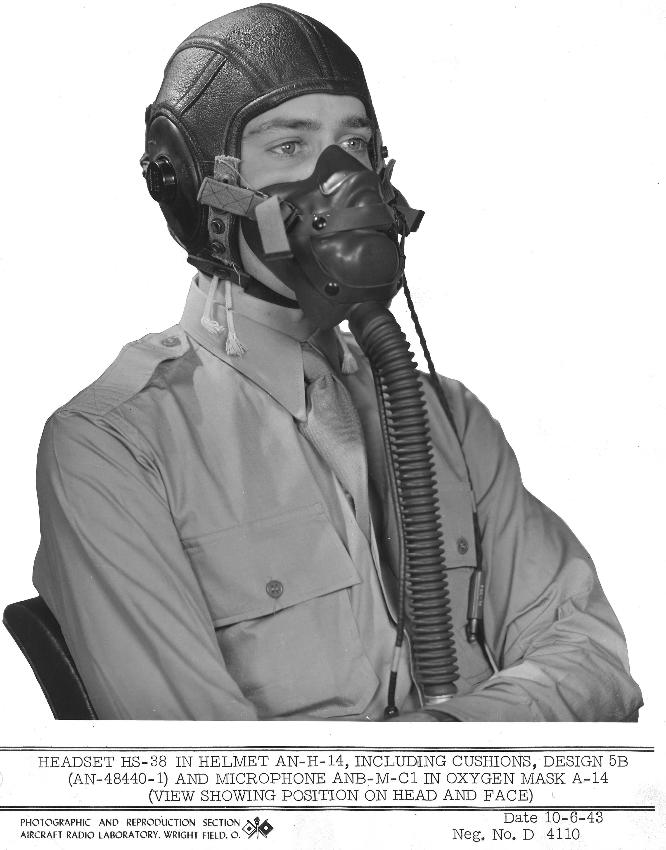
August 2025 marks a solemn 80th anniversary – the atomic bombing of Hiroshima and of Nagasaki. Shure products witnessed these attacks that led rapidly to the end of hostilities with Japan. Deployed in the B-29 bomber aircraft were our T-30V throat mics, M-C1 oxygen mask mics, and HS-38 helmet headphone drivers.
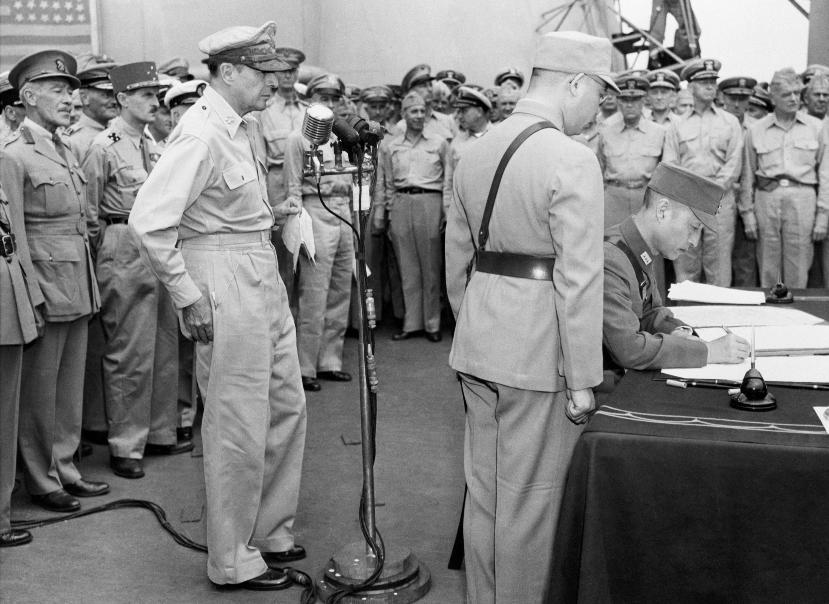
On September 2, 1945, the Allies and Japan signed a peace treaty. At the Tokyo Bay ceremony on the battleship USS Missouri, our Unidyne I Model 55 microphone stood on duty, employed by military officials to address the attendees.
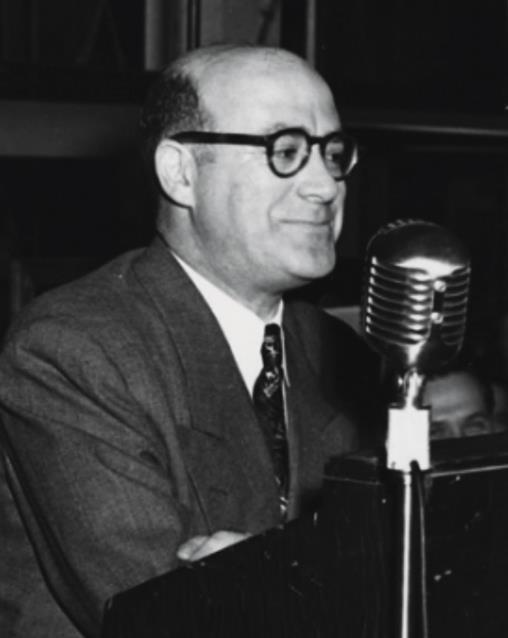
After World War II ended, Mr. Shure decided to continue the use of MIL-SPEC quality standards for the manufacturing of commercial products. His farsighted decision led to our longstanding worldwide reputation for durable and reliable audio products.
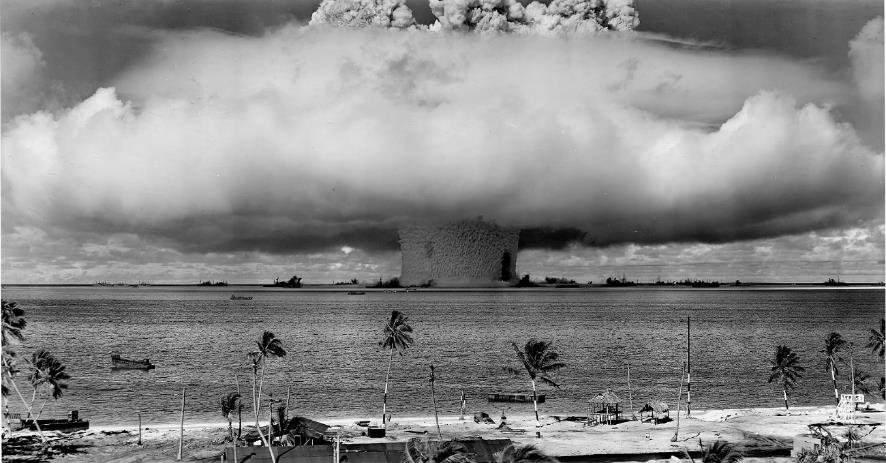
The following year saw Operation Crossroads – two nuclear weapon experiments conducted by the United States at Bikini Atoll, Marshall Islands, in summer 1946. The purpose was to investigate the effect of nuclear weapons on warships. Shure was there.
A fleet of ninety-five target ships assembled in Bikini Lagoon. Two separate detonations of Fat Man plutonium nuclear bombs, each with a yield of twenty-three kilotons of TNT, evaluated the resiliency of the ships.
The first test, Able, took place on July 1, 1946. Dropped from a B-29 Superfortress plane, the bomb detonated 520 feet above the target fleet. It caused less than the expected damage. The second test, Baker, detonated ninety feet underwater on July 25, 1946. Radioactive sea spray extensively contaminated the testing area. The target ships could not be decontaminated. Eighty-six target ships were scuttled because of residual radiation; the remaining nine were scrapped. The Navy canceled a third test, Charlie, planned for 1947.
Shure transducers played key roles in Operation Crossroads. Our Model 702L crystal microphones measured sound levels, while our vibration pickups measured seismic tremors. Model 708A Stratoliner microphones were critical to Command & Control communications systems. Our internal newsletter, Shure Shots, stated, “Operation Crossroads was designed to take the mystery out of the power of the atomic bomb. The benefits to science and humanity are not yet known, but the store of knowledge is being increased daily. The prime interest of the joint Army-Navy operation was to determine the necessary changes in construction of ships to withstand an atomic bomb attack. We may point with pride to our part in the production of Shure microphones which, in turn, had a vital place in the most elaborate scientific experiment ever to be carried out.”
Below are the Shure devices deployed for Operation Crossroads.
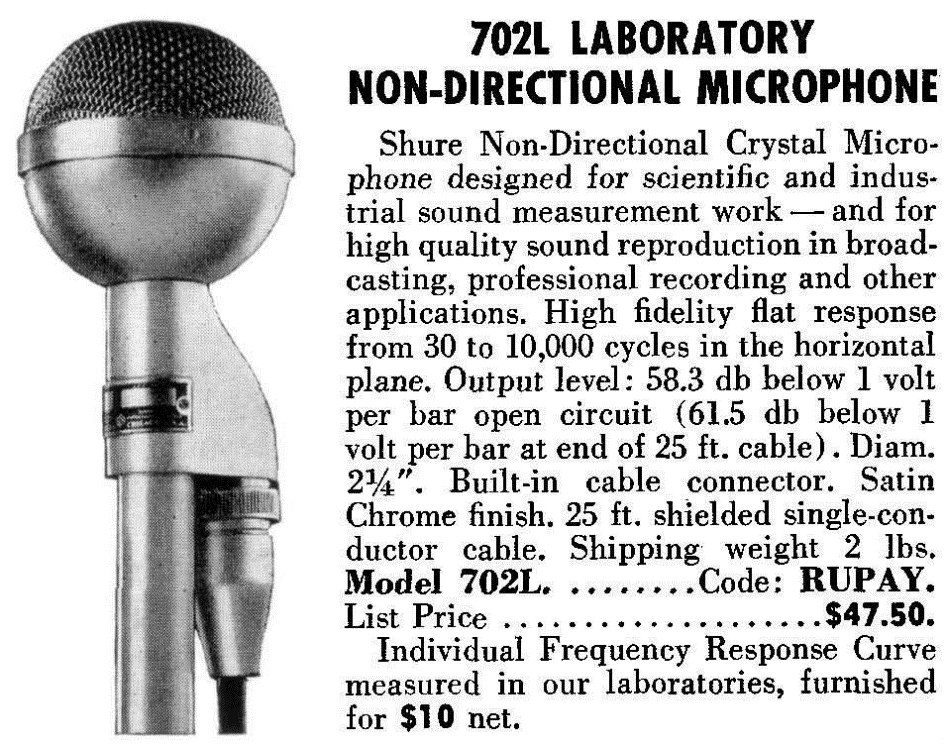

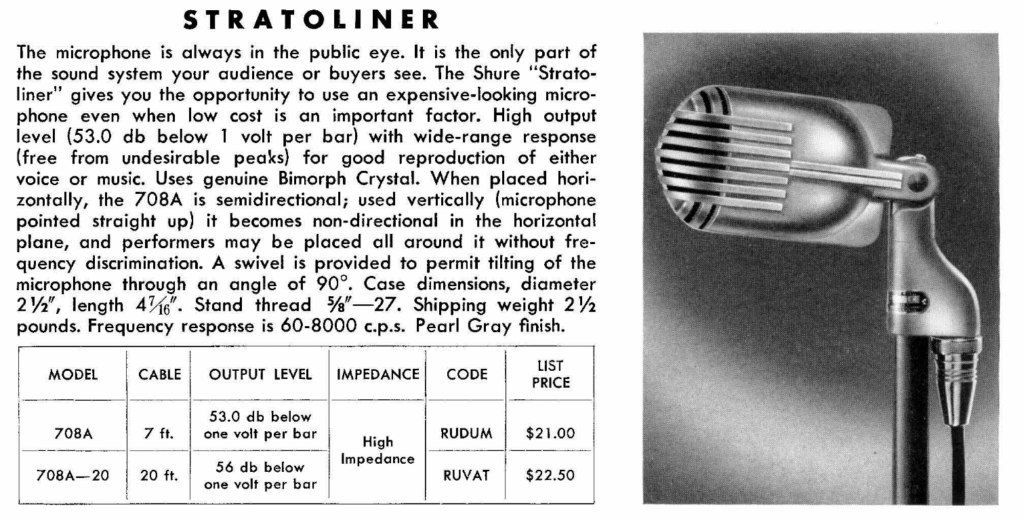
Note the Shure devices used at Operation Crossroads contained crystal transducers, chosen because the Rochelle salt crystal elements would be unaffected by the enormous electro-magnetic pulse created by the explosion.
Related information: Official Film of Operation Crossroads
Arcana – mysterious or specialized knowledge
General MacArthur’s succinct speech given on the USS Missouri, September 1945:
“We are gathered here, representatives of the major warring powers, to conclude a solemn agreement whereby peace may be restored. The issues, involving divergent ideals and ideologies, have been determined on the battlefields of the world, and hence are not for discussion or debate. Nor is it for us here to meet, representing as we do a majority of the people of the earth, in a spirit of distrust, malice, or hatred. But rather it is for us, both victors and vanquished, to rise to that higher dignity which alone befits the sacred purposes we are about to serve, committing all our people unreservedly to faithful compliance with the obligation we are here formally to assume.
“I hope a better world shall emerge out of the blood and carnage of the past, a world founded on faith and understanding, a world dedicated to the dignity of man and the fulfillment of his most cherished wish for freedom, tolerance, and justice.
“As supreme commander of the Allied powers, I announce it my firm purpose, in the tradition of countries I represent, to proceed in the discharge of my responsibilities with justice and tolerance, while taking all necessary dispositions to ensure that the terms of surrender are fully, promptly, and faithfully complied with.”
After all parties had signed the treaty, MacArthur concluded, “These proceedings are closed.”
***
How loud is a nuclear bomb detonation? At one test, a sound level meter placed 250 feet away from a detonation site peaked at 210 dB SPL. The calculated level at the source was 240 to >280 dB SPL. Medical research suggests a shock wave blast of > 210 dB will be lethal.
