
When United States Signal Corps inspectors approved the T-17 Microphone made by Shure in 1942, Shure officially “joined the Army.” The change was aptly described as “the factory taking office civilians and putting on an Army uniform.” Shure production lines were redesigned for new products and higher production levels. New equipment was installed for designing, testing, and manufacturing new products. Company policies and regulations all reflected the new military discipline. This paved the way for the Shure T-17 to roll smoothly and efficiently along production lines that were able to keep pace with the rising demand.
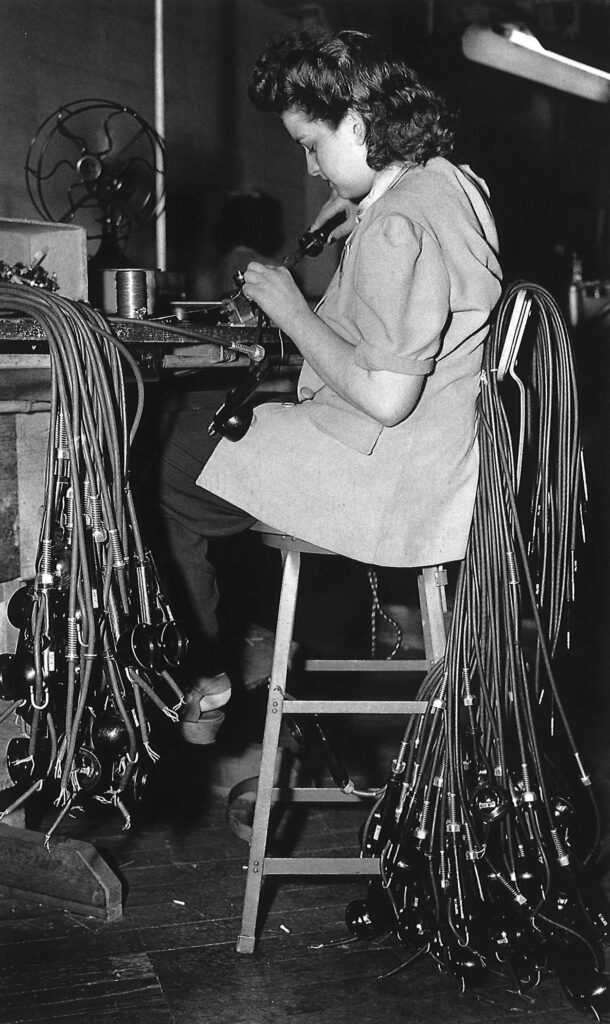
During the war, the T-17 was the most widely used microphone in the U.S. Army and Air Force. Through announcements at the plant and news broadcasts from the front each day, the men and women at Shure realized the importance of their work. As one Company memo stated: “Those screws, washers, and other small parts mean the difference between life and death to millions of fighting men in the widespread battle lines of the Allied Forces.”
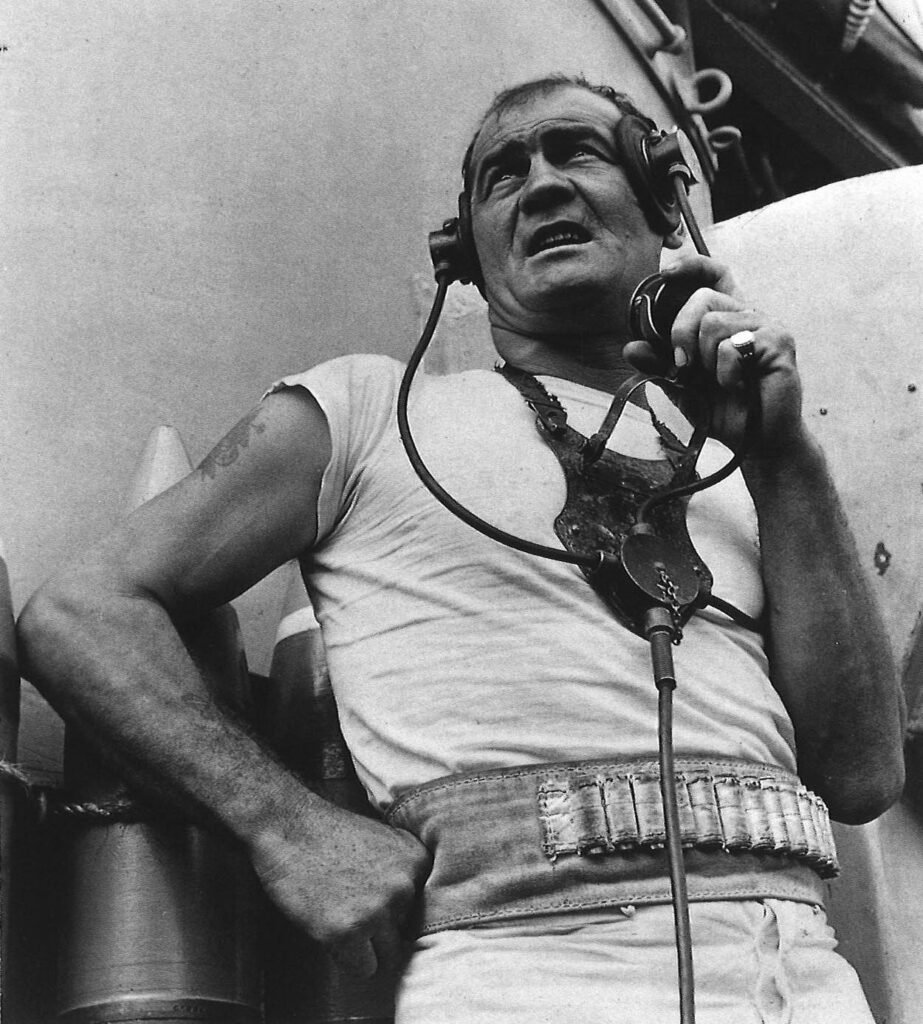
The T-17 proved worthy on the battlefield, and it was estimated to have saved “2,500 man and machine hours per month.” These savings resulted from using Shure’s redesign, using plastic rather than aluminum for the microphone case. Aluminum was a precious commodity during the war, and the plastic design was an important achievement by Shure’s engineering staff.
After the Japanese attacked Pearl Harbor and the United States entered the war, the War Production Board (WPB) took control of all steel, copper, aluminum, rubber, silk, and nylon. The WPB quickly stopped the manufacture of 300 kinds of items it deemed “unessential,” including refrigerators, beer cans, and toothpaste tubes, and allocated the raw material for these items to military products. Because of the T-17’s plastic case, some of the aluminum allotted to Shure for the production of microphones could be “reassigned” by the WBP to other wartime uses.
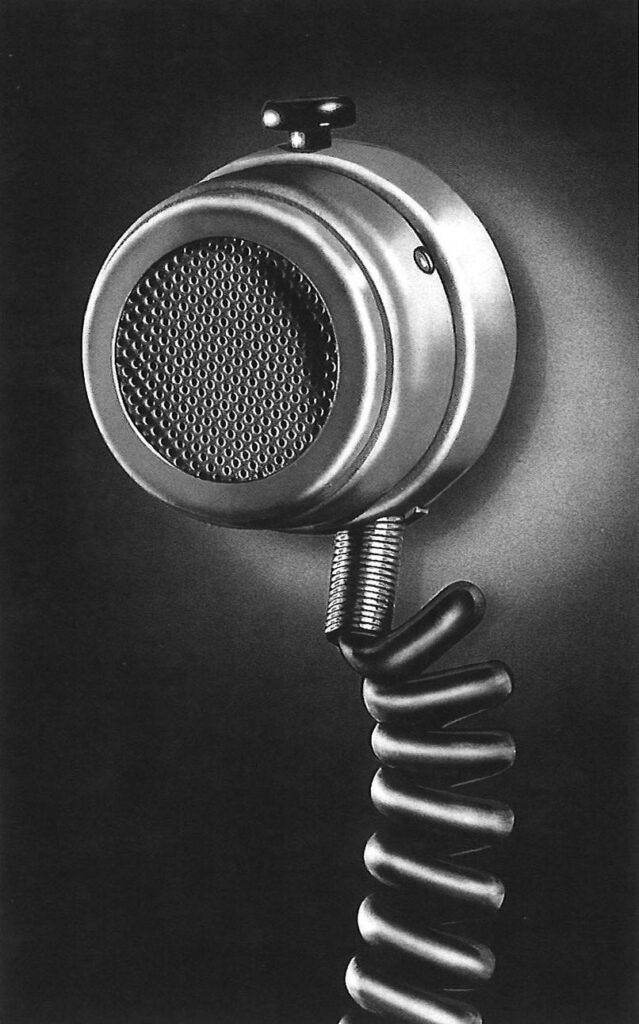
The plastic T-17 could be produced more quickly than metal microphones; and it was safer and more comfortable, especially in extreme temperatures. The T-17 plastic case was half the weight of aluminum and had superior electrical insulating qualities; so it could perform well in all types of environments—from tanks patrolling the deserts of Africa to remote military posts in the Arctic.
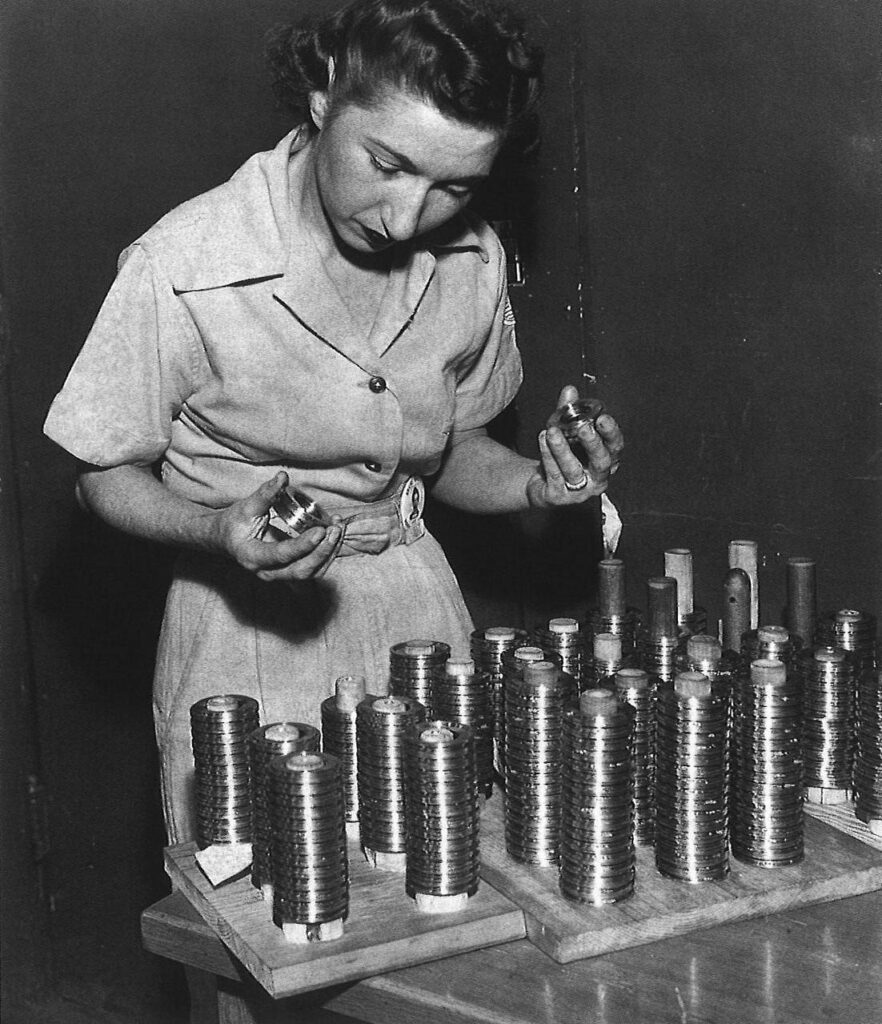
For assistance in converting the microphone design from aluminum to plastic and to create molds for plastic parts, Shure turned to Chicago Molded Products Corp. Because of the superior accuracy of the plastic molding process developed by Shure and Chicago Molded Products, proper assembly of all the microphone parts was greatly simplified, saving about 100 hours of machining for every 1,000 units.
In 1944, the Department of Defense created a display about the T-17 in the Pentagon as part of a new conservation exhibit. As the most widely used microphone in World War II, the T-17 earned an important place in the history of the military and in the development of Shure.
