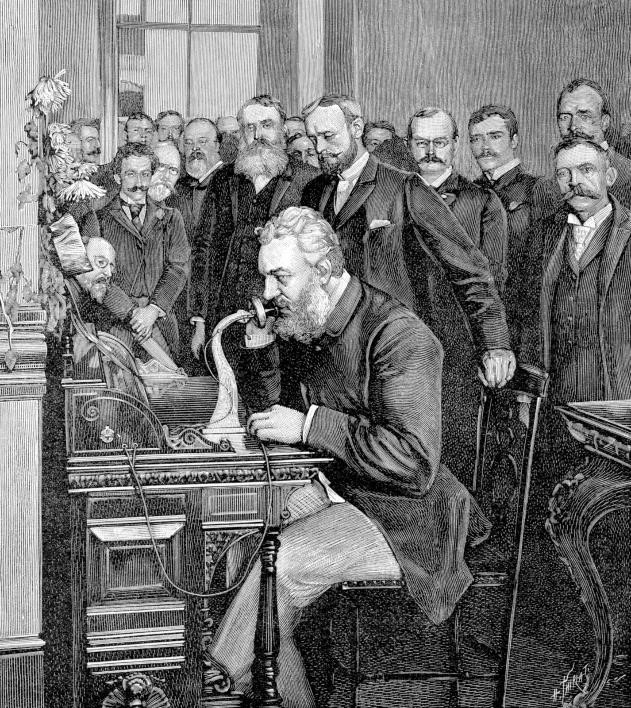
In 1925, Western Electric Research Laboratories and the engineering division of American Telephone & Telegraph (AT&T) merged to create Bell Telephone Laboratories. The ownership of Bell Labs was shared between Western Electric and AT&T.
The principal work of the Labs was to design and support the telephone equipment Western Electric manufactured for Bell System companies. At its peak, Bell Labs developed a wide range of revolutionary technologies, including radio astronomy, the transistor, the laser, information theory, the UNIX operating system, and programming languages. Bell Labs also provided consulting for U.S. government programs, such as the Apollo missions to explore the Moon.
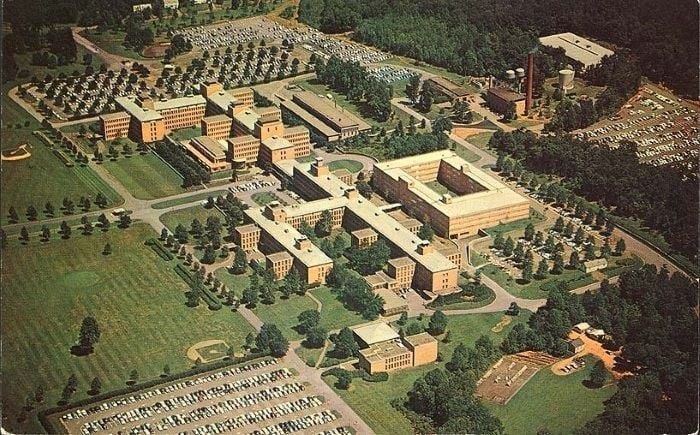
A percentage of Bell Lab scientists were assigned to basic research. This prescient decision produced multiple Nobel Prize winners.
- 1937: Clinton J. Davisson shared the Nobel Prize in Physics for demonstrating the wave nature of matter.
- 1956: John Bardeen, Walter H. Brattain, and William Shockley received the Nobel Prize in Physics for inventing the transistor.
- 1977: Philip W. Anderson shared the Nobel Prize in Physics for developing an improved understanding of the electronic structure of glass and magnetic materials.
- 1978: Arno A. Penzias and Robert W. Wilson shared the Nobel Prize in Physics. Penzias and Wilson were cited for their discovery of cosmic microwave background radiation, a nearly uniform glow that fills the universe in the microwave band of the radio spectrum.
- 1997: Steven Chu shared the Nobel Prize in Physics for developing methods to cool and trap atoms with laser light.
- 1998: Horst Störmer, Robert Laughlin, and Daniel Tsui, were awarded the Nobel Prize in Physics for the discovery and explanation of the fractional quantum Hall effect.
- 2009: Willard S. Boyle and George E. Smith shared the Nobel Prize in Physics with Charles K. Kao. Boyle and Smith were cited for the invention of the charge-coupled device (CCD) semiconductor imaging sensor.
- 2014: Eric Betzig shared the Nobel Prize in Chemistry for his work in super-resolved fluorescence microscopy.
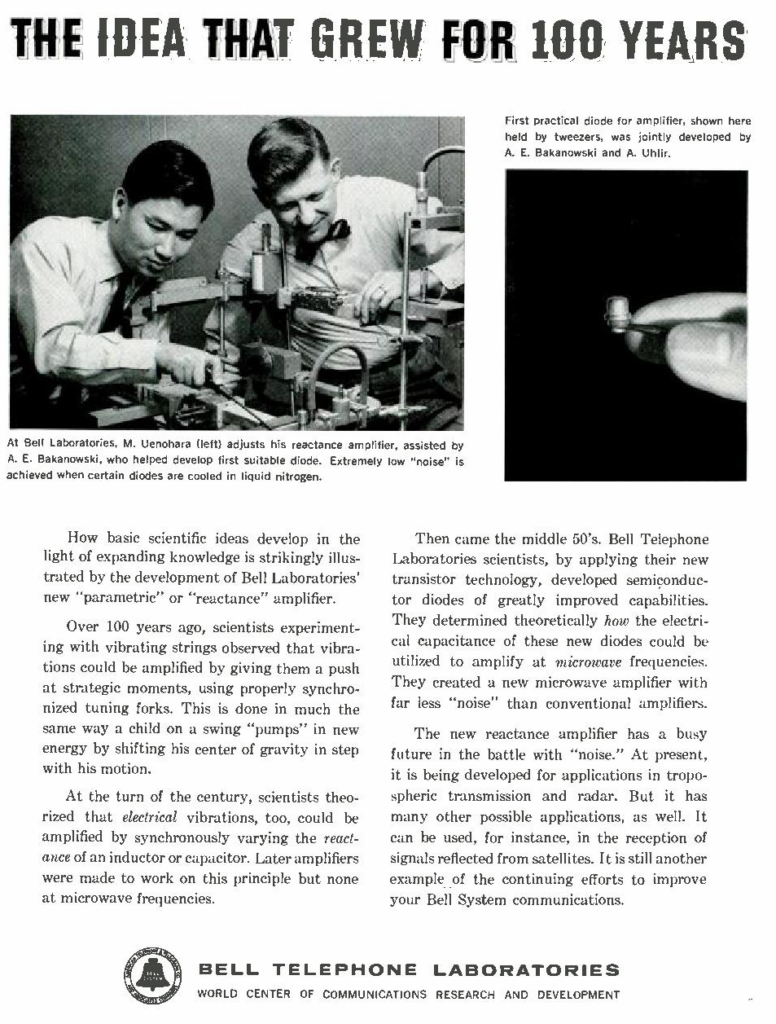
The technology and terminology used in the professional audio industry, like the decibel, are rooted in the work of Bell Labs. Its accumulated acoustical/audio knowledge was presented to the world via the venerated Bell System Technical Journals, available at:
http://ieeexplore.ieee.org/xpl/RecentIssue.jsp?punumber=6731002
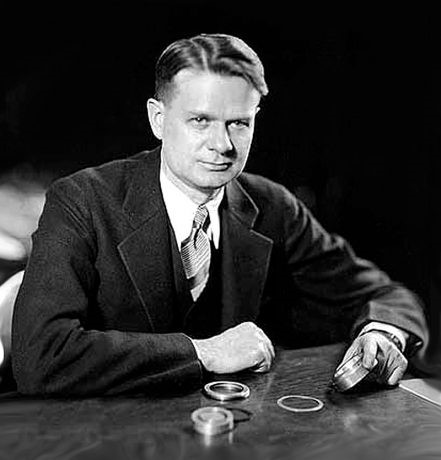
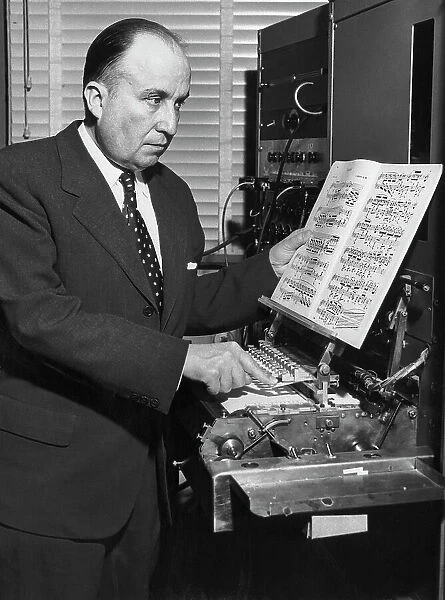
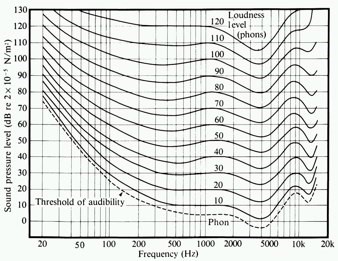
In the Bell Lab journals, one finds the writings of distinguished audio researchers, such as Harvey Fletcher (Fletcher-Munson auditory curves), E. C. Wente (condenser microphone innovator), and Harry F. Olson (ribbon microphone innovator).
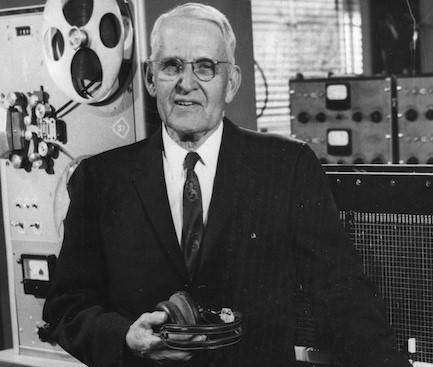
Related information: Bell Labs paper on conference room acoustics
Arcana – mysterious or specialized knowledge
For decades, Bell Labs played jolly old Saint Nicholas – giving knowledge to the professional audio world. Knowledge is a great holiday gift, but so is a Red Ryder BB gun. BB = Ben Bauer?
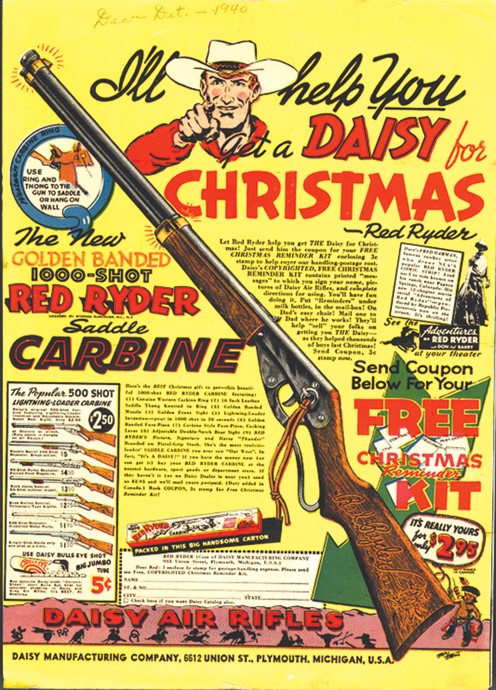
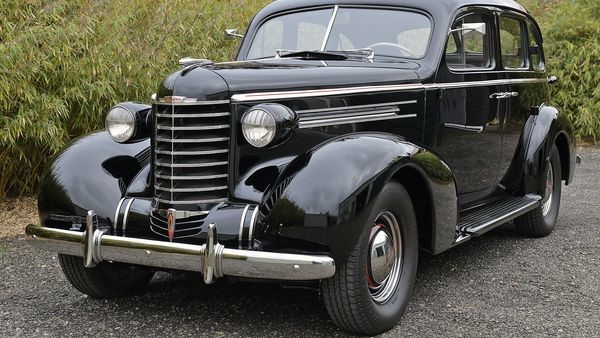
The movie “A Christmas Story” features the Daisy air rifle and a 1937 Oldsmobile Coupe Six; its grille inspired the Unidyne I industrial design.
***
Ever given much thought to the concept of loudness and how it is measured? If not, here is the seminal Bell Labs article by Fletcher and Munson, dated 1933:
https://www.worldradiohistory.com/Archive-Bell-System-Technical-Journal/30s/Bell-1933d.o.pdf
Note Figure 4 in the article – the first publication of the Fletcher-Munson curves.
***
In the late 1950s, S. N. Shure contracted Harvey Fletcher to be a technology consultant.
***
Research at Bell Labs led to the development of the transistor. Here is a link to the patent for a “circuit element using semiconductive material”: http://wedophones.com/TheBellSystem/pdf/02569347.pdf
***
The decibel is 1/10 of a Bel. The Bel unit, named for Alexander Graham Bell and devised to measure signal power losses on telephone lines, was deemed too large for routine use. So, the Bel was divided by ten and dubbed the deciBel, abbreviated as dB. 1 dB is the smallest level change that the typical human ear can detect.
***