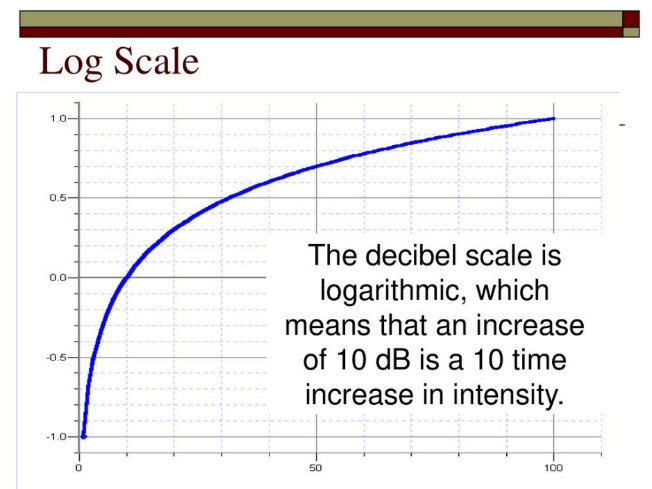
Arriving early for a party, I struck up a conversation with the host. Working in the kitchen, about 20 feet [6 meters] from where I stood, she said. “Have a seat and I will tell you what’s been going on.” I settled into a nearby comfy chair, and we chatted. The house was quiet; it was no problem to converse even though the talker/transmitter (the host) stood 20 feet from the listener/receiver (me).
Later that evening, the house filled with guests and the host decided to continue our earlier conversation. But to hear each other we had to be one foot apart…the talker/transmitter had to be much closer to the listener/receiver. What changed?

The answer: the ambient (background) noise level had increased due to the numerous conversations in the room. For me, the host’s voice was the signal that I wanted to hear. All other sounds were noise because these were signals that did not interest me. Yet when I arrived at the party, and the noise level was quite low, I could be 20 feet away and converse.
This is a practical demonstration of Signal-to-Noise Ratio. The signal is the voice of the host; the noise is everything else. The noise is uncorrelated (random) acoustical debris. If the level of the noise is greater than the level of the signal, I cannot understand what is being said. Everyone has experienced a poor Signal-to-Noise Ratio at a party, or a rock concert, or sporting event. Noise creates an acoustical fog that makes it difficult, or impossible, to understand speech.
Here is a related question: Why might a Shure wireless mic system work at over 400 feet in the Utah desert, while the same exact Shure wireless system will not work satisfactorily at only 50 feet in New York City? As the wireless mic system did not change, what did?
The answer: the ambient (background) RF (Radio Frequency) noise level increased due to the many sources of RF transmission in New York City. Examples are numerous TV station transmitters, two-way radio signals, broadcast radio signals, Wi-Fi, data networks, plus the ubiquitous smartphone, owned by every New Yorker and consistently in use. These signals are uncorrelated waves of electro-magnetic debris. Even though most of these RF noise sources do not operate on the same frequency as the Shure wireless system, these sources raise the level of RF garbage. This makes it difficult for the Shure transmitter (talker) to be heard by the Shure receiver (listener). Just like what happened at the party, the receiver has a tough time sorting out the desired transmitter signal from the undesired noise.
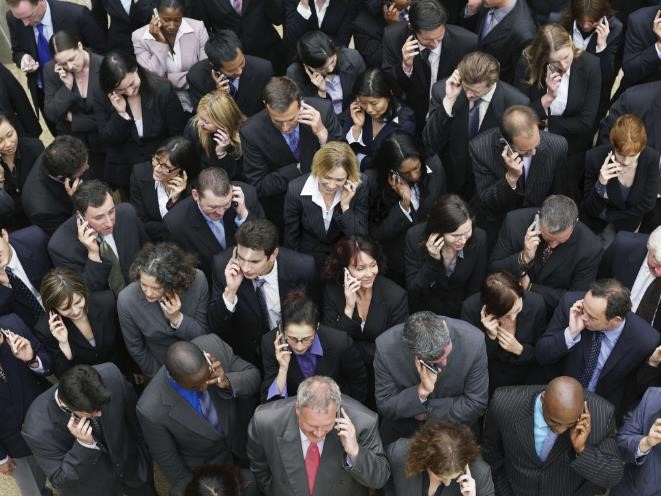
In an environment with a high level of RF noise, the receiver (or the receiver antennas) must be located closer to the transmitter. This improves the RF Signal-to-Noise Ratio. The receiver then can pick up the desired transmitter because the signal is now stronger than the noise.
One method for making a wireless receiver more selective (improving the ability to sort out the signal from the noise) is by adding “front-end RF filters.” Located after the antennas, these filters reduce the level of RF noise sent into the receiver. Effective filters of this type are expensive and primarily found on higher priced wireless systems. Directional antennas also can improve the RF signal-to-noise ratio.
Related information: Wireless Mic Remote Antenna App
Analog wireless versus digital wireless
Antenna Diversity Explanations
Arcana – mysterious or specialized knowledge
The intelligibility of speech is directly related to the signal-to-noise ratio in the acoustical environment in which the speech is heard. Put simply, it is difficult to hear intelligible speech in a noisy room.
- If speech level is 0 dB to 10 dB above background noise level, intelligibility will be unacceptable.
- If speech level is 10 dB to 20 dB above background noise level, intelligibility will be poor to fair.
- If speech level is 20 dB to 30 dB above background noise level, intelligibility will be fair to good.
- If speech level is 30 dB to 50 dB above background noise level, intelligibility will be good to excellent.