Shure entered the wireless microphone market in 1953 with the Vagabond 88 system, then exited in 1960 after discontinuing the Vagabond. For the following quarter of a century, we did not make a wireless mic system, yet were an essential part of the then-nascent technical niche.
In the 1970s, a number of small audio companies sold crystal-controlled, single channel VHF wireless mic systems; firms such as Swintek, Edcor, HME, Nady, Samson, and Vega. To satisfy customer demand, these companies approached Shure about buying the Unidyne III SM58 element for use on their handheld transmitters. Shure thought, “Why not? We are not manufacturing wireless mics. Let’s make money from this market.” Our OEM sales department soon found itself with new customers and a profitable business sector.
Swintek dominated the performance market in Las Vegas showrooms. Bill Swintek, the founder, owner, and chief designer had Vegas showroom sound engineer contacts who aided in establishing the brand. Swintek wireless mics were rugged, provided solid RF performance with acceptable audio quality, and featured a shiny chrome handle – just the ticket for the glitz of Las Vegas.

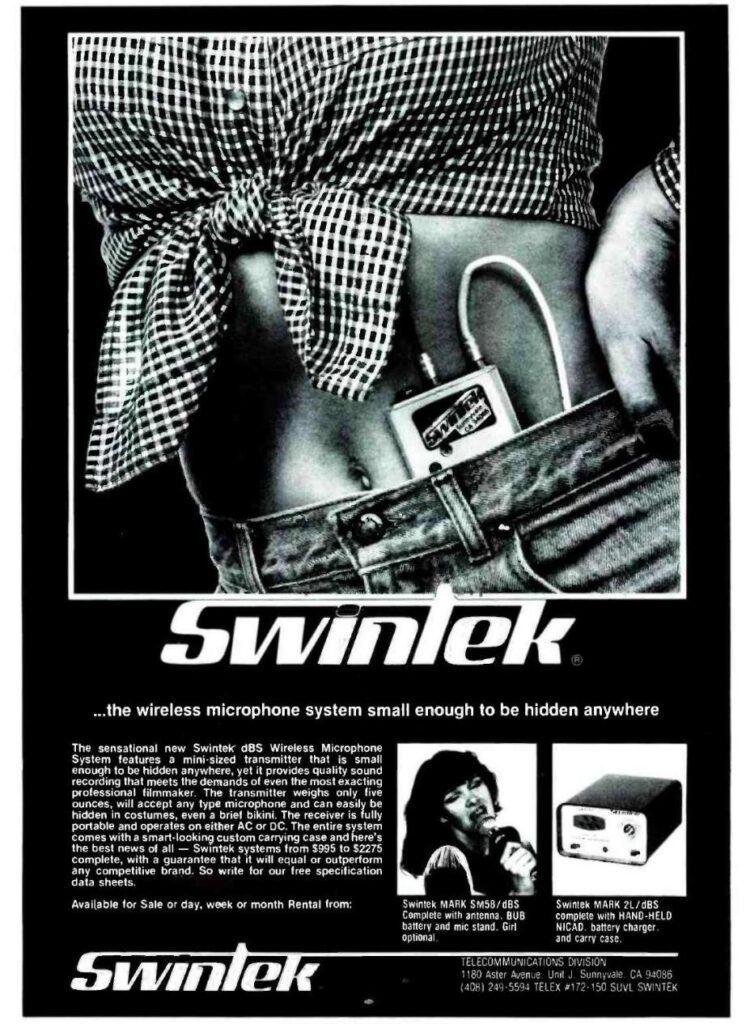
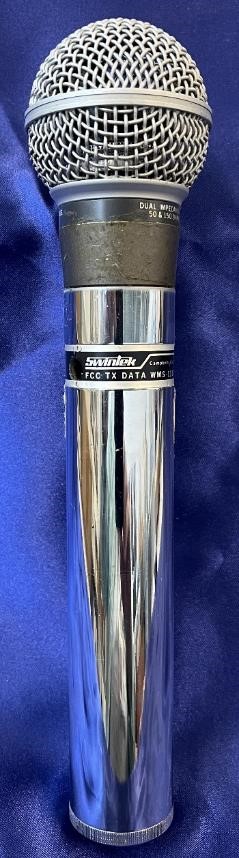
Powering the Swintek transmitter was a single 9 Vdc battery. Swintek systems often operated in the “traveling” VHF frequency band located below TV channel 7 and above TV channel 6. This band was dubbed “traveling” because the system could operate anywhere in the United States and not encounter interference from a television station. The mic above, recently acquired for the Shure Archive, operated at 171.025 MHz.
Around 1985, Shure management looked at the enormous quantity of SM58 OEM wireless mic elements being sold, considered that for each OEM unit sold a wired SM58 was not being sold, and realized that a wireless mic system was a far larger dollar sale than a wired mic. Perhaps it was the time to get back into the wireless mic business.
Shure formed a partnership with Telex, then an OEM customer for the SM58 wireless head. Telex agreed to manufacture Shure-branded receivers while we would manufacture the transmitters. In 1988, Shure W-Series wireless mic systems hit the market. Our VHF fixed-frequency SM58 handheld diversity system retailed for $1,950 – that’s $5,500 (!) in 2025 currency.
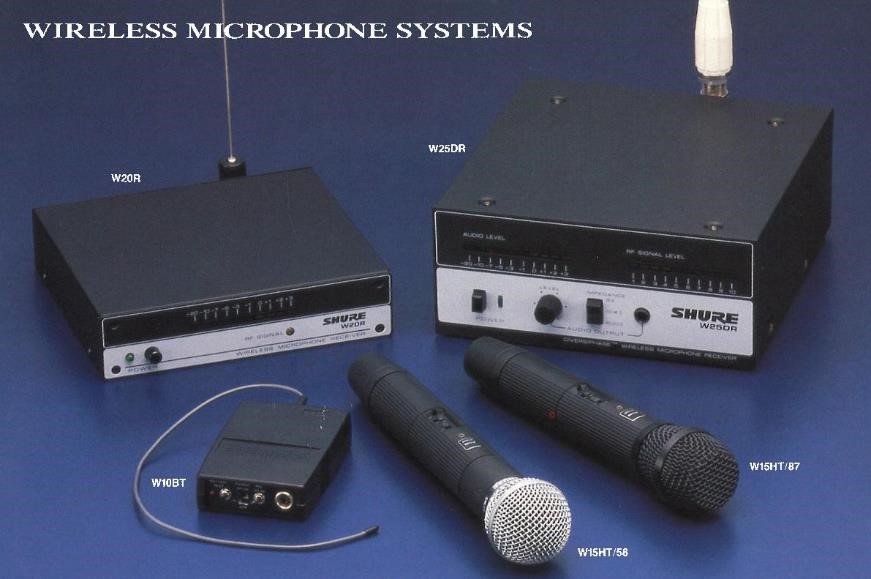
As our wireless mic business expanded, we delivered a coup-de-grace to our competitors. OEM customers were informed we would stop selling our SM58 wireless mic heads, but, if desired, they could enter a “final buy” purchase order. Which they did…and their order quantities temporarily overwhelmed our production capacity. After the depletion of these final buy inventories if an end user wanted a wireless mic with an SM58 head, then the only choice was a Shure. The long-lived popularity of the SM58 remains a major selling advantage for our wireless systems.
Related information: Shure Apps Tech Tip #345, #346
Arcana – mysterious or specialized knowledge
At the NAMM show last week, a software plug-in from Korneff Audio debuted that simulates the Shure M62V Level-Loc; the introductory price is $74.99. Here is an explanatory video about this new plug-in: M62V Plug-In
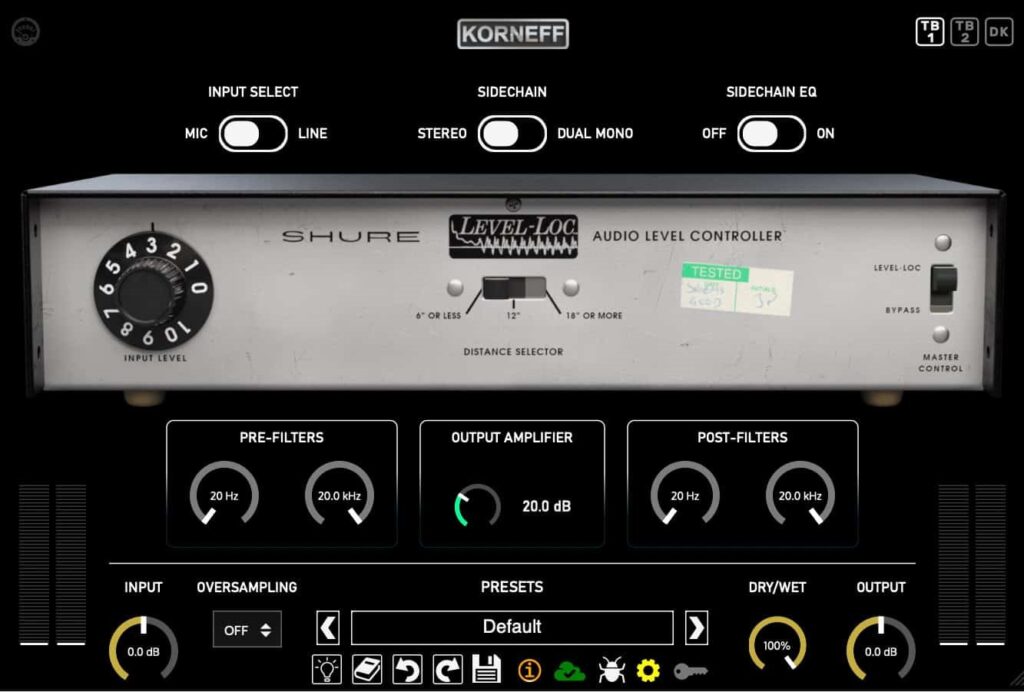
As a hardware alternative to an audio plug-in, Black Lion Audio introduced its version of the M62V Level-Loc, priced at $499.
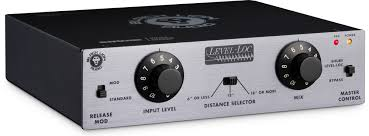
If a reader missed Tech Tip #572 about the Level-Loc, check out this post.
***
dB magazine, July 1974.
Article: “Sound In The House”
Wireless mics are the heart of good house sound, but the mic worn as a lavalier simply cannot compare to the mic held to the mouth. Therefore, although I’ve been using the Astro wireless mic, I am now experimenting with a system designed by ex-Astro engineer Bill Swintek. A system consists of a Shure 545 mic head working into an eight-inch transmitter operating at approximately 175 MHz. The package will sell (transmitter and receiver) in the neighborhood of $1,000 [$6,800 in 2025 currency].
To date, your author has not found information about Astro wireless mics.
***
Sony also marketed wireless mic systems in 1970s & 80s. Though a major brand in consumer electronics worldwide, wireless mics were an afterthought at Sony. For that era, Sony systems worked well enough to be used on tour by the Rolling Stones and Michael Jackson. The Stones, being perpetually loyal to Shure, insisted upon replacing the Sony mic element with the SM58. Sony was displeased but knuckled under to the demands of the band. A small run of Sony transmitters sporting SM58 heads were fabricated. After the tour ended, Sony gathered up every transmitter with the SM58, shipped them back to Japan, and they have never been seen again.