Quick! List each Shure wireless microphone line that has the letter “L” in the model number.
Did you remember all nine of them? Alphabetically, they are…and were:
- BLX Series
- GLX-D Series
- L Series
- LX Series
- QLX-D Series
- SLX Series
- SLX-D Series
- ULX Series
- ULX-D Series
But why the “L” did we choose “L?”
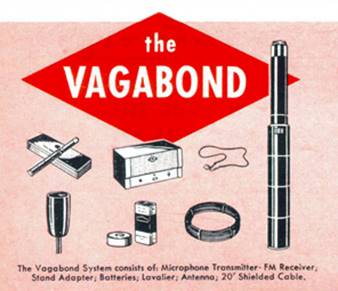
Might “L” mean 50 as it does in Roman numerals? Our first wireless mic system, the Vagabond 88, debuted in 1953, so “L” could refer to the 1950s.
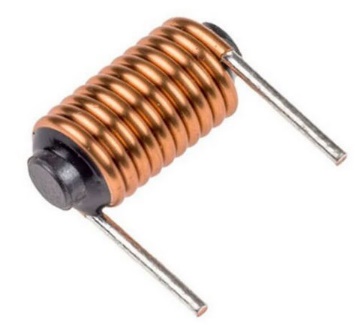
“L” stands for inductance – the resistance of a circuit element to changes in current. Inductors are commonly employed in wireless mic designs.
In watchmaking, “L” represents the ligne, a traditional French measure of length. It is equal to 0.0888 of an inch or about 2.2 mm. 136 GHz has a 2 mm wavelength – a tad too high for wireless mics.
“L” can also stand for liter, a measurement of capacity.
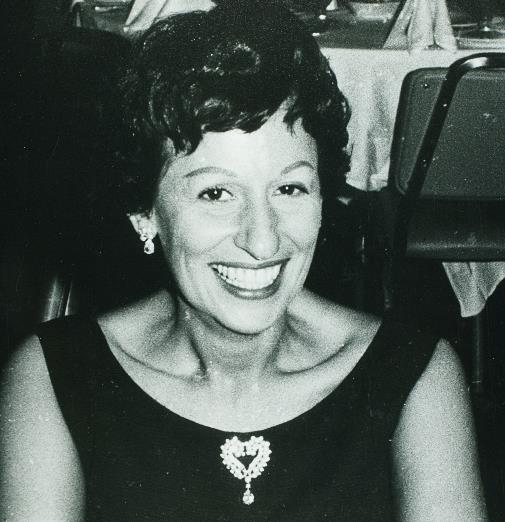
For Mrs. Rose L. Shure, “L” meant Langer – her family surname.
Well, it is none of the above. Here is how the “L” became firmly embedded in our wireless microphone product names.
After exiting the nascent wireless mic business in 1960, Shure decided to re-enter the market around 1985. We did so by forming a partnership with Telex. They manufactured the Shure-branded VHF receivers, diversity and non-diversity. We fabricated the transmitters, bodypack and handheld. These products were sold as the Shure “W” series – W for Wireless. Granted, not exceptionally clever marketing on our part.
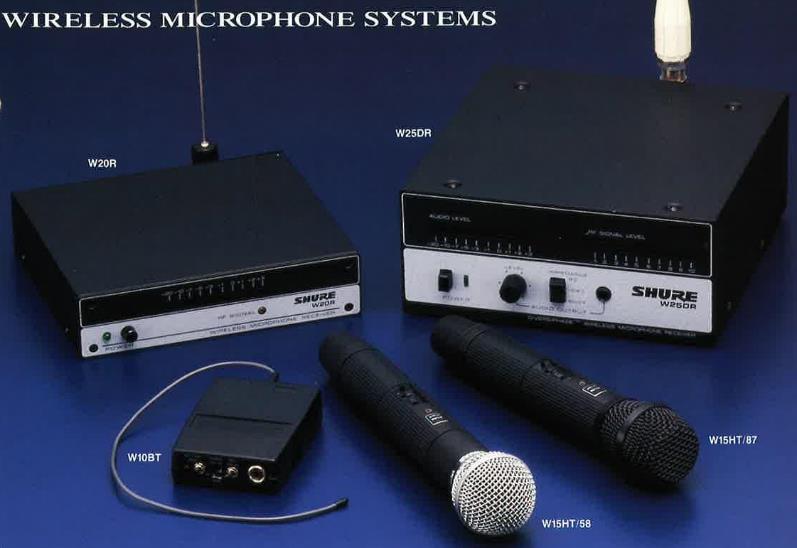
1990 became the target date to introduce a new, all-Shure VHF wireless system. Our wireless product manager, Sandy Schroeder, became inspired by the Vagabond moniker, so he searched for a single word to express the performer’s freedom when not tethered by a mic cable. He settled on “Liberty.” Our new VHF wireless products would be the Liberty Series.
At the same time, Sandy conceived of the numbering system: 1 = bodypack transmitter; 2 = handheld transmitter; 3 = non-diversity receiver; 4 = diversity receiver; 5 = portable receiver; the Liberty 1, 2, 3, 4, or 5. Liberty was too long for a model number, so it was truncated to “L.”
Full speed ahead, Sandy…almost.

Several months before the planned introduction, Shure’s Intellectual Property Department was researching the word Liberty for use as a trademark. Wireless mic competitors had not adopted the word and our confidence was high. Suddenly, an enormous iceberg was spotted, floating dead ahead. Anchor Audio had employed the word Liberty for portable battery-operated powered loudspeakers. As these products were sold in the pro audio market, the trademark office would likely reject Shure’s Liberty submission. Sandy was told, “You can’t use Liberty.”
Now what? Products were being manufactured for the introduction. Must we scrap all of it?
Sandy called a brain-storming session of product managers – your author was in the meeting. It soon dawned on us that Liberty appeared only on packaging and user guides. The products were simply marked as L1, L2, L3, or L4. One of us offered (I can’t remember whom), “Let’s drop the iberty and called it the L-Series.” And that is what we did.
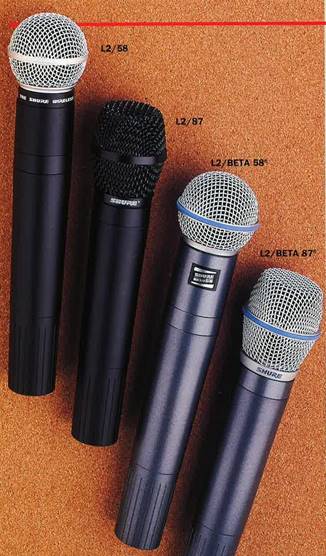
When the successful L-Series needed an update, the development project was code-named “LX;” our intention being to eventually replace the “X” with a different letter or number. When it came time to christen the new series, we were so accustomed to the LX name that it was kept.
So that dear readers is how the “L” and the “X” became part of Shure wireless microphone nomenclature history. Nota Bene: this is not an April Fools tale…
Related information: https://www.uspto.gov/trademarks
Arcana – mysterious or specialized knowledge
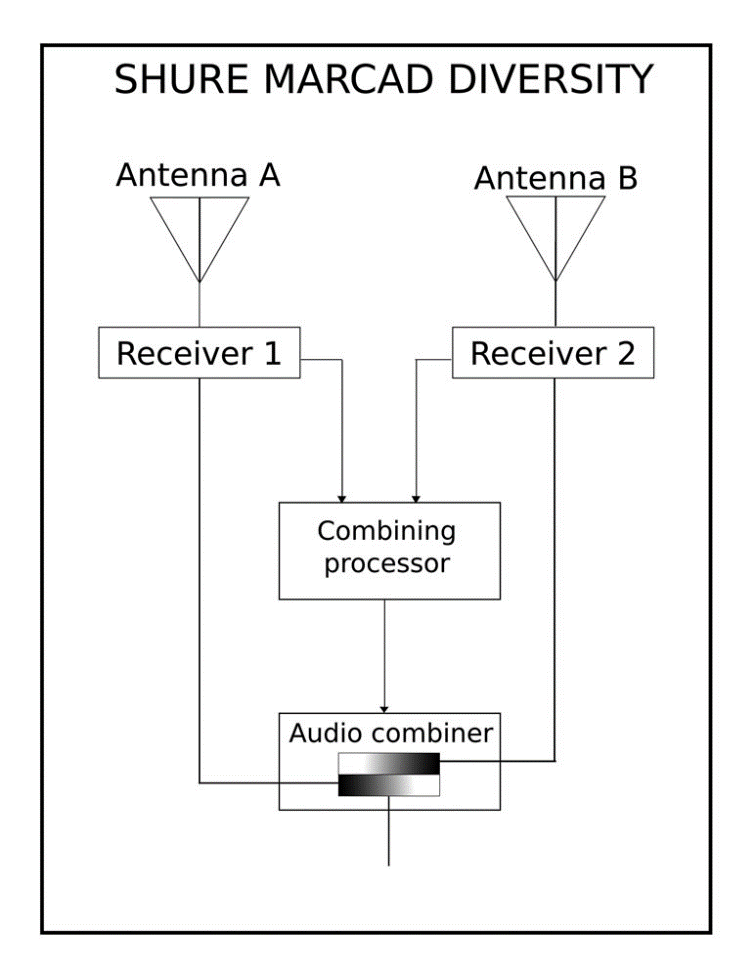
Though Shure did not trademark Liberty, we did trademark MARCAD – MAximum Ratio Combining Audio Diversity. MARCAD is a dynamic vector addition of both antenna signals, i.e., instead of the diversity receiver switching between Antenna A and Antenna B, the MARCAD circuit sums the useable signals from both antennas.
Now retired, Sandy provided the following additional history. Thank you, Sandy!
For Shure to re-enter the wireless mic business relatively quickly, there was not time to design and build our own system. Most of our competitors were already selling wireless systems by that time, and we were already behind the pack. So, Edgar Reihl and I went shopping. After evaluating a number of existing systems, we decided that Telex had designs that performed well, were relatively robust, and appeared to be well received by the market. When I approached Telex with the idea of building an OEM version of their system for us, they weren’t immediately sold on the idea. They were undoubtedly afraid that with Shure’s name and broad distribution network, we could significantly undermine their business. It turns out that all it took to change their minds was one short statement. I said, “We are going to enter this business with or without you…it’s your choice.” A day later, they agreed to supply us.
Of course, we fooled no one with the Shure-branded Telex products. The savvy sales reps knew right away that our units were built by Telex, but upper management forbade us from disclosing the source of our new wireless. It was an awkward situation. To make matters worse, Telex dropped their prices right after we introduced the W Series. This did much to hasten the development of the L-Series, which turned out to be quite successful.
***
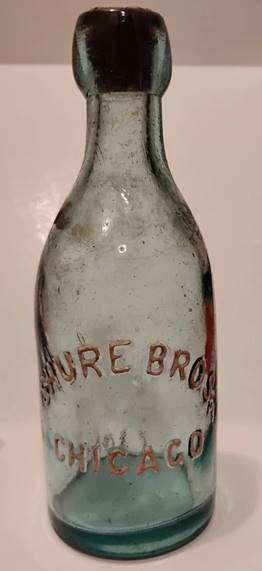
The Shure Bros., Chicago, glass bottle pictured below dates to the late 1870s and is not linked to our Shure Brothers. It was ten years after this bottle was filled with cola that the uncle of S.N. Shure, Nathan Shure, founded his Chicago-based N. Shure Company in 1888.
***
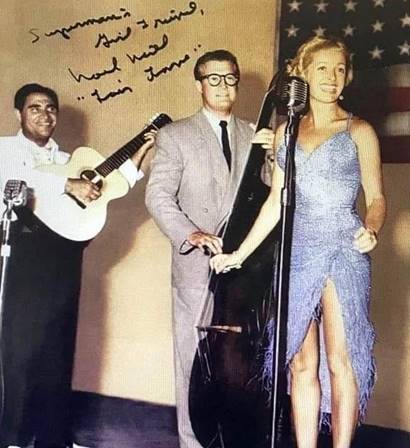
Baby Boomers, do you recognize the bassist in the following photo? It is George Reeves who famously played Superman on the 1950s television series. To supplement his acting salary, Reeves worked as a musician. The mic on the left is our Monoplex Model 737A crystal – of course it is a SUPER-cardioid. On the right is “The Mic that Needs No Name.”
***
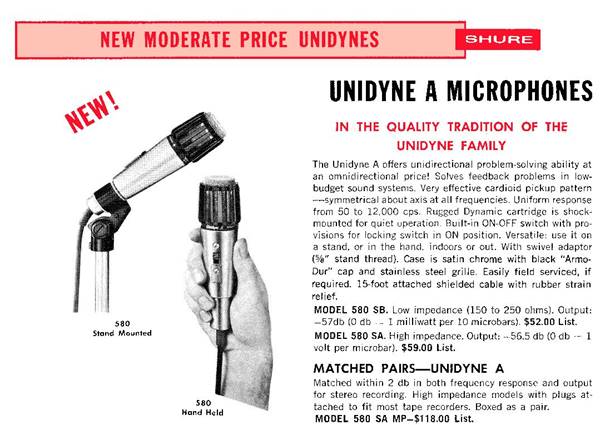
This is Tech Tip #580, so let’s look up in the sky…it’s a bird…it’s a plane…no, it’s the unidirectional Model 580SA and 580SB moving coil microphones. [S = switch; A = high impedance; B = low impedance]. This model offered “unidirectional problem-solving ability at an omnidirectional price!” It also had an industrial design only a mother could love.
Introduced in 1965 with a U.S. list price of $52 ($520 in 2025 currency), the Unidyne A Model 580SB was 60% of the Unidyne III Model 545 price. To learn more about the so ugly it is cute Model 580, please refer to Tech Tip #450 “Matched Microphones.”