
Category: Tech Topic

Shure Apps Tech Tip #563: Up On The Roof
On the roof it’s peaceful as can be…and there the world below can’t bother me.
So wrote Carole King and Gerry Goffin in 1962, but for one SM81 mic, the roof was not a peaceful place. The story begins when Shure decided to develop and market electret condenser microphones.
In 1978, we introduced our first modern studio-quality condenser mic, the SM81. Designed to be as rugged, durable, and reliable as the SM58, the SM81 encountered a few skeptics in the… -more-
Reprise – Shure Apps Tech Tip #155R: Radio Frequency [RF] Signal Attenuator
Each month features an updated reprise of a Tech Tip from ten years ago because many past Tips are well worth review. Also, some will benefit from updating. Enjoy the thirty-seventh monthly Tech Tip reprise.
It is common knowledge that an audio signal can be “too strong” and cause distortion when connected to an input that cannot handle the excess signal. One example would be a line level signal connected to a mic level input – the result is distorted… -more-

Fighting Feedback Since 1939
How do we fight feedback? Let me count the ways. Since the 1930s, Shure has waged a war on acoustical feedback.
Sales flyer for Unidyne and the Uniplex microphones, 1939
For two decades, unidirectional microphones were the weapons of choice. Then in the 1960s, acoustical consultant Charles Boner researched the behavior of indoor sound systems focusing on the phenomenon of feedback. His findings culminated in utility patents covering the use of narrow band notch equalization as a method of feedback… -more-

In Remembrance of D-Day – Eighty Years Ago
June 6, 2024, marks the 80th anniversary of the D-Day invasion at Normandy during World War II. Nearly 160,000 Allied troops landed on French beaches. Of those, 73,000 were from the United States, 83,000 from Britain and Canada. Forces from other countries were also involved, including French troops fighting with General Charles de Gaulle. The Allied forces faced around 50,000 German soldiers. Less than one year later, the war in Europe was over.
From 1942 through 1945, Shure Brothers Company… -more-

Reprise – Shure Apps Tech Tip #140R: Durability of a Super 55 Unidyne
Reprise – Shure Apps Tech Tip #140R: Durability of a Super 55 Unidyne
Each month features an updated reprise of a Tech Tip from ten years ago because many past Tech Tips are well worth review. Also, some will benefit from updating. Enjoy the thirty-fifth monthly Tech Tip reprise.
Shattered, Shattered
Photo by Stuart Van Dorn
Email from a musician in California:
After rehearsal, I started loading up gear. I was distracted with arms full of equipment and placed the… -more-
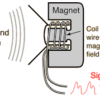
Shure Apps Tech Tip #551: Moving Coil Dynamic Microphone – The First Patent
2024 is the 150th anniversary of the moving coil dynamic microphone.
In January 1874, Ernst Werner Siemens, a citizen of Berlin, Germany, filed an application for a U.S. patent, entitled “Improvement in Magneto-Electric Apparatus.” This patent, No. 149,797, was granted April 14, 1874.
Yes, this is the person who founded the Brobdingnagian company bearing his name – Siemens Global, an employer of over 320,000 people worldwide. Its 2023 revenues were nearly seventy-eight billion dollars.
E.W. Siemens, 1885
Every Tech Tip… -more-
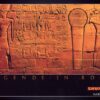
Shure Apps Tech Tip #550: The Prehistoric SM58
Two of the most memorable ads in Shure history debuted in the 1990s – created by Jack Levy Associates, an advertising agency in Chicago.
SM58 Legends In Rock – Stonehenge of England
SM58 Legend In Rock – Hieroglyphs of Egypt
In February 2024, my next-door neighbor, Matt, sent a text to me, “I recently found a mic in my basement. Had it for decades. You might want it for the Shure museum.” Matt and I have been neighbors for over… -more-

Shure Apps Tech Tip #138R: RF Wavelength and Propagation
Each month features an updated reprise of a Tech Tip from ten years ago because many past Tech Tips are well worth review. Also, some will benefit from updating. Enjoy the thirty-fourth monthly Tech Tip reprise.
The dictionary defines “propagation” as the spreading of a transmission. A wireless mic transmitter emits a Radio Frequency (RF) wave and this wave spreads away from the transmitter, i.e., RF wave propagation.
Water waves propagate. Drop a pebble in a quiet pond, and the… -more-

Shure Apps Tech Tip #549: Unmasking the Unidyne IV Model 548 – Part Two
Guest author Robin Magruder worked at Showco for 29 years, rising from Roadie to Executive VP/General Manager. Today, Robin is President and General Manager of Crossroads Audio, Dallas, Texas.
Robin kindly offered his recollections of the Unidyne IV Model 548 and its use by Showco.
“Showco started using the Model 548 microphone about 1970. I’m certain Showco was indeed Shure’s largest 548 customer – probably by far. I believe there were several reasons Showco chose the 548. It was rugged,… -more-
Shure Apps Tech Tip #548: Unmasking the Unidyne IV Model 548 – Part One
Originally posted October 2018, this updated Tech Tip #548 is reissued in homage of the Model 548.
Let’s begin with a brief history of the Unidyne family:
1939: Shure Model 55 Unidyne I – world’s first unidirectional, single element, moving coil dynamic microphone. A revolutionary breakthrough in the science of electroacoustics. Earns a patent for Ben Bauer in 1941. Garners the IEEE Milestone Award in 2014.
1951: Shure Model 55S Unidyne II – advertised as “The Microphone That Needs No… -more-