
Tech Tip #589 explained how Shure Brothers Company entered the microphone market in 1929 by distributing transducers manufactured by Universal, Kellogg, and Ellis. Mr. Shure became convinced microphones would be a growing and profitable market, so he set about to create Shure branded units.
In January 1932, the following advertisement appeared in the magazine Projection Engineering. To date, this is the earliest ad known featuring a Shure branded microphone.
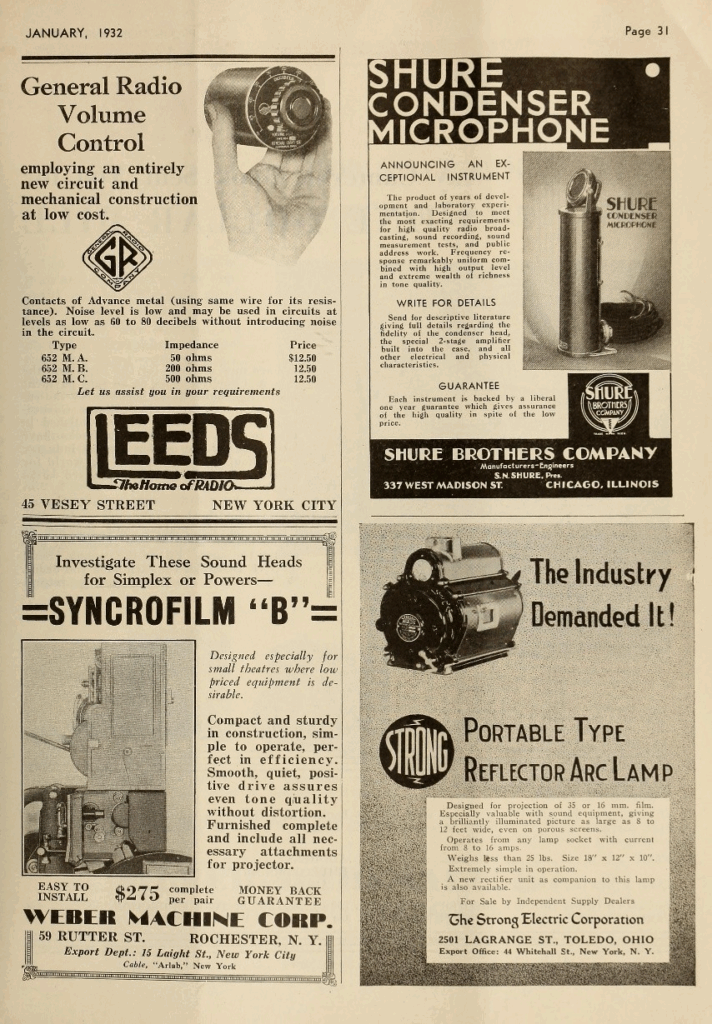
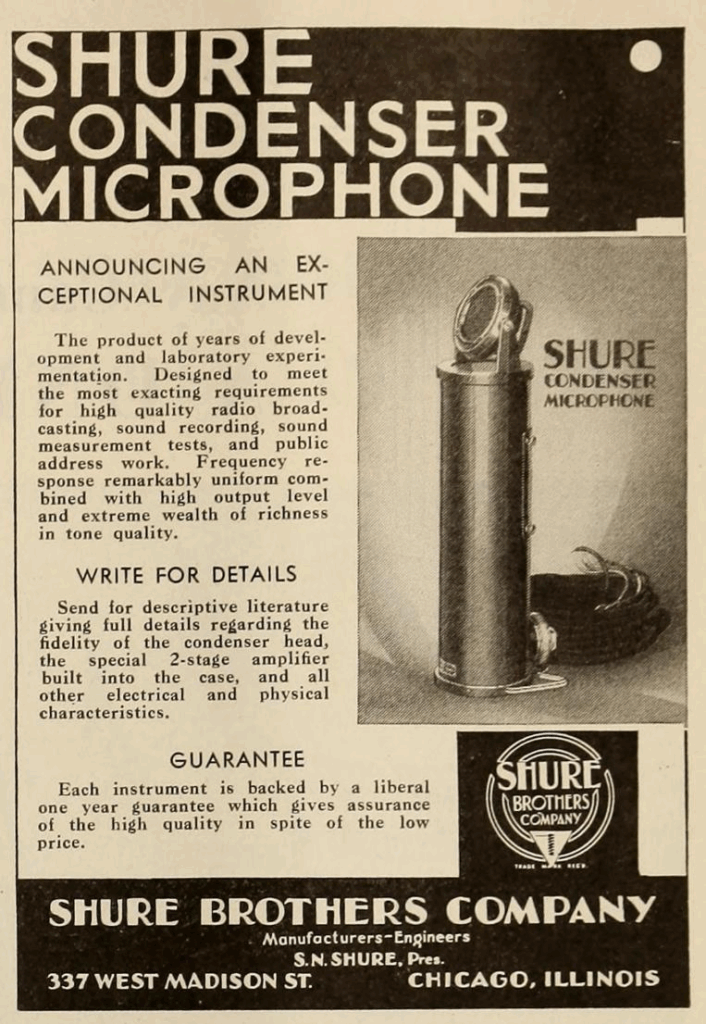
The Model 42, a condenser microphone for radio broadcasting, sound recording, sound measurement, and public address, carried a hefty retail price of $125 or $2,950 in 2025 currency. Battery requirements were 6Vdc at 60 milliamps for the filaments of the two internal vacuum tubes, and 180Vdc at 3 milliamps to operate the vacuum tube circuitry and to polarize the condenser mic element. The specified frequency response was 40 to 10,000 cps/cycles per second; now called Hz/Hertz.
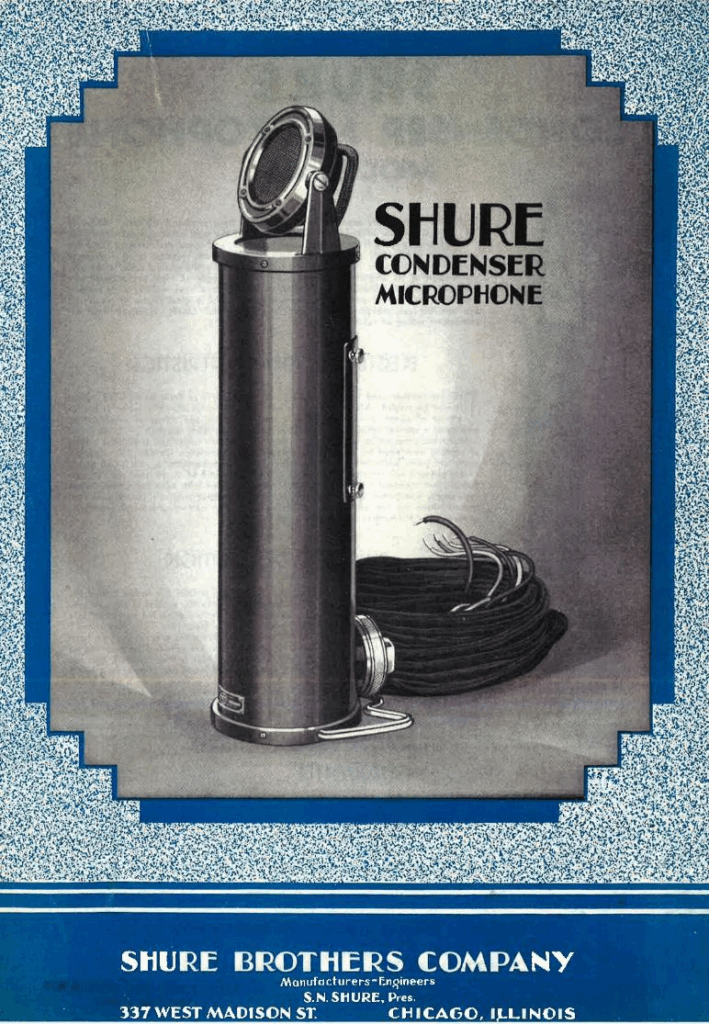
Here is the eye-catching cover used for our very first condenser microphone sales flyer.
Shure would exit the condenser mic market by the late 1930s, then re-enter in 1974 with the introduction of the SM82 line-level microphone for broadcasters. The SM82 contained the first electret condenser element ever employed by Shure. Any reader who desires more information about the SM82 may contact me via email, and I will provide a PDF of the white paper Applications and Design Considerations for a High-Quality Unidirectional Line-Level Microphone.
Related information: Shure 1933 catalog
Projection Engineering journals
Shure Apps Tech Tip #309: The SM82 Line Level Microphone
Arcana – mysterious or specialized knowledge
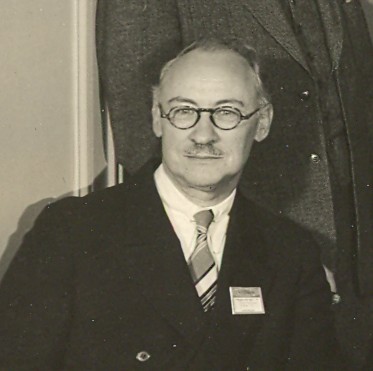
Mr. Harry Lea started at Shure Brothers Company in January 1932. Mr. Lea recalled, “I was a one-man assembly line, tester, repairman, and wrapping department. By 1933, we were beginning to grow. We bought a drill press, a lathe, and hired a full-time machinist. Soon we had enough work for a small handful of women assemblers, and I began to concentrate on repairing all makes of microphones. I managed the first Service Department at Shure.”
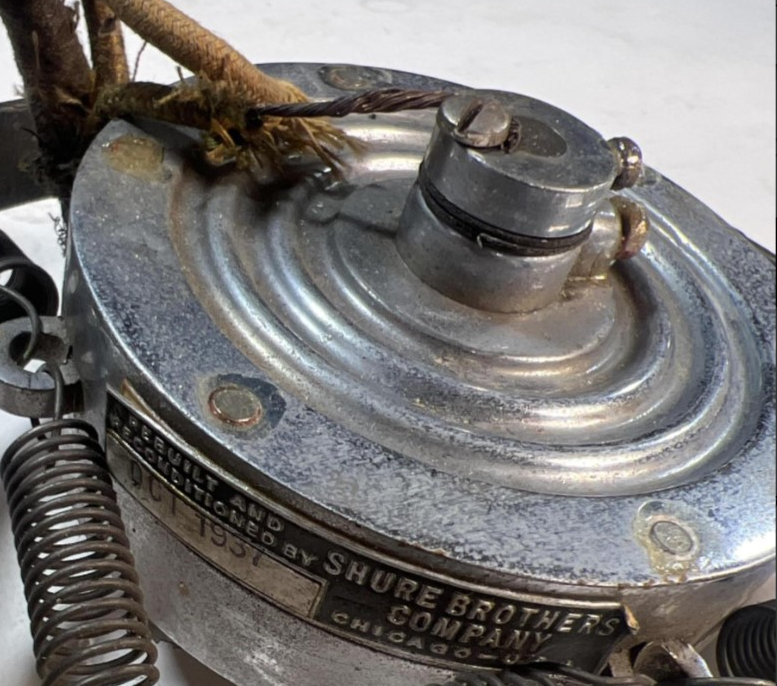
Below is a photo of a competitive carbon mic sporting a badge that reads Rebuilt and reconditioned by Shure Brothers Company Chicago – USA.
It is interesting to note that Mr. Lea’s statement contradicts our marketing hyperbole about the Model 42 which boasted – That our engineers have concentrated their years of microphone experience into the design of this model is attested by its appearance, performance, and low price.
***
A handwritten note in the Shure archive, undated and unsigned, asserts “In 1932, Mr. Shure had sixteen condenser mics made by a Mr. Roosevelt, who was in a wheelchair and worked out of his home workshop.” It is indeed feasible that some, or all, of our condenser mics from the 1930s were sourced instead of being manufactured in-house.
***
Check out the Shure logo used in the Projection Engineering ad – pure Art Deco.

***
Shure’s first use of the model number “58” is associated with the Model 42 condenser mic. The #58 floor stand ($16.50 in 1932) with silent automatic safety lock feature was designed especially for the Model 42.
***
In 1916, Edward Christopher “E.C.” Wente of Bell Laboratories unveiled the first condenser microphone element. Developed as an instrument to measure sound intensity, Wente’s transducer led to the development of condenser mics suitable for recording studios.
***
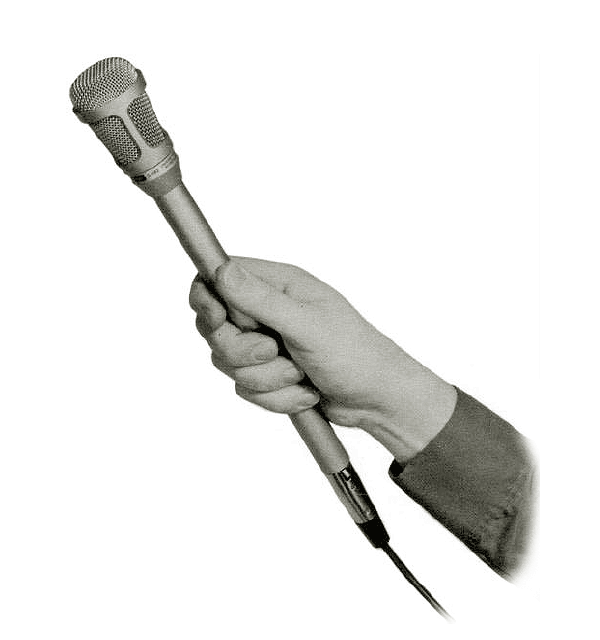
Today’s Tech Tip #590 suggests the Model 590T. Few readers will remember this microphone.
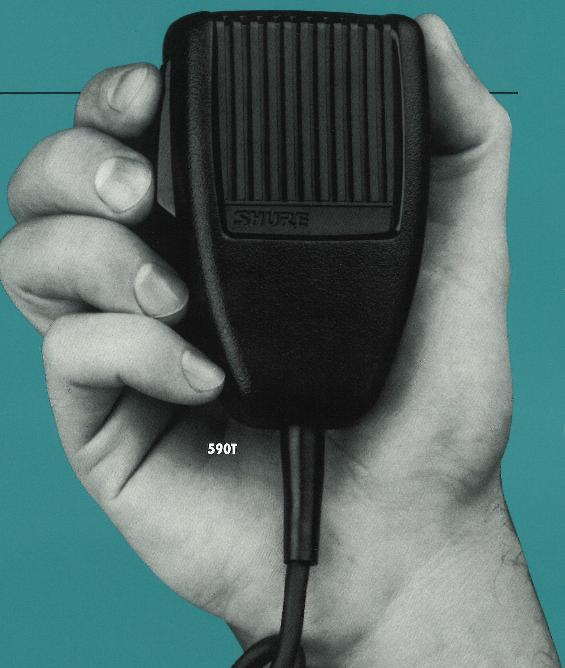
The 590T Push-To-Talk mic featured a moving coil element and an internal “transistorized” preamp (thus the “T” in the model number) that boosted the output signal so it could drive a two-way radio to full modulation. Over thirty-five interchangeable “Modulink” cables were available for the Model 590T – each cable with a unique equipment-end connector for mating with the numerous radio brands and models. In its introductory year of 1987, the 590T had a U.S. retail price of $47; $25 was an average retail price for a Modulink cable. The mic was discontinued circa 2001.
