
During the Centennial of Shure Incorporated, Tech Tips are planned that document lesser-known aspects of our history. In this issue, readers will learn about the SM5 boom microphone and its relationship to the SM57.
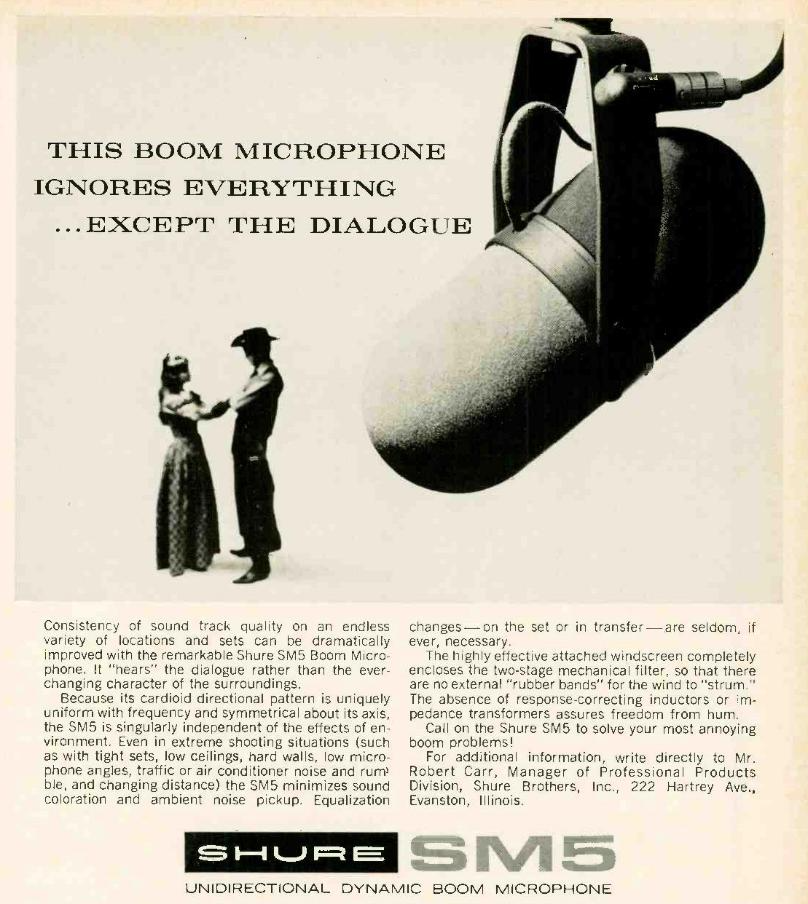
The SM5 boom microphone debuted in 1964. Its User Guide claimed:
The SM5 has been painstakingly developed to uniquely satisfy the existing requirements for boom operation, and to provide a new degree of reproduction quality and flexibility of application in television and motion picture studio and location work.
Features of the design and operation include:
Directivity – cardioid, symmetrical about axis and exceptionally uniform with frequency. Minimizes sound coloration due to off-axis pickup – such as from reverberation, reflections from floor or scenery, and performers accidentally being “off-mike.” Provides very effective rejection of background noise.
Frequency response – wide range, especially tailored to provide natural dialogue or vocal music pickup with good presence, yet also suitable for music scoring.
integral windscreen – very effective in outdoor locations and through fast boom swings.
Mechanical suspension – two-stage mechanical filter for any boom application. Suspension elements are internal to windscreen to prevent wind noise generation in the suspension assembly.
Minimum electrical noise – absence of transformers or response correcting inductors prevents pickup of electrical noise. May be used in extreme hum fields.
Perfectly balanced – excellent stability and minimum overswing.
Ruggedness and dependability – under all operating conditions. Element and isolation assembly are protected by the outer windscreens and steel reinforcing rods.
Because of the unusual mechanical construction and performance characteristics, the SM5 may be used to advantage in many applications where boom operation is not practical.
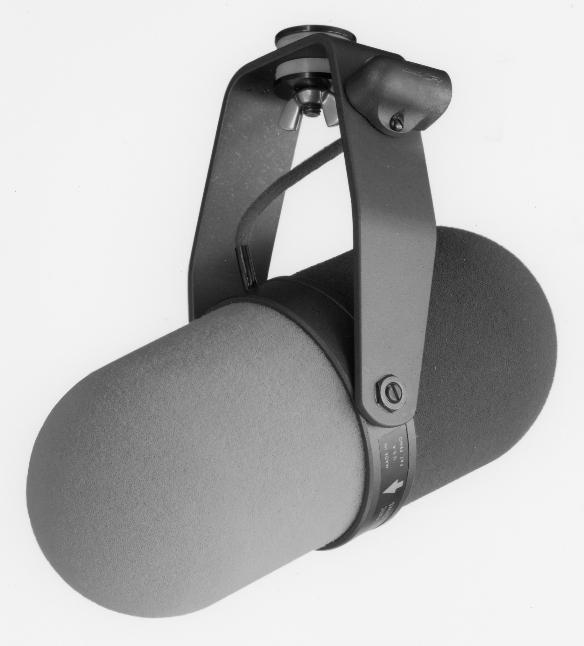
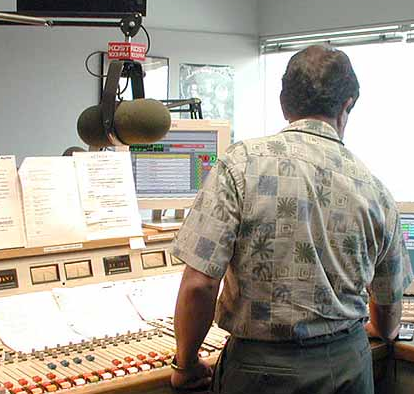
The SM5 never caught on as a viable boom microphone, but it did become popular as an on-air talent mic for AM and FM radio. Unit sales never exceeded three hundred in any 12-month period, yet our SM5 garnered a loyal, even fanatical, following among radio station engineers. When the mic was discontinued in the late 1980s, supporters called and wrote Shure pleading to have the SM5 reinstated.
To placate the SM5 fans, Shure repeatedly explained that the mic element inside was the mild-mannered Unidyne III, and that a similar sonic timbre could be found in the SM7 or the SM57. We were not believed. Though it was the pre-Internet era, a viral rumor still quickly spread that Shure was hiding something sinister about the SM5 – perhaps the Unidyne III story was a ruse. Was it?
Dear readers, I invite you to examine the two photos below showing the interior of the SM5. Do you recognize “a familiar grille?”
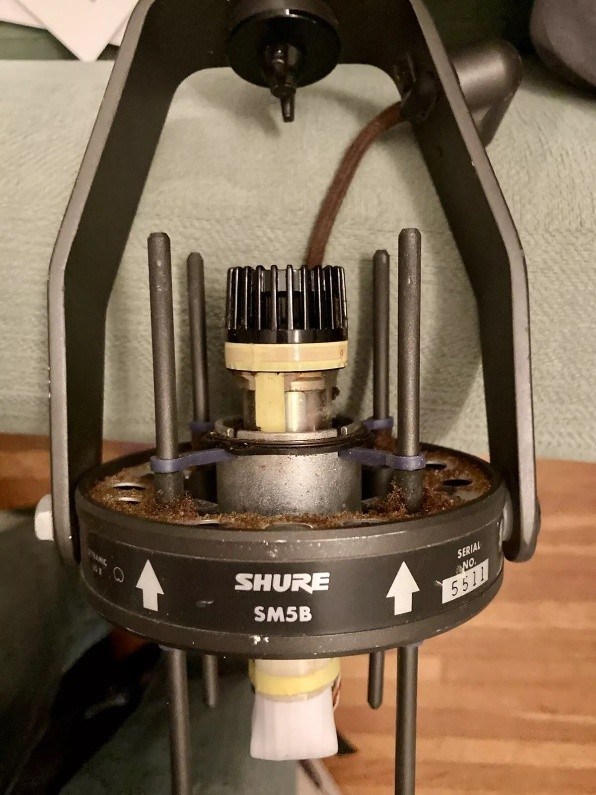
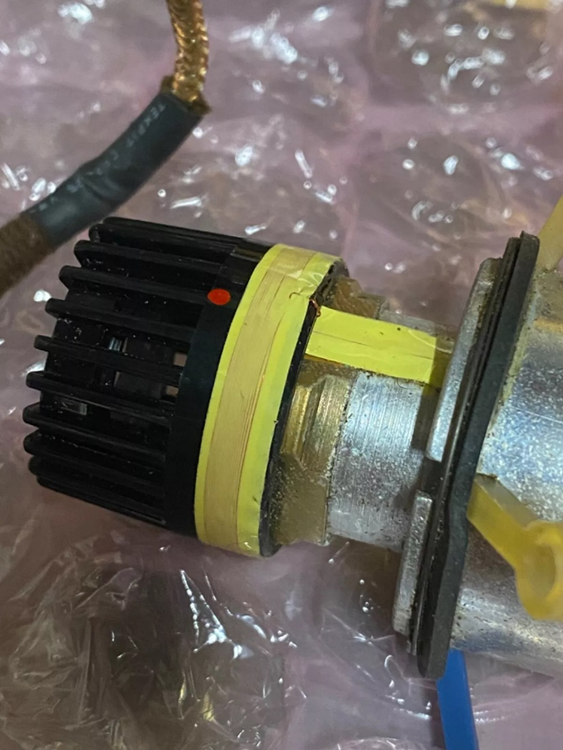
Yes, the SM57 grille/resonator was employed in the SM5. Why? Because this grille/resonator is an integral part of the Unidyne III transducer. Nearly 40 years later, some still doubt that the SM5 is a Unidyne III design.
The SM5 craze has diminished but not disappeared. Recently on eBay, a restored unit carried a price of $1,500. Be it vintage mics, vintage guitars, or vintage amps, buyers often listen with their eyes and not their ears
Related information: SM5 replacement foam windscreens
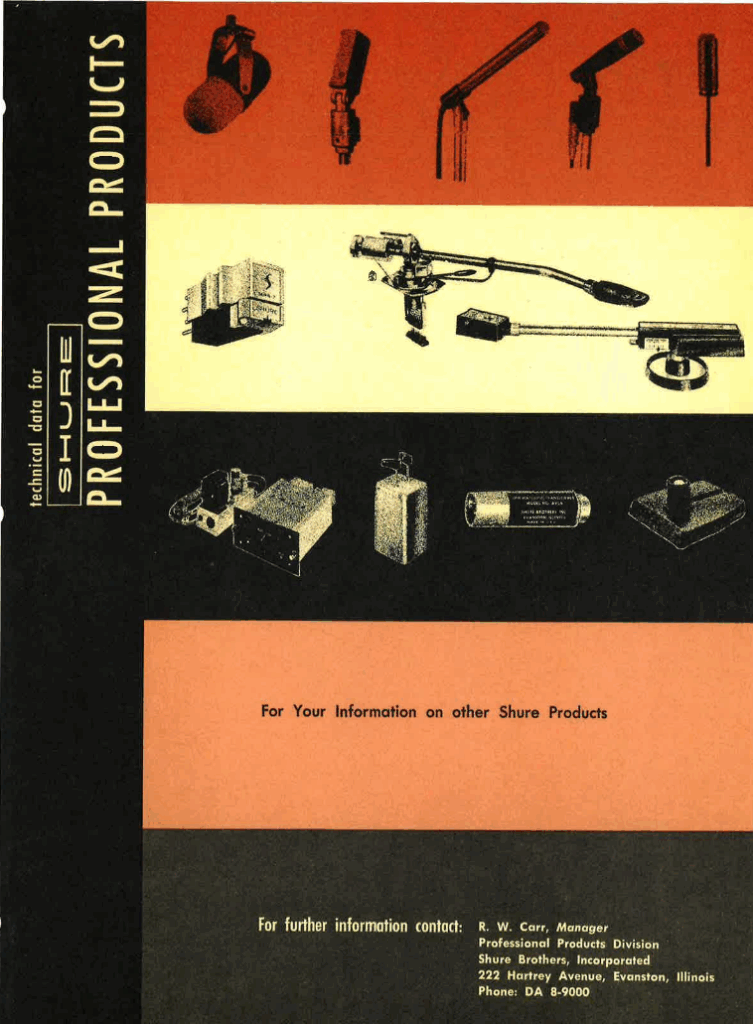
1965 Shure catalog with the SM5
Shure Apps Tech Tips #342: The SM5 Family of Microphones
Shure Apps Tech Tips #399: The First SM5 and the SM7 Design Patent
Arcana – mysterious or specialized knowledge
Is it truly a Unidyne III element in the SM5? It is indeed. When Bob Carr, Shure’s microphone marketing manager in the 1960s, was tasked with introducing a new pro product line there was no budget to develop a brand-new transducer. Bob’s nascent Studio Microphone [SM] line would have to employ mic transducers that already existed. The Unidyne III element became the heart of the SM5, SM7, SM56, SM57, and SM58. In hindsight, this decision has worked exceptionally well…for more than six decades.
***
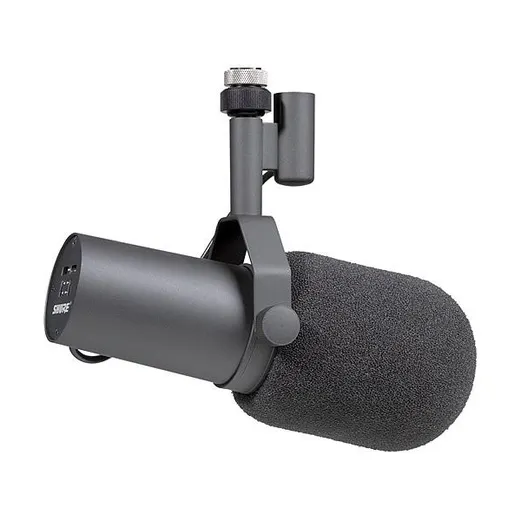
The familial resemblance between the SM5 and the SM7B is not a coincidence. When the SM7B was introduced in 2001, it featured a new larger foam windscreen specifically designed to mimic the SM5.
***
A reminder from Nietzsche: SM denotes “Studio Microphone,” not “Super Man.”
