In Spring 2015, the Shure Unidyne microphone was selected to be a permanent acquisition in the Architecture and Design Division of the Museum of Modern Art [MoMA] in New York City.
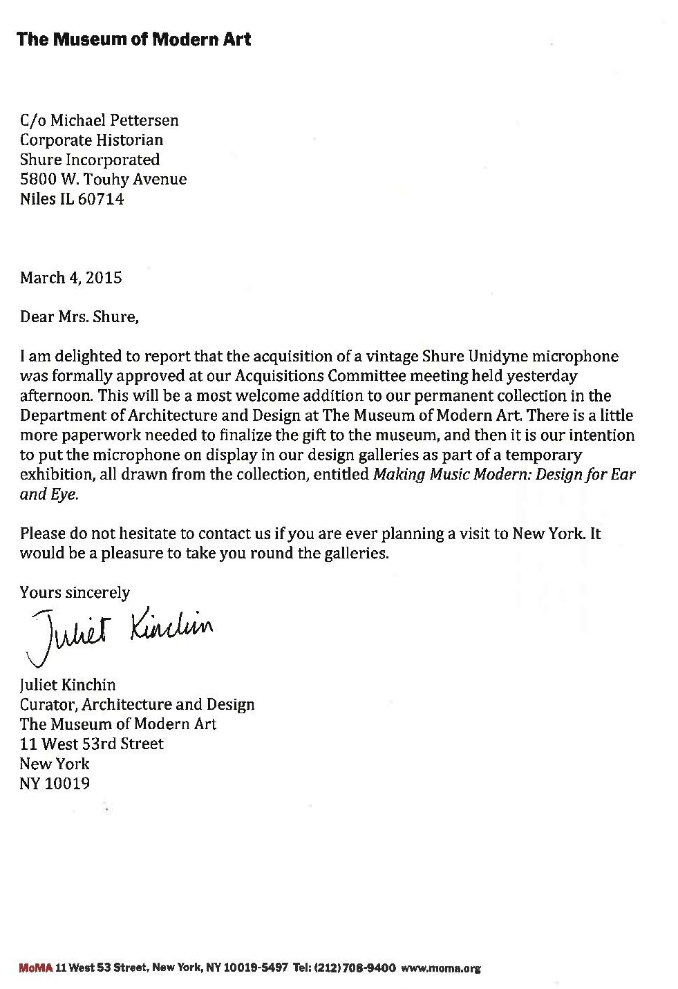
Our Model 55 may be viewed in the MoMA online collection: Shure Unidyne Mic by Bauer and Shearer
The Unidyne I, arguably the most recognizable of Shure microphones, is comfortable amongst its famous neighbors: sculptures by Brancusi, paintings by Monet, furniture by Eames, architecture by Frank Lloyd Wright, and photographs by Stieglitz. Quite the upscale neighborhood for a mic with modest beginnings in Chicago.

Our Unidyne II is also rumored to be part of a “cool” art collection in the far northern latitudes. Ho, ho ho….

Related information: MoMA New York City
Arcana – mysterious or specialized knowledge
When a sound wave from a talker reaches a microphone’s diaphragm, how far does the diaphragm move from its resting spot? Such movement is known as displacement.
During normal conversation, a talker produces a sound wave intensity around 74 dB SPL-A [seventy-four decibels of sound pressure level, A weighted] measured at twelve inches. A sound wave of 74 dB SPL-A will displace (move) a mic diaphragm about .003 microns = 0.00000012 inch = 1/33,333 the diameter of human hair. The typical human hair thickness is: 0.004 inch/100 microns/100 micrometers.
Because diaphragm movement is microscopic, measurement by laser is employed by mic development engineers. Unlike the displacement of a loudspeaker cone, the displacement of a microphone diaphragm will not be perceived by the human eye.
***
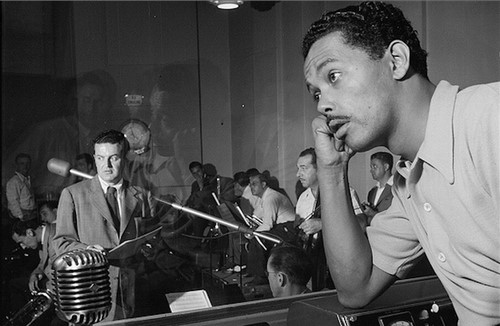
Here is our Unidyne I microphone in the studio with singer Billy Eckstine circa 1954. Eckstine’s 1950 appearance at the Paramount Theatre in New York City drew a larger audience than Frank Sinatra’s appearance at the same venue.
***
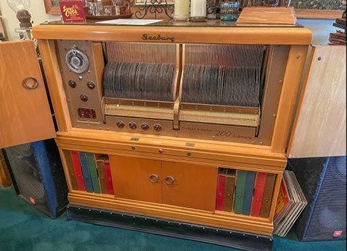
Speaking of Sinatra, here is the tale of his 1948 Seeburg Select-O-Matic Home Jukebox.
***
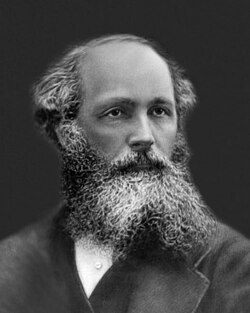
James Clerk Maxwell (1831-1879):
“The tendency of the human mind is to do anything rather than think.”