The March 2016 issue of Physics Today contained an informative article by Alex Case, associate professor of sound recording technology, at the University of Massachusetts, Lowell campus.
Evolving technologies for converting acoustic pressure into an electrical signal have driven changes in the performance practice and sound of pop singers. When you listen to the vocals in popular recordings, you do not actually hear the singers. What you hear are loudspeaker illusions of the vocals; illusions so compelling that you think you know the voices of your favorite singers. But it’s likely that the performers would sound different singing in your living room or in your car. In fact, they might sound quite a bit different. The discipline of pop music production includes the creation of sounds that are better than those of real life—exaggerated, unmistakable, and often unforgettable. And although that is true for all members of a band, the vocalists get special attention.

Shouts and Whispers
Sound recording and playback can be traced back to 1877 with Thomas Edison’s tinfoil recordings. In less than a decade, recording advanced to the more durable, better-sounding, wax cylinder. A recording horn coupled airborne sound to a flexible diaphragm whose motion vibrated a sharp stylus that cut into the recording medium. Sound pressure oscillations in air were mapped to physical undulations of a groove. Playback reversed the process. This electricity-free, all-acoustic recording process was rather inefficient. Recording sessions dealt with this inefficiency by favoring loud instruments. The quietest instruments were put closest to the recording horn so that they had a fighting chance of projecting enough acoustic energy into the horn to alter the groove of the recording medium. Vocalists didn’t sing so much as shout their performances.
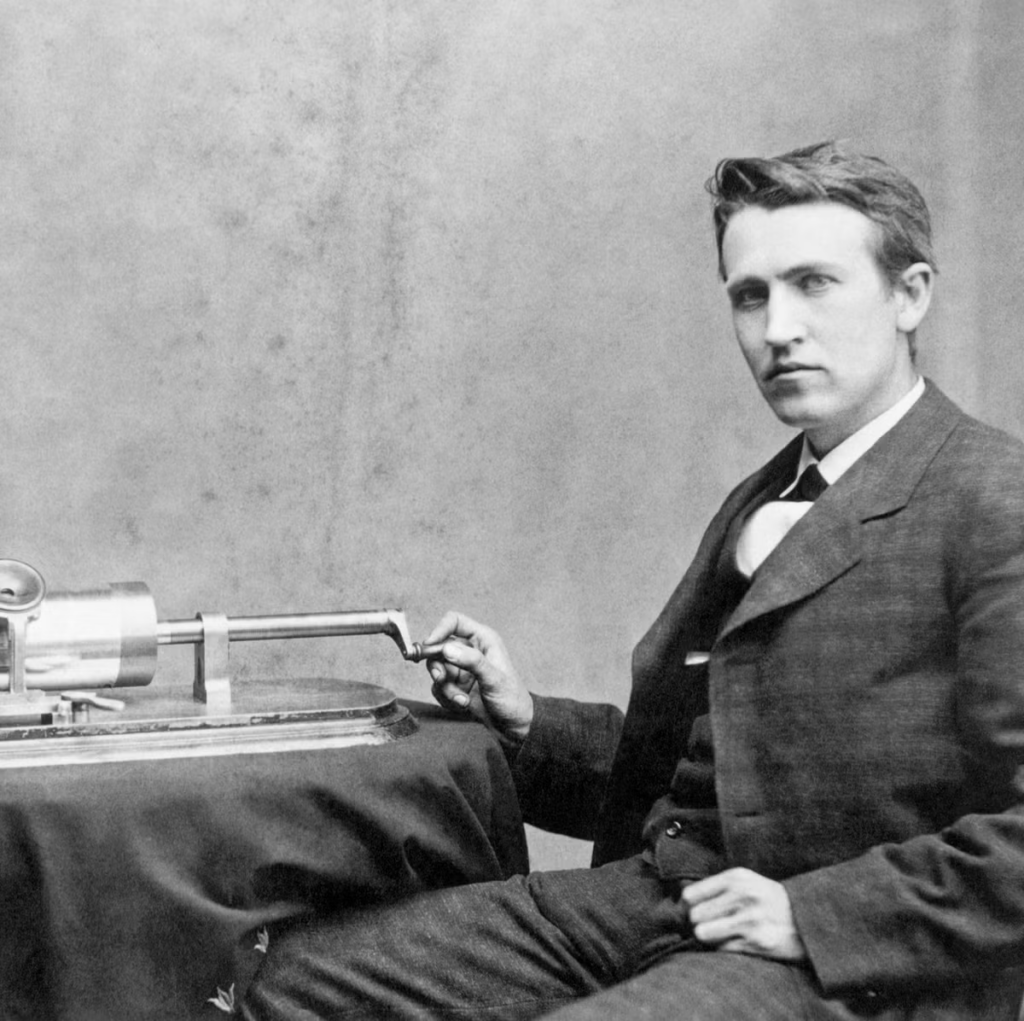
Recording with a microphone changed these practices. Acoustic energy could be transduced into a changing electrical voltage, then be amplified to drive the recording cutting head. In the mid-1920s, microphones began to be used in recording studios. Two principal audio characteristics benefited from the new technology:
First was dynamic range. Whereas screaming and shouting were originally the only ways vocalists could make themselves heard in an acoustic recording, low-amplitude forms of expression could now be captured with a microphone – thanks to the electrification and associated processing/amplification of the signal on its way to the record, be it a flat disc or a cylinder. In those days, cylinders were also called records as they were the “record” of a performance.
Second was an improvement in frequency response. Even the earliest microphone reached both lower and higher in frequency than an all-acoustic recording setup.
Singers embraced those improvements so passionately that they created new styles. One musical style of the 1920s came to be known as whispering. Though marketed as whispering, the vocalists did sing but with an ear-grabbing gentleness. Shouting was out – intimacy was in. Electronic recording could capture delicacy, detail, and understatement, and thus give the listener a personal connection to the singer. The vocalist, singing quite near the microphone, created a recording that sounded as if they were in the listener’s living room.
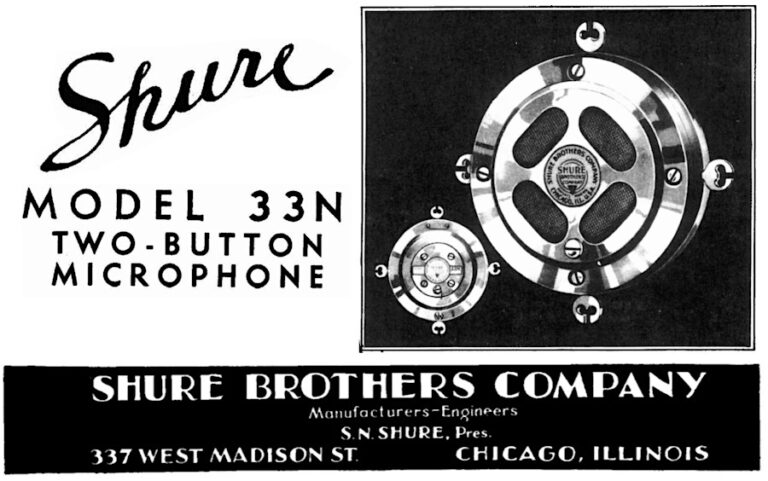
The first technology empowering the whispering singer was the carbon transducer. Granules of carbon packed into a cavity were slightly compressed when air moved against a flexible diaphragm. The change in the density of the carbon granules caused an analogous change in electrical resistance, essentially a variable resistor. A fixed voltage applied across the changing resistance resulted in a variable current controlled by the changing acoustic wave compressing the carbon granules.
The sound of a carbon microphone recording was much like the signature sound of an old analog telephone— characterized by narrow bandwidth, limited dynamic range, and a bit of noise. But it was a significant improvement over the acoustic mechanical recordings made without a microphone.
Beautiful Imperfections
An important advancement in transducer technology occurred when the Radio Corporation of America (RCA) developed the ribbon microphone. A thin, electrically conductive metal ribbon was suspended in a magnetic field. The motion of air pushed and pulled the ribbon which induced a current in the metal ribbon. Made as light as possible, the ribbon reacted smoothly and quickly to the acoustic input. With the advent of ribbon technology, the frequency capability of the microphone finally spanned the full frequency range of the human voice.
But the sound of the ribbon microphone, though improved over the carbon microphone, was not perfect. In fact, the ribbon’s slight imperfections were beautifully suited to the human voice. All microphones have a limited high-frequency capability—a ribbon, for example, can only move so fast. High-frequency oscillations of air, moving too quickly for the ribbon to track, are not transduced into electrical current. For ribbon microphones, the frequency attenuation is gradual, a property that creates a never-harsh, silky tone. Whereas carbon microphones might crackle a bit, ribbon microphones stayed smooth.
Audio fate smiled on the ribbon microphone as a second quirk of its design also proved useful to singers. The ribbon, open to the air on both sides, possesses a property known as proximity effect. As a microphone is placed closer to a sound source, the resulting signal gets louder. But the ribbon design caused the low-frequency portion of the signal to increase in amplitude more quickly than the higher frequency range – as a function of distance. As a result, the tone of a vocalist proximate to the microphone possessed a rich, velvety, bass emphasis. Singing close to the mic also required breath control and performance restraint. No belting allowed.
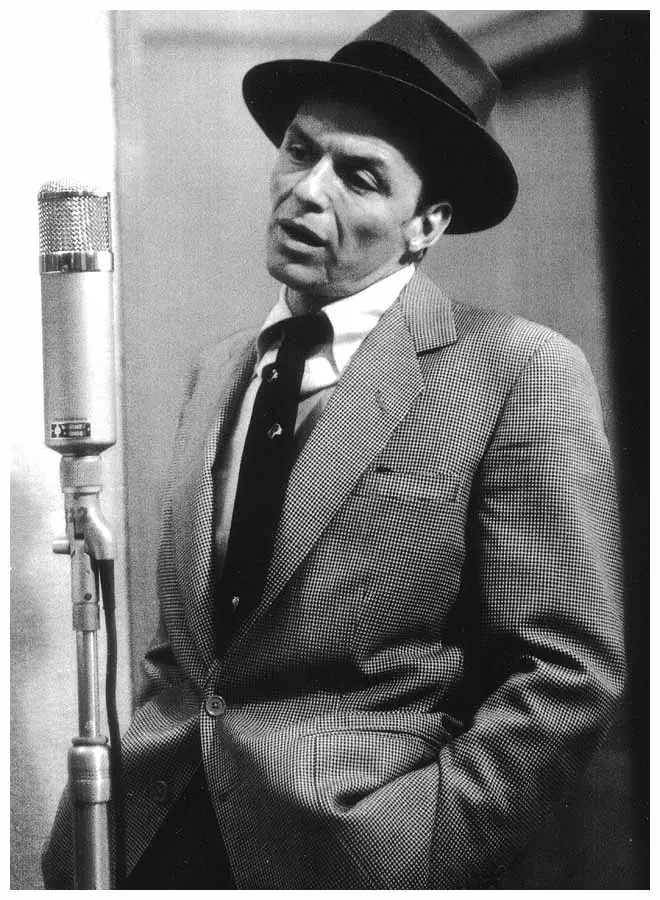
The low-frequency lift, high-frequency cushioning, and mid-frequency clarity of the ribbon microphone captured a larger-than-life, better-than-real vocal quality. From the ribbon transducer, the “crooner” was born. Nat King Cole, Bing Crosby, Rosemary Clooney, and others built their careers not only through musical talent, training, and practice, but they invented a dexterity with the microphone which enabled them to get the desired tone. Musicianship now required a performance technique unique to the studio. The singer would lean in close for an exaggerated low end, while controlling breath and dynamics to prevent distracting artifacts that might otherwise become audible being so close to the transducer. The performance technique has no value to a singer alone. It is a singer-plus-microphone sound that makes a crooner croon.

Carbon and ribbon microphones weren’t the only transducer types available to the early recording studios. In 1917 Bell Labs developed the first condenser microphone – a technology that leveraged variable capacitance to create an electrical signal from an acoustic signal. One plate of the capacitor is fixed; the other is a light, flexible diaphragm, with a metal conductive coating, coupled to the air. Pressure waves displace the diaphragm, causing capacitance changes from which the audio signal is derived. Used in broadcasts as early as the 1920s, the condenser microphone permanently entered the recording studio market with Georg Neumann’s model U47 in 1949. Condenser microphones dominate studio recording sessions to this day.
Compared with ribbon microphones, condenser microphones offer greater accuracy in the highest frequencies; softened crooner tone is traded for heightened realism. The natural resonance of the condenser capsule can enhance upper-mid frequencies. Sound engineers welcome this departure from flat-frequency response. Fondly called a presence peak, it etches vivid detail into the vocal track, boosting intelligibility and highlighting emotional expression. With the presence peak, the modern vocal sound was born. Frank Sinatra’s recordings during his years at Capitol Records (1953-62) offer early examples of the larger-than-life pop sound heard on most recorded vocals today.
One for the Road
Left out of the story so far is the reliable moving coil dynamic microphone, such as the Shure Unidyne Model 55, which has been in continuous production since 1939. For live music performance, this type of transducer has ruled supreme. As the Unidyne picks up sound primarily from one direction, it can focus on the singer and reject background noise.
The low-frequency power rises as the singer gets close, which gives a larger-than-life quality that is very much part of the pop aesthetic. However, the low end does not overwhelm the rest of the sound, and the hearty moving coil transducer is forgiving of the humidity, spit, and sweat that emits from a performer so close to a transducer. With a far more durable capsule than the typical ribbon or condenser, the moving coil microphone is well suited to life on the road.
Offering a presence peak of its own but not reaching as high in frequency as a condenser microphone, the moving coil is a particularly good fit to vocalists who sing with great intensity—blues belters and hip-hop artists, for example. These performers work the microphone hard, knowing that the less-than-full bandwidth capability of the microphone can lead to a sound with a distinct character suitable for stage or studio.

The evolution of microphone technology has not led to a sole “best practice” for contemporary studio craft. Audio engineers and singers are aware of the unique qualities of ribbons, condensers, and moving coils. Transducer type is a strategic and artistic choice, driven by the desired vocal timbre and performance style. Whereas once technology inspired artistry, artists now leverage technology.
Reference Books
Electroacoustic Devices: Microphones and Loudspeakers, Focal Press/Taylor & Francis (2009)
Eargle’s Microphone Book: From Mono to Stereo to Surround, Focal Press/Elsevier (2012)
Related links: The Coutant Microphone Site
The Les Harrison Microphone Collection
http://www.edisontechcenter.org/microphones.html
Arcana – mysterious or specialized knowledge
A modern condenser microphone diaphragm is made of Mylar with an extremely thin coating of gold. How many one-inch diameter diaphragms can be fabricated using one ounce of gold? The answer is…around 72,400 diaphragms. With gold at $4,780 per ounce, each diaphragm has 6.5 cents worth of gold. My thanks to Shure microphone development engineer Roger Grinnip for this arcane calculation.
***
Anthracite coal is the raw material used for the granules in a carbon microphone element.
***
A gold mic, Model 565SD, presented to Freddie Mercury by Shure is being auctioned this month (March 2016). As of April 6, 2016, the top bid was 30,000 UK pounds.

***
Shure posted the following on social media – April 1, 2026.