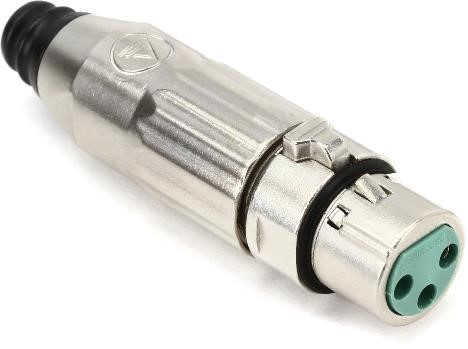
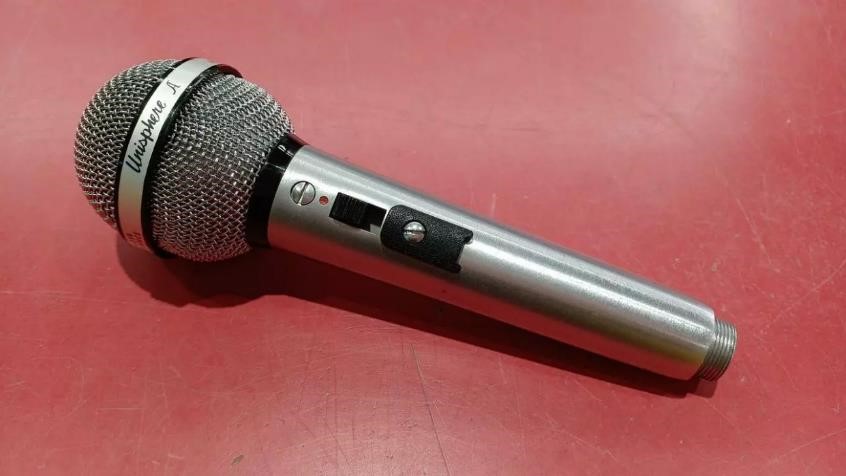
Introduced in 1966, the Model 565 series, dubbed the Unisphere I, is a member of the Unidyne III family. The SM58, also introduced in 1966, is a fraternal twin – not identical to the Model 565 but sharing Unidyne III DNA.
Let’s examine the differences as they were in 1966.
- The Model 565 zinc handle is chrome plated with a black closing ring below the ball grille.
- The SM58 zinc handle is dark gray with darker flecks.
- The Model 565 ball grille is chrome plated with smaller screen openings.
- The SM58 ball grille is zinc plated with larger screen openings.
- The Model 565 contains an Amphenol MC4F connector: pin 1 = shield; pin 2 = unbalanced high impedance; pin 3 = balanced low impedance return; pin 4 = balanced low impedance send.
- The SM58 contains a Switchcraft XLR QG3M connector: pin 1 = shield; pin 2 = balanced low impedance send; pin 3 = balanced low impedance return.
The Model 565S, a variation, featured an on/off slide switch and a “pistol-grip swivel” lower portion.
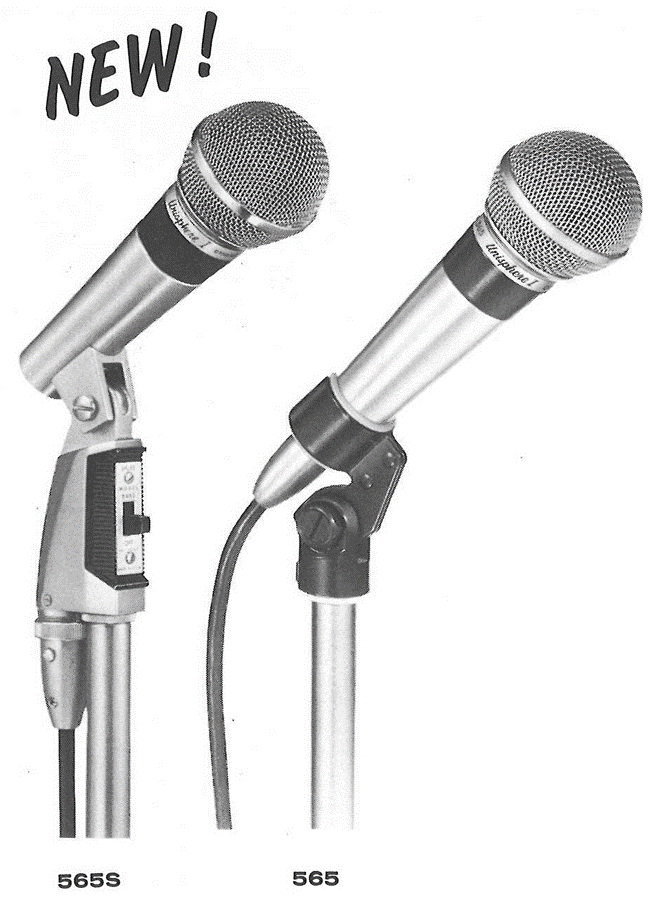
The Unisphere I 565 models first appeared in the 1967 catalog.
In August 1969, the Woodstock Festival established the Model 565 as the first choice for rock ‘n’ roll arena concerts. Every mic on the outdoor stage was a Model 565 modified by the addition of a Switchcraft adapter that replaced the Amphenol connector with a male XLR. If you have heard music from Woodstock, you have heard the Model 565 in action.
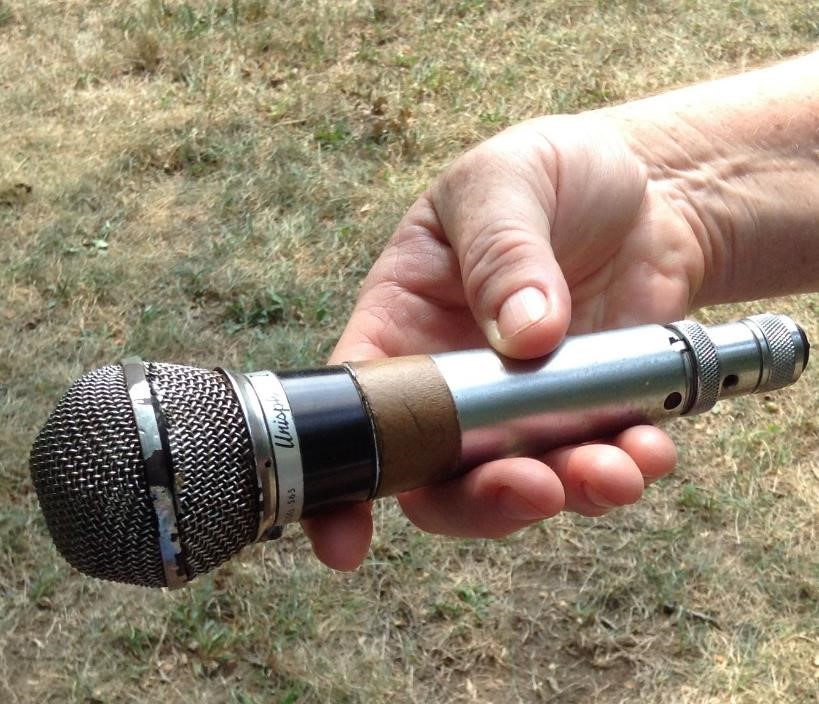
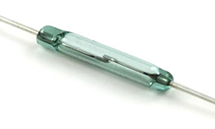
As the XLR connector gained popularity, Shure expanded the Unisphere I line in 1972 with the Model 565D and Model 565SD; D = Dual impedance, S = Switch. These new models featured a male XLR. The 56SD employed a magnetic reed on/off switch; such a switch improved reliability because its contacts, being sealed in a glass capsule, could not be contaminated by dirt, dust, or moisture.
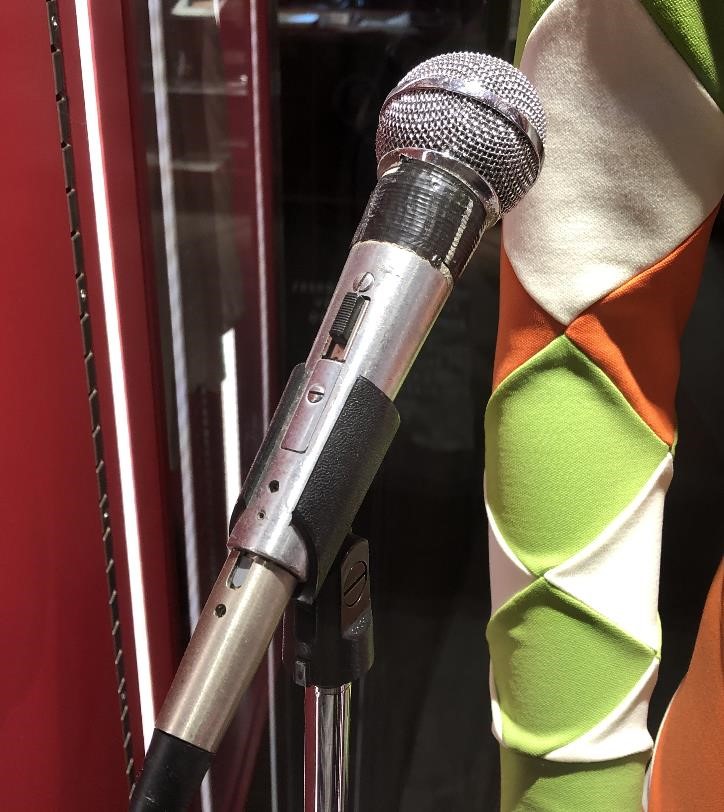
Freddie Mercury of Queen made the Model 565SD globally famous. It is not known how Mercury came to own the Model 565SD or why he preferred it over the SM58. The Queen museum in Montreux, Switzerland, holds one of his 565SD mics.
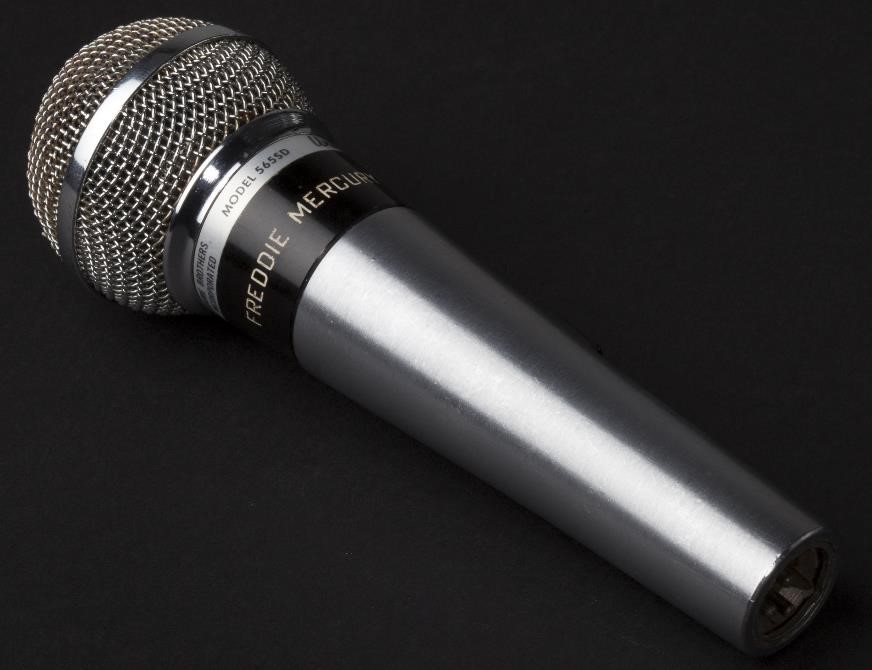
As Queen’s popularity surged, Shure UK provided an unknown quantity of customized 565SD mics to Mercury. During one Queen tour, each performance ended when Freddie tossed his mic to the audience. The mic pictured below was caught by a fan in the United States. He sent it to Shure to be authenticated. Your author examined the mic using a microscope to determine that it was indeed genuine. The owner wanted it returned, so sadly it was not added to the Shure archival collection.
The Unidyne III Model 565 will celebrate its 60th birthday in 2026, as will the Unidyne III SM58.
Related information: Model 565 with Amphenol connector
Arcana – mysterious or specialized knowledge
In addition to the Unisphere I Model 565, there was the Unisphere A Model 585 and the Unisphere B Model 588. The brand name of Unisphere never caught on like Unidyne did. Your author’s first Shure mic was the Unisphere A 585SA…not that anyone asked.
***
The name Amphenol is a shortening of American Phenolic Corporation. Founded 1932 in Chicago, Amphenol’s first products were sockets for vacuum tubes/valves. Amphenol expanded during World War II when it became a prime manufacturer of connectors used in military equipment, including airplanes and radios.
Amphenol microphone connectors debuted in the 1930s and fell out of use by the 1980s. The model numbers were easy to decode, e.g., MC4F = Microphone Connector Four (sockets) Female.
The Cannon XLR mic connector slowly replaced the Amphenol mic connector. One of the more popular XLR connectors is the Switchcraft QG series. QG = Quick Ground, so named because pin 1 connects with its mating socket before pin 2 and pin 3, thus establishing the ground path first. This reduces audible hum and buzz.