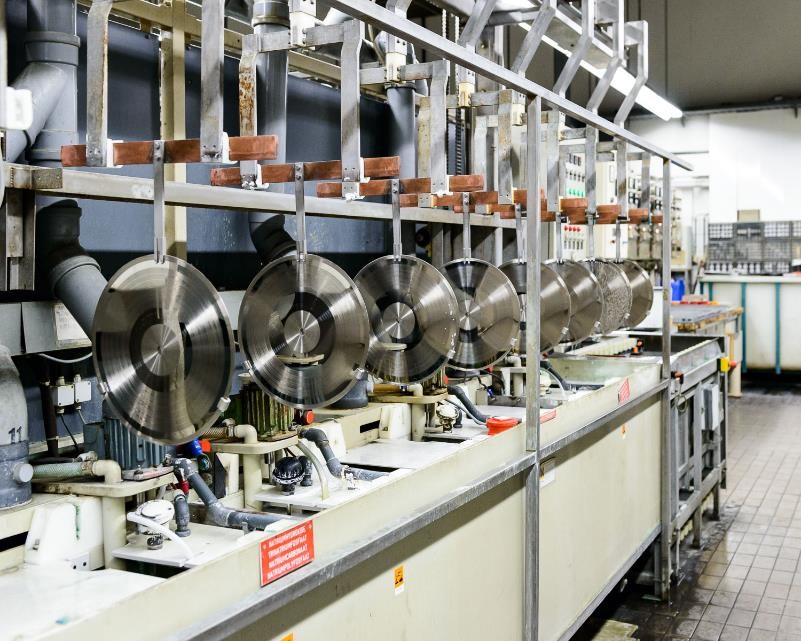
With the continued interest in phonograph records, Tech Tip readers may be interested in how vinyl discs are manufactured. The techniques have remained essentially the same for decades.
Here are short educational films from RCA Victor about vinyl recordings:
Related information: Timeline of the V15 phono cartridge
1978 Phono Seminar White Paper
Illustration of the interior of a phonograph cartridge
Introducing Hi-Fi Stereo Sound
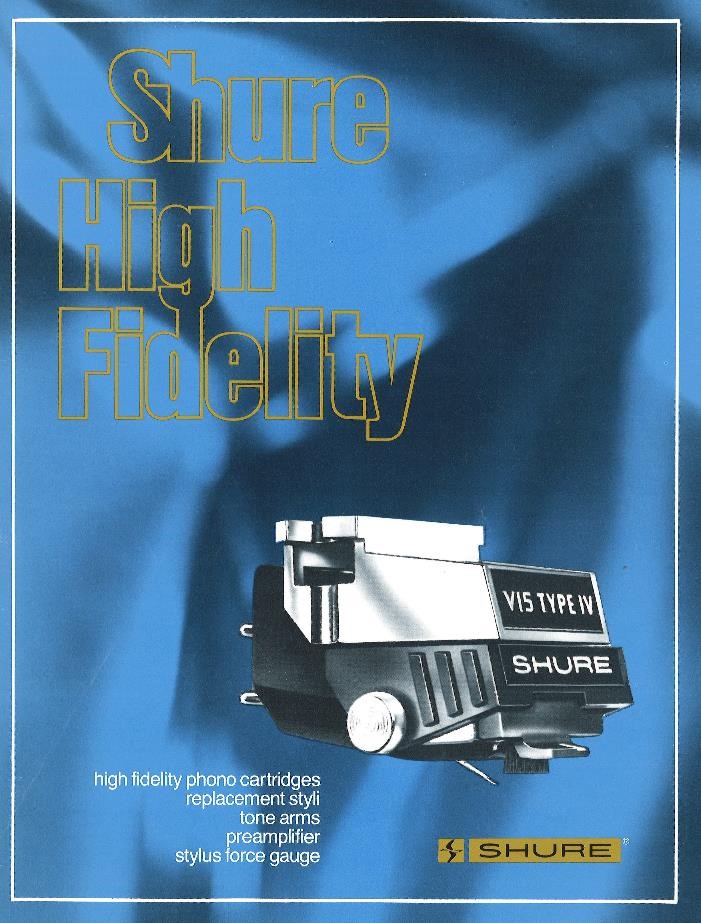
1978 Shure High-Fidelity catalog
Record Pressing Plant in Nashville
Arcana – mysterious or specialized knowledge
Shure manufactured phonograph products for eighty-one years, beginning in 1937. When your author began his Shure career in 1976, phonograph products accounted for over 65% of total sales dollars and an even higher percentage of profits. When we manufactured our final phonograph cartridge in 2018, phono products were 0.5% of total sales. So, if you hear “vinyl is coming back” please consider that 500,000,000 LP records were sold in 1970, and 40,000,000 were sold in 2023.
***
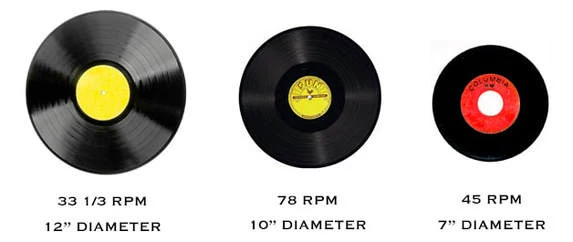
The playback speed of 78 rpm (revolutions per minute) emerged from the spring wound turntables and gravity powered turntables of the early 1900s. Both types relied upon a mechanical governor to keep the turntable speed at a stable rate. One reliable governor from this era worked especially well in the range of 75 to 80 rpm. In 1925, 78.26 rpm was chosen as a standard for motorized phonographs. It was suitable for most existing records and was easily achieved using a standard 3600-rpm motor and 46-tooth gear (78.26 = 3600/46).
***
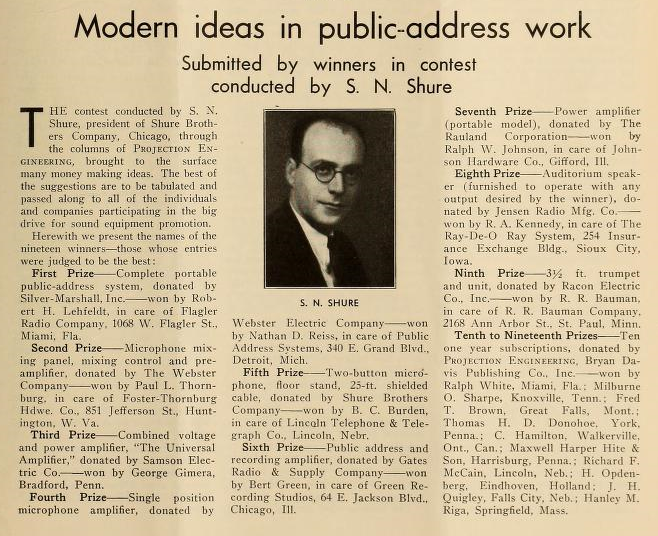
Below is an article from Projection Engineering magazine, January 1933. At this date, our Company was new to manufacturing having produced its first microphones in 1932.