
When the SM58 debuted in 1966, the connector end of the mic was different from the current design. Below, note how the 1966 handle diameter suddenly diminishes to match the diameter of the mating XLR connector.
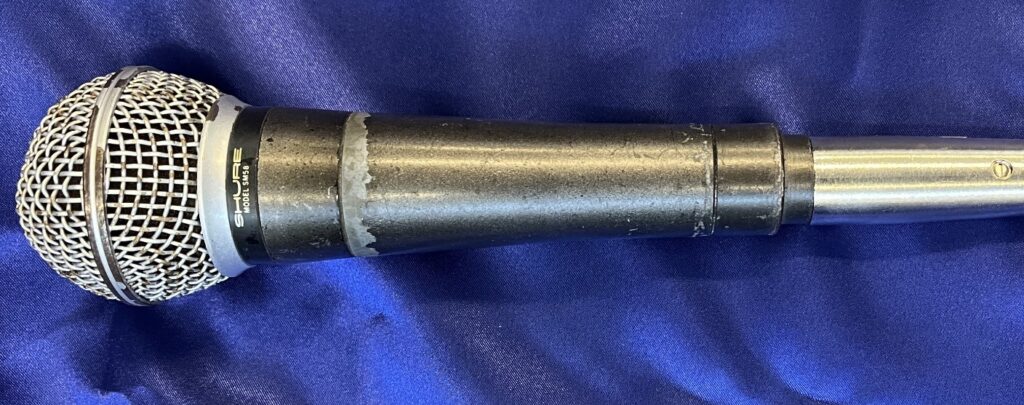
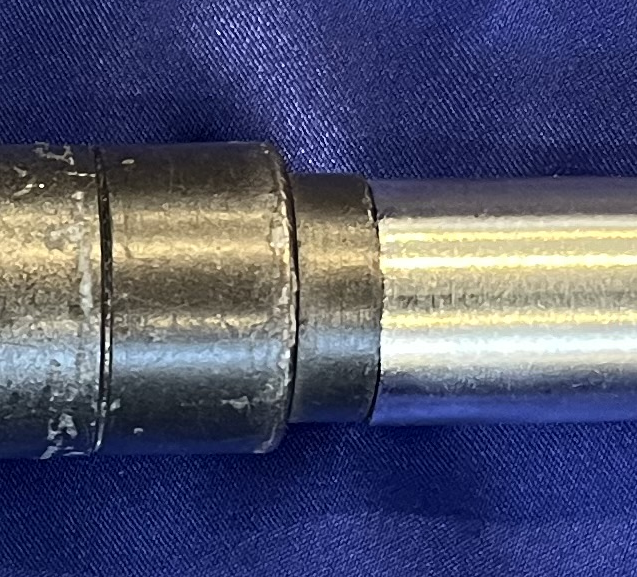
The rationale for this industrial design choice was a mystery. It seemed like too much effort simply to have the mic handle match the XLR diameter; pieces of this puzzle were missing.
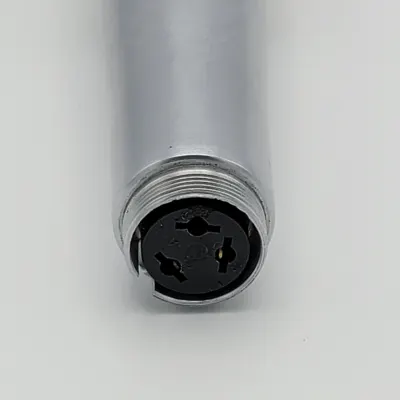
Removing the XLR male insert showed that the ¾” bottom section was a separate metal piece fabricated specifically to hold the audio connector. This press-fit ¾” addition was epoxied into the mic’s midsection.
What was the source of the SM58 midsection? It could not be the Model 545 as this handle had external male threads used to secure the Amphenol connector.
While ruminating this enigma, your author examined a Model SM56 microphone, introduced in 1964 – two years before the SM58. Eureka! The bottom section of the SM56 was the same length as the SM58 midsection. The SM58 handle originated from the SM56, plus the addition of the ¾” extension for the male XLR insert.
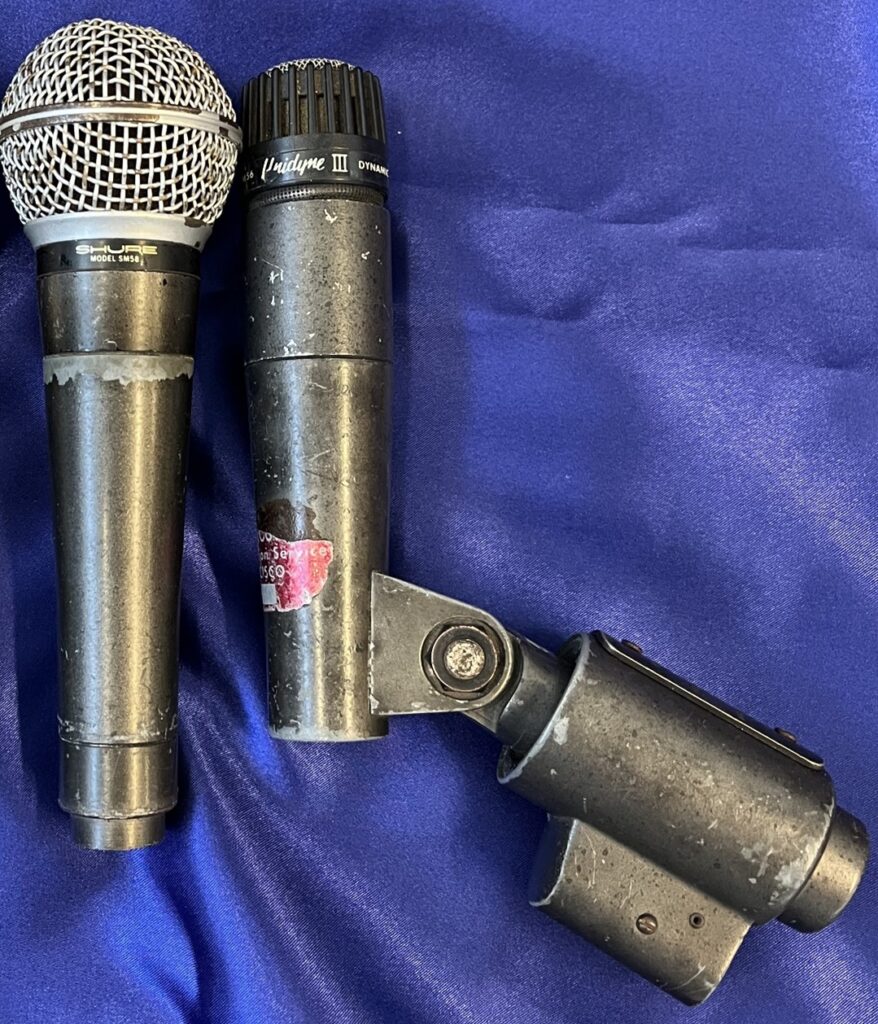
Once the SM58 established itself as a viable mic in the pro audio marketplace, Shure designed a new handle eliminating the ¾” bottom extension.
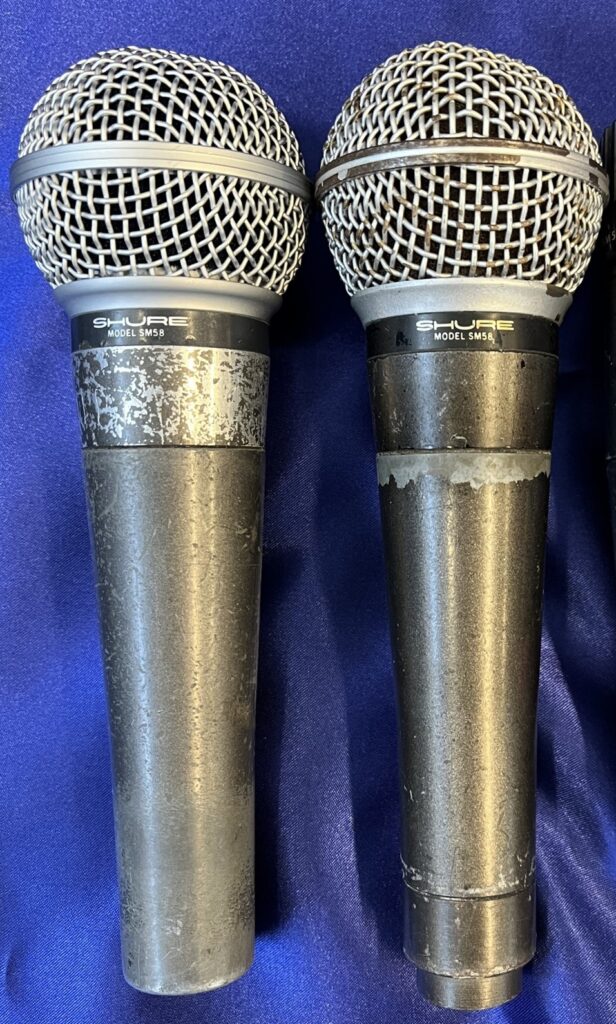
Right – original SM58 with two-piece handle
Another history mystery solved. Research will continue to determine the year in which the one-piece handle design debuted.
Related information: SM58 & SM57 FAQ
First catalog with SM56 & SM57
Arcana – mysterious or specialized knowledge
The original SM57 from 1965 also employed the SM56 handle with the added ¾” extension for the male XLR insert.
***
The logo on the SM58 from 1966 has become known as the Shure “Porsche” logo because of the similar capital letters and font style.


***
Why is the number “58” used in “SM58?” Because it was the next number in a sequence.
The first Shure moving coil mic was the Model 55 in 1939. Why “55” was chosen is not known; perhaps because “Fifty-Five” is mellifluous in English.
Subsequently, moving coil models began with “5”…at least for a while. Examples: Model 51 from 1947. Model 52 from 1947. Model 55S [S = small] from 1951. Model 545 from 1959.
In 1964, the first moving coil Studio Microphones [SM] debuted: SM5 SM50 SM56
In 1965, the moving coil SM57 appeared. Now there was a numerical sequence: 55 – SM56 – SM57.
In 1966, it was logical to add SM58 to the moving coil sequence: 55 – SM56 – SM57 – SM58.
Other SM moving coil models: SM10 SM11 SM12 SM14 SM51 SM53 SM54 SM59 SM60 SM61 SM62 SM63 SM76 SM77 SM78
Are Shure model numbers always selected rationally? At times, but not always.
