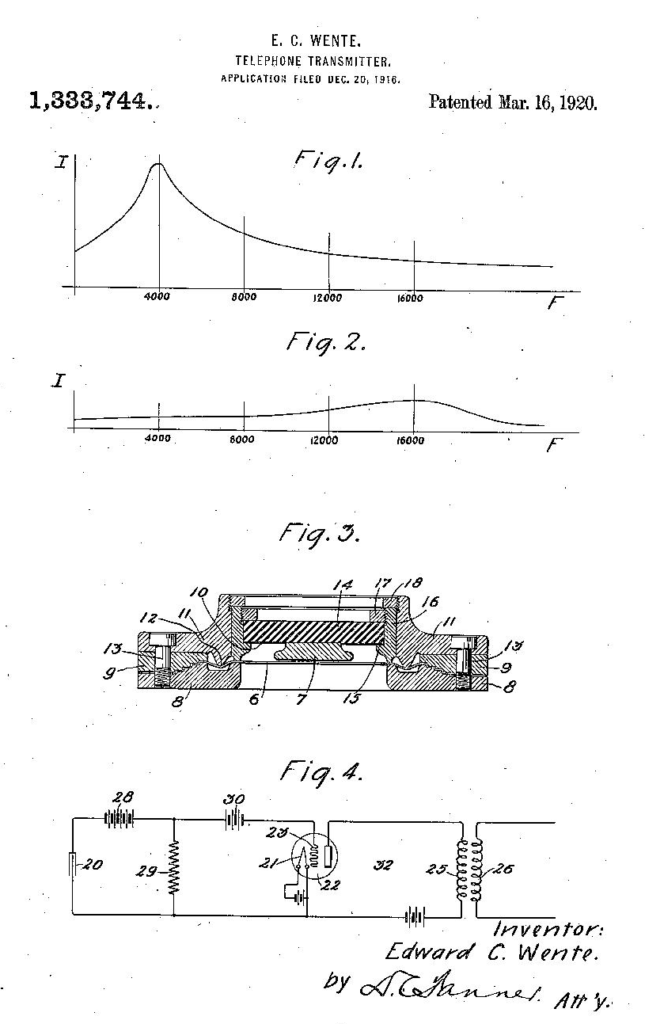
On December 20, 1916, inventor Edward C. Wente, employed by Bell Labs, applied for a U.S. utility patent. His device was a new type of telephone transmitter, i.e., a condenser microphone. Four years later, Wente received his patent.
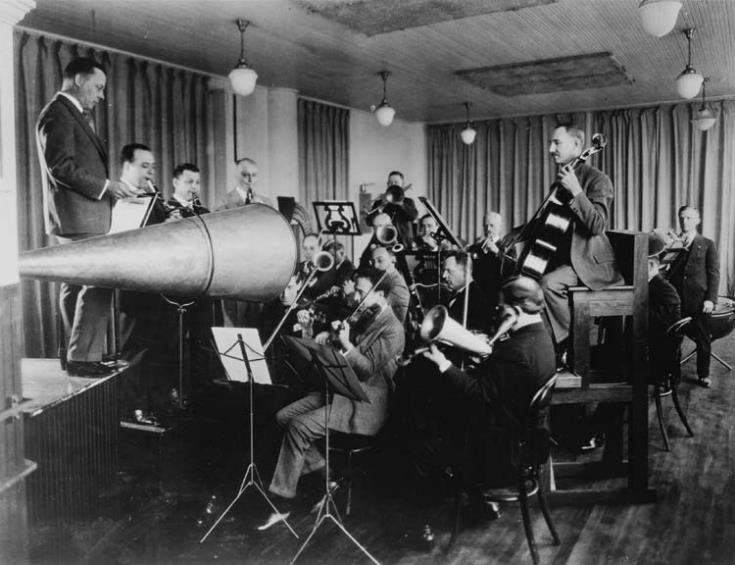
In the early 1920s, Bell Labs, in conjunction with its manufacturing subsidiary, Western Electric, began developing designs for recording studios with electronics at the heart of their recording process. Such studios would soon replace acoustical recording studios in which musicians performed in front of a large horn; the horn “gathering” the sound waves in order to drive a cutting stylus that engraved the master disc.
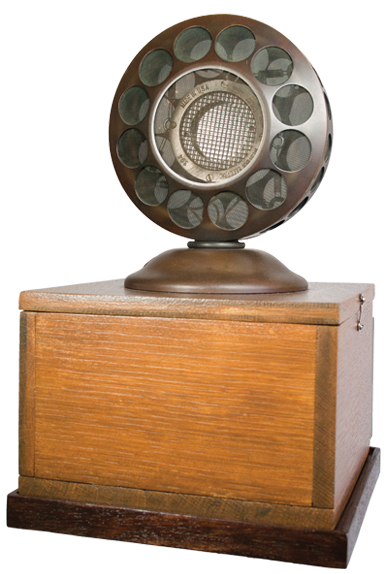
While existing carbon microphones could be used for electronic recording, Wente’s condenser mic showed great promise for improved fidelity. Western Electric set out to manufacture and market a recording studio condenser microphone based on the Wente patent. In 1925, the Model WE 394-W debuted.
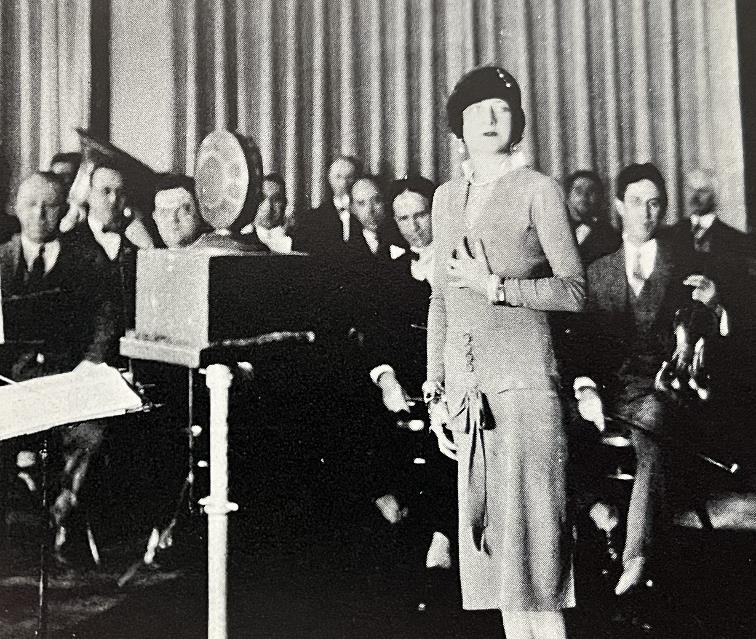
Below is opera singer Mary Garden in front of the WE 394-W mic at an early electronic recording session for the Victor Talking Machine Company.
Marco van der Hoeven, The Hague, Netherlands, is arguably today’s foremost authority on the history of vintage microphones. Marco obtained an example of the WE 394-W, had it restored to working condition, and is using it for recording. How good is the sonic fidelity of a one-hundred-year-old condenser microphone? Far better than one might imagine.
Here is a video of Hen House Prowlers, Chicago’s pre-eminent bluegrass band, recorded in 2024 with the WE 394-W condenser mic. You may not believe your ears: My Little Flower
In the Prowlers video, note the “final mix” is accomplished by physically positioning the musicians in relation to the microphone.
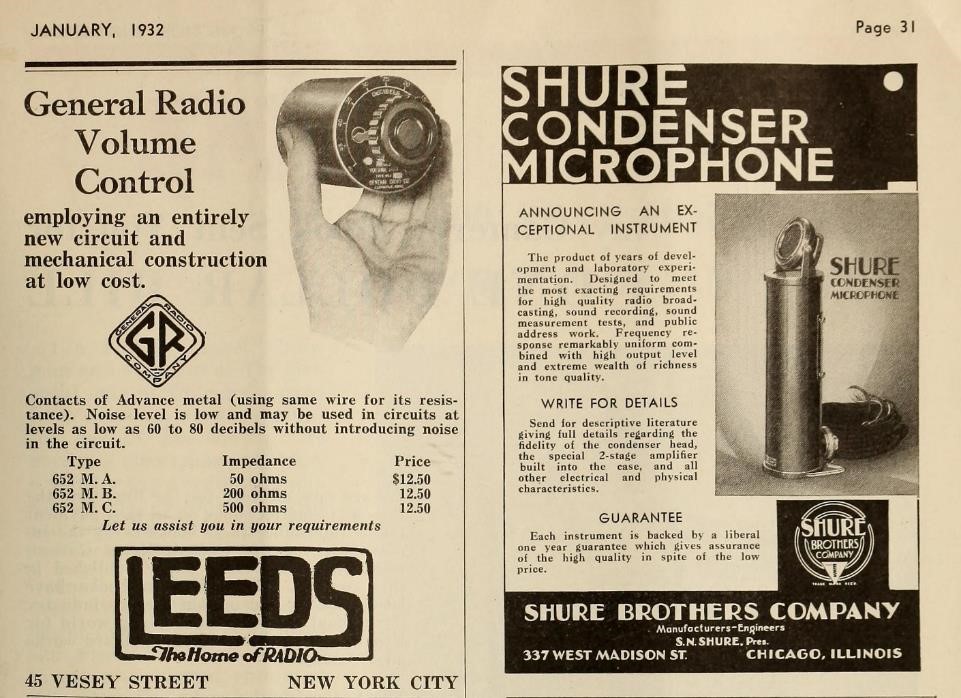
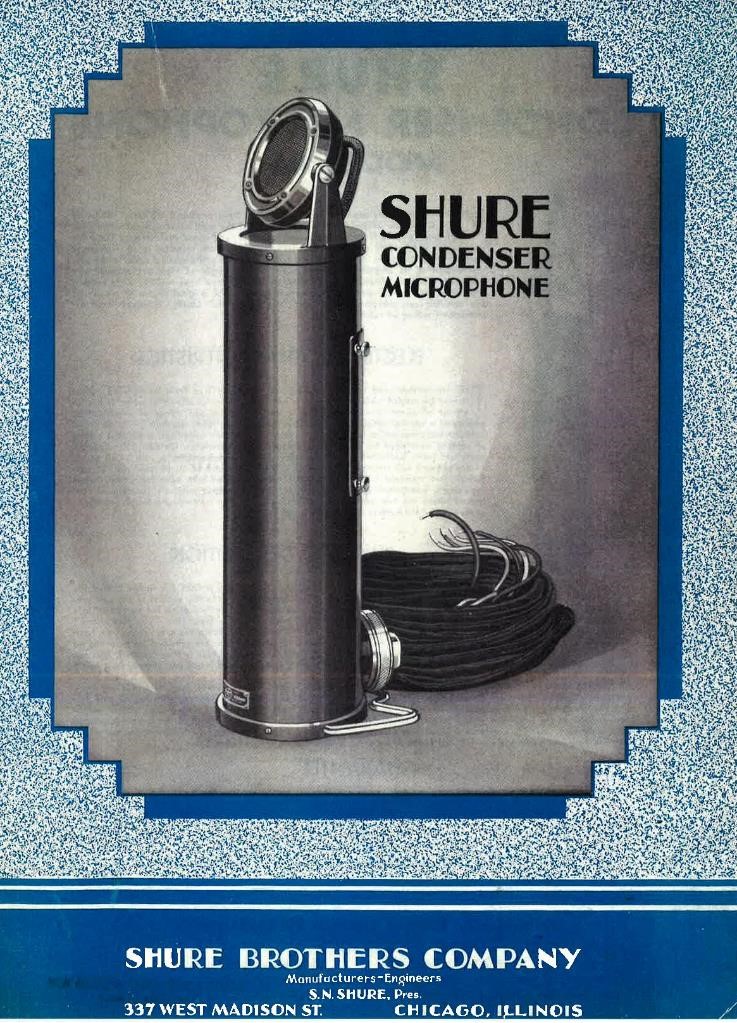
In 1932, Shure ended its exclusive distribution of carbon microphones manufactured by Ellis Electrical Laboratories and began selling only mics branded as Shure. Our first microphone bearing the Shure logo was not a carbon model [as incorrectly documented in the Shure history books], but a condenser model targeting the rapidly growing electronic recording studio market. Below is an advertisement for the Shure Condenser Microphone Model 44, priced at $250 or $6,100 in 2024 currency. The ad appeared in the January 1932 issue of Projection Engineering magazine.
Many thanks to Marco van der Hoeven, my mentor, for inspiring this Tech Tip and for his ongoing scholarly research of vintage microphones. Dank je wel, Marco!
Related information: Marco van der Hoeven writes about the Western Electric WE 394-W
Arcana – mysterious or specialized knowledge
Tech Tip #472, entitled Chicago Telephone & Radio – India’s First Pro Sound Company, posited that Mr. Motwane, owner of Chicago Telephone & Radio, may have visited Shure Brothers Incorporated. Well, in 1959 such a meeting with Mr. Shure did occur. Hal Blumenthal, our International Sales manager, invited Mr. Motwane to the Evanston headquarters. Mr. Motwane was in the United States to see his son, then a student at Indiana University. Below is the photographic evidence.
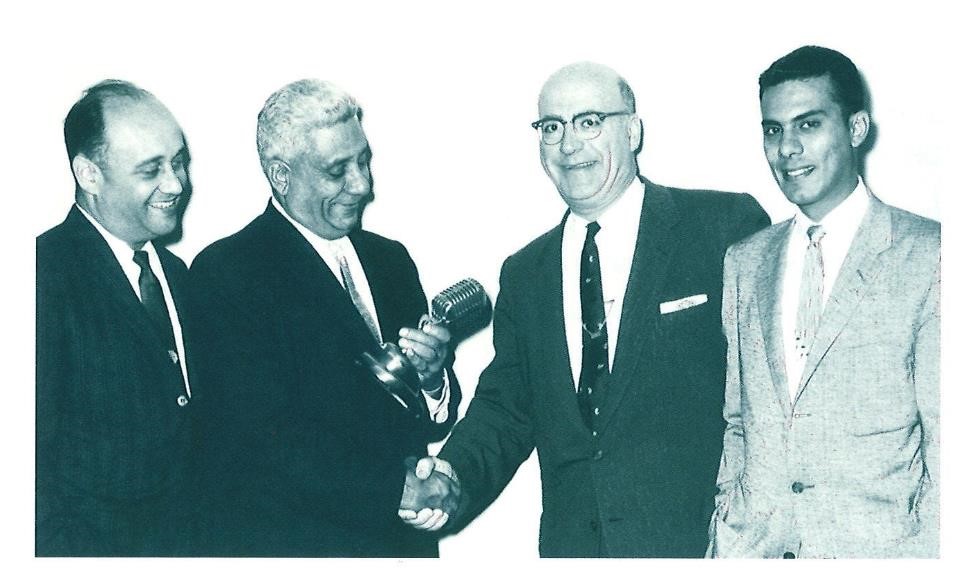
August 17, 1959, Evanston Illinois
***
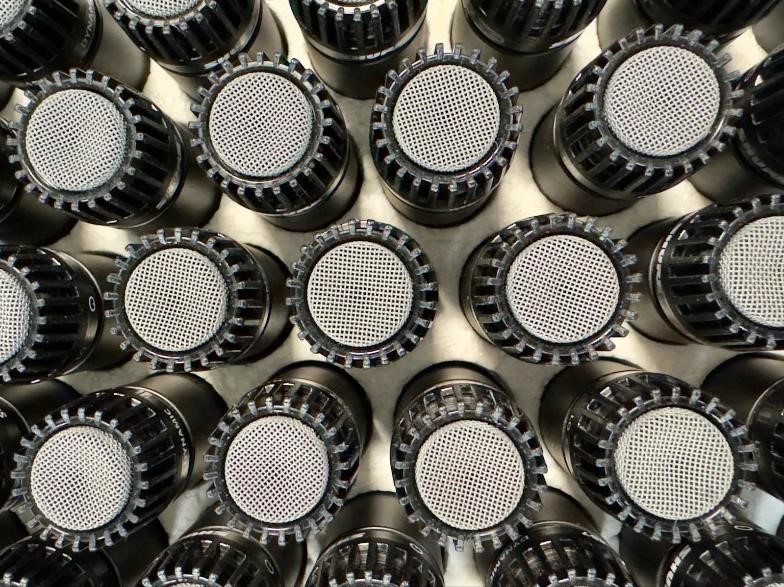
Shure’s Chris Stelter took the photo below while visiting our manufacturing plant in Juarez, Mexico.