
Category: Tech Topic

Tech Tip #576: Led Zeppelin and Shure – Part One
Premiering February 2025, the documentary Becoming Led-Zeppelin depicts the formation and early years of the band. It represents the first time Led Zeppelin participated in a biographical film. Becoming Led-Zeppelin traces Jimmy Page, John Paul Jones, John Bonham, and Robert Plant through the British music scene of the 1960s, how they got together in 1968, and their meteoric ascendancy. The story is told by the three surviving band members with the late John Bonham represented by an audio interview. The… -more-
Tech Tip #575: Battle Announce Microphone
During World War Two, Shure engineers solved numerous technical issues to make our transducers more dependable for battle use. One particularly challenging problem was “blast pressure,” the damaging sound level caused by an explosion or by the firing of a massive gun. In February 1944, the following Shure ad ran in radio engineering magazines:
Shure Ad during World War Two
For the Allied war effort, Shure manufactured carbon microphones and controlled reluctance [CR] microphones. Carbon mics could withstand blast pressures… -more-
Tech Tip #41: An Explanation of Microphone Model Numbers/Prefixes
S.N. Shure was a seeker of order. The Shure Archive holds an example of his daily calendar, kept when he was a teenager. Entries recorded what he did in school, what homework he was assigned, his experiments in wireless and science, and which friends he met after school. Mr. Shure innately loved organization.
The Shure “Wireless” Brothers S.J. and S.N., with a friend, 1917
As our microphone line rapidly expanded in the 1950s, Mr. Shure made certain it was organized.… -more-

Apps Tech Tip #56: Conversation at a Loud Party…and Wireless Microphones
Arriving early for a party, I struck up a conversation with the host. Working in the kitchen, about 20 feet [6 meters] from where I stood, she said. “Have a seat and I will tell you what’s been going on.” I settled into a nearby comfy chair, and we chatted. The house was quiet; it was no problem to converse even though the talker/transmitter (the host) stood 20 feet from the listener/receiver (me).
Later that evening, the house filled with… -more-

Tech Tip #171: Voltage, Amperage, and Resistance for Beginners
Volts, amps, ohms are words heard daily in professional audio, yet many of us only have a vague notion about these terms. There is an analogy between electricity and water. Though not 100% accurate, it is close enough for most audio needs.
The volt is a unit of electrical “pressure;” similar to water pressure within a hose.
The ampere (shortened to amp) is a unit of electrical current; similar to the quantity of water flowing out of a hose.
The… -more-
Apps Tech Tip #491: The Forlorn and Forgotten SM58
David Ippolito is “That Guitar Man of Central Park.” Performing in New York City, Mr. Ippolito has numerous loyal fans who faithfully attend his outdoor concerts in the park. He posted the following story on Facebook and kindly allowed Shure to share it with Tech Tip readers.
Every independent singer/songwriter knows the Shure SM58 microphone, or just 58 as we call it, is THE workhorse microphone of all time. They sound great and are basically indestructible. Years ago, when I… -more-
Tech Tip #573: OEM Wireless Mic Elements in the 1970s/80s
Shure entered the wireless microphone market in 1953 with the Vagabond 88 system, then exited in 1960 after discontinuing the Vagabond. For the following quarter of a century, we did not make a wireless mic system, yet were an essential part of the then-nascent technical niche.
In the 1970s, a number of small audio companies sold crystal-controlled, single channel VHF wireless mic systems; firms such as Swintek, Edcor, HME, Nady, Samson, and Vega. To satisfy customer demand, these companies approached… -more-
Apps Tech Tip #492: Condenser Microphone Element Damage
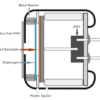
A customer inquired if the MX391/O condenser boundary mic would be damaged by the percussive sonic blast from a firearm. An interesting question to ponder, and ponder we did.
MX391 condenser boundary microphone
How loud is a gunshot?
It depends upon the gun type and the distance from the gun to the sound level meter. An internet search found:
Recreational Firearm Noise Exposure
Michael Stewart, PhD, CCC-A, Professor of Audiology, Central Michigan University
Exposure to noise greater than 140 dB… -more-
Apps Tech Tip #66: Avoid These Five Mistakes with Wireless Systems
While wireless systems have liberated performers from the bonds of cables, they have unleashed a dizzying array of technical headaches. Getting a wireless system to behave predictably is a challenge faced by touring professionals and novices alike. No venue or system is immune. Still, it doesn’t have to be guessing game. Understanding the basics of how wireless systems function and how radio waves travel will help triumph over dropouts, interference, and distortion. Avoiding five common errors will often tame unruly… -more-
Tech Tip #572: The Reincarnation of the M62 Level-Loc
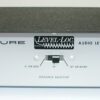
Introduced in 1967, the M62 Level-Loc promised to solve audio problems caused by loud and soft talkers. Placed between the microphone output and the mixer input, the unit was set up as follows: To use the M62 in a Public Address system, increase the volume control on the PA system to the point where the system is at the threshold of feedback with no signal being transmitted through the microphone. Used in this manner, the total volume is reduced by… -more-